
What Is Logistics in Education and Learning?
Logistics in the context of education refers to the coordinated planning, delivery and management of the systems that enable learning. It goes beyond simple scheduling or transportation; education logistics encompasses the orchestration of people, places, schedules, instructional materials, technology, connectivity, assessment data and the workflows that allow teaching and learning to happen consistently and equitably. When logistics are well designed, they reduce friction for educators, enhance learner experiences and make it possible to scale personalized instruction across diverse learning environments.
Conversation on the Learning Leadership Society Podcast
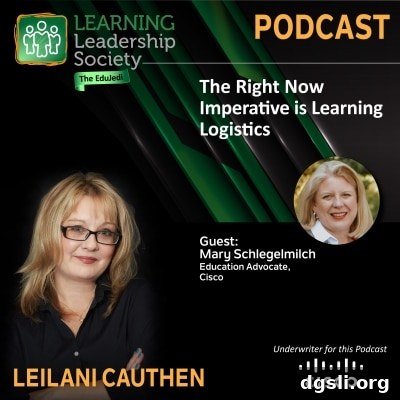
In a recent episode of the Learning Leadership Society Podcast, host LeiLani Cauthen explores this concept in depth. Her guest, Mary Schlegelmilch from Cisco, brings a practitioner’s perspective shaped by experience in education and school consulting. Together they examine the current pressures on K–12 and higher education systems and outline practical steps toward more robust, future-ready logistical models for learning.
Key Challenges: Teacher Shortage, Personalization, and Workflow
The conversation highlights three interrelated challenges facing schools today. First, the teacher shortage: districts and institutions are already coping with fewer educators, leading to larger class sizes, increased burnout and less time for individualized instruction. Second, the demand for personalization: students and families expect learning that adjusts to individual needs, interests and pacing, which requires flexible staffing, adaptive curriculum and responsive assessment. Third, the absence of reasoned workflows: many schools lack clear, efficient processes that align people, places and technology. Without reliable workflows, efforts toward personalization and innovative practices often falter.
Network Maturity as an Engine for Educational Change
A major theme of the episode is the role of network maturity in enabling modern education. A mature network is not only fast and secure but also manageable, observable and integrated with classroom systems. When networks are designed to support instructional use cases, they allow teachers to access resources seamlessly, support hybrid and remote learners, and enable data-driven tools that adapt instruction in real time. Schlegelmilch and Cauthen describe network maturity as foundational: it unlocks technologies that can lift administrative burden from teachers and create new possibilities for collaboration and differentiated instruction.
Elevating Human Teachers Through Technology
Importantly, the discussion emphasizes that technology’s role is to elevate—not replace—human teachers. Thoughtfully applied tech can automate routine tasks, provide timely insights from assessment data, and free educators to focus on coaching, mentoring and designing rich learning experiences. The guests outline how schools can prioritize investments that support teacher effectiveness: reliable connectivity, integrated classroom tools, streamlined content delivery, and professional development that ties technology to pedagogy.
Rethinking Space and Time for Learning
Another compelling idea is how logistics and technology together can change the use of space and time in education. With flexible scheduling, blended learning models and robust remote access, schools can reimagine when and where learning happens. Physical spaces can be configured for collaboration, small-group instruction and individualized support, while virtual environments extend opportunities beyond school hours. The right logistical framework makes these shifts practical and sustainable, ensuring equitable access regardless of students’ circumstances.
Practical Progress and Next Steps
The episode offers concrete directions for leaders who want to improve logistics in their systems: audit current workflows and pain points, invest in network reliability and manageability, pursue professional learning that integrates tech and pedagogy, adopt data practices that inform instruction without overburdening teachers, and design policies that support flexible, student-centered scheduling. These steps help districts move from ad hoc solutions to strategic, scalable approaches that benefit learners and educators alike.
If you want to hear the full conversation and the specific examples shared by LeiLani Cauthen and Mary Schlegelmilch, click the link below to listen to the episode.
Click here to listen