
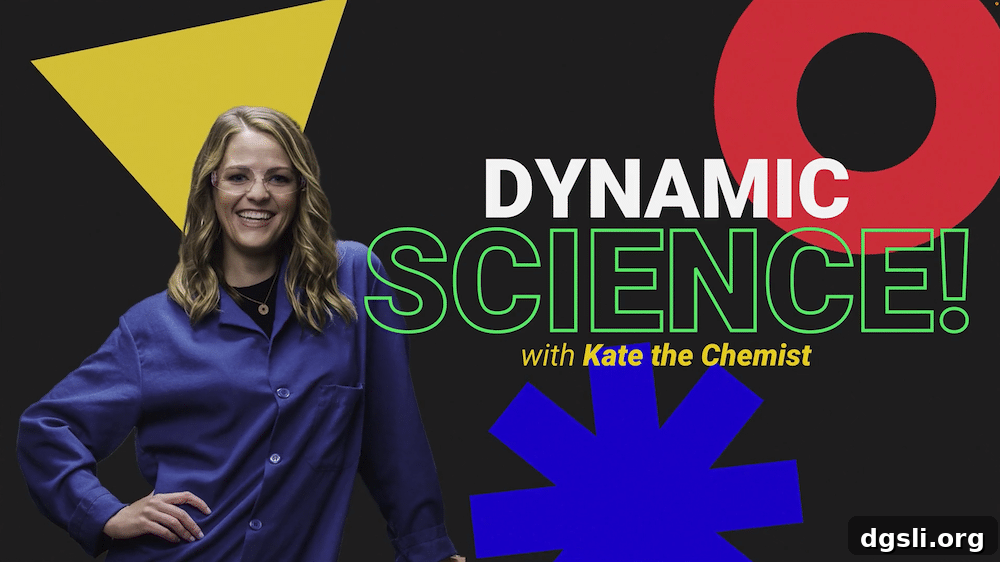
Who loves science? We at Summit K12 do—and we’re thrilled to share this exclusive interview with Dr. Kate Biberdorf, better known as “Kate the Chemist.”
Dr. Kate Biberdorf is a chemist, science communicator, and professor at The University of Texas. With a theatrical, hands-on approach to teaching, she works to dismantle the stereotype of the scientist and reach students who might otherwise feel intimidated by science. She is the author of The Big Book of Experiments, The Awesome Book of Edible Experiments for Kids, the Kate the Chemist fiction series, and the nonfiction book It’s Elemental: The Hidden Chemistry in Everything. Her work has been featured in major outlets and she has appeared on national television programs.
Kate has partnered with Summit K12 to produce engaging, entertaining videos for the 2024 science curriculum adoption in Texas. In this conversation, we explore how Kate began her work, the impact she’s making in science education, her books and outreach approach, and practical tips for parents and teachers helping students overcome their fears of science. We also discuss her collaboration with Summit K12 and what’s next for Kate the Chemist.
Image by Christina Flygstad, Cory Venable, and Ricardo Santiago.
Love of Chemistry
Robyn Shulman: I read you loved chemistry in high school. Was there something specific that drew you to the subject?
Dr. Kate Biberdorf: I’ve always been naturally inquisitive—I asked endless questions as a kid. But it wasn’t until my sophomore year of high school when I met Mrs. Kelly Palsrok that chemistry truly clicked. She brought experiments to life in class—running around and lighting things on fire—and from age 15 I knew I wanted to be a chemist because of her.
Robyn: How many students do you reach through your outreach and teaching?
Kate: During my outreach program I reached around 20,000 elementary students a year on average, with my best year near 28,000. On the college side, I teach very large general chemistry classes—about 1,000 students each semester across two large sections.
Books that Bring Chemistry to Life
Robyn: You’ve written several books. Which one means the most to you and why?
Kate: Each book has its own importance, but The Big Book of Experiments is closest to my heart. It grew out of my Fun with Chemistry outreach program. I started by sending a simple PDF of experiments to parents, and over time that PDF evolved into a full-color, step-by-step book after partnering with a major publisher.
Image by Christina Flygstad.
Kate: I intentionally added color and a feminine flair to the book to subtly reinforce that anyone—regardless of background or identity—can be a scientist.
Robyn: On The Kelly Clarkson Show you discussed It’s Elemental: The Hidden Chemistry in Everything. What draws you to chemistry?
Kate: Chemistry explains the world around us. In It’s Elemental, I take readers through a typical day—breakfast, a workout, getting ready, and even date night—to highlight how chemistry appears in daily life. From the colors we see to why fabrics drape the way they do, chemistry connects atoms and molecules to every experience. A solid foundation in chemistry helps you understand so much of the everyday world.
Making a Name while Making a Difference
Image by Christina Flygstad.
Robyn: You focus on experiments with easy-to-find materials. Can you explain that choice?
Kate: In my outreach work, especially with Title I schools, I made a rule: experiments included in The Big Book of Experiments had to use supplies found in a typical craft drawer or be easy to order. If they weren’t available in those two ways, the activity didn’t make it into the book. Accessibility is essential when creating meaningful science experiences for students of all backgrounds.
Robyn: When did you realize many students feel intimidated by science?
Kate: I’ve always been aware that people dislike uncertainty. Not knowing an answer can make learners uncomfortable. Part of my work is helping students and adults accept uncertainty as part of the scientific process—asking questions and pursuing answers is central to being a scientist.
I want to do for students what Bill Nye did for me—bring science to life in person. I haul liquid nitrogen and dry ice into classrooms because that emotional, awe-inspiring response can ignite a lasting interest in science.
Kate’s Passion
Image by Christina Flygstad, Cory Venable, and Ricardo Santiago.
Robyn: You do television, books, podcasts, school visits, videos, and teaching. Which do you enjoy most?
Kate: I’m a performer at heart. If I had to choose one activity for the rest of my life, I’d teach in front of a large college classroom—general chemistry with hundreds of students. There’s something about bringing chemistry alive for freshmen that truly fuels me. But across all formats, the goal is the same: spark curiosity and show how science can improve the world.
Science Tips for Teachers and Parents
Robyn: What key advice would you give to parents and teachers whose students struggle with chemistry?
Kate: Admit when you don’t know something. Parents often feel they must have all the answers, but acknowledging uncertainty models authentic scientific thinking: ask questions and seek answers together. During the pandemic I recommended families take science walks—notice something together, photograph it, research it using tools like reverse image search, and follow the curiosity to an answer. Smartphones make information accessible; use them to foster exploration.
Robyn: How does science work for English Language Learners?
Kate: Science has its own vocabulary, so learning key terms is an essential first step. In outreach I led lectures in Spanish for ESL students, and hands-on activities proved to be a strong way to connect and show that science is inclusive and approachable.
Working with Summit K12
Image by Ricardo Santiago.
Robyn: What did you enjoy most about working with the Summit K12 team?
Kate: The team became like family. Collaborating with people from diverse backgrounds and perspectives has been energizing. Many of them are now part of what I jokingly call my STEM Army—they’ve adopted a scientific mindset and helped make this work possible.
Future Plans for Kate the Chemist
Robyn: What’s next for you?
Kate: Season two of my podcast Seeking a Scientist has been picked up, and we’ll be releasing more episodes to meet growing audience demand. I’m honored to work with NPR on this project and excited to continue sharing science stories through the podcast. I’ll also be attending CAST to discuss the work we created with Summit K12 and to meet educators and learners in person.
Follow Kate the Chemist
Robyn: Where can readers follow Kate’s work?
Kate: Kate the Chemist website; social platforms including Twitter, Instagram, and TikTok are where I share experiments, updates, and resources.
- Kate the Chemist website
- TikTok
Robyn: Thank you so much, Kate. We’re excited to continue working with you!