
Making Mathematical Modeling Accessible to High School Students
Young people are often inspired by big ideas and the desire to change the world. Science fairs and research competitions provide one path for turning that inspiration into action. Yet access to meaningful research is not equal for all students. A study from the University of Toronto observed that students with laboratory access tend to dominate many high-level science fairs. For most high school students worldwide, high-end lab access is rare, and this creates a visible barrier to producing research-grade work.
One field that can help level the playing field is mathematical modeling. Mathematical modeling uses statistics, algorithms, and logical reasoning to analyze real-world systems. Because it relies more on computation and critical thinking than on specialized laboratory equipment, mathematical modeling is inherently accessible. With a modest set of tools—a computer, basic software, and a foundation in algebra—students can construct models that address problems in public health, economics, engineering, and beyond.
Outside of the classroom, mathematical modeling underpins many aspects of modern life: traffic engineering, financial analytics, epidemic projections, and seismic risk assessment all rely on mathematical models. Given its pervasive real-world importance and relatively low barrier to entry, it raises a key question: why isn’t mathematical modeling introduced earlier and more widely to high school students?
In many U.S. high schools, the mathematics curriculum focuses on algebra, geometry, statistics, and calculus. Too often math is taught as a set of procedures that produce single “right” answers, while creative subjects like art and computer science are positioned as open-ended endeavors. In reality, effective mathematical modeling combines mathematical rigor with creativity: choosing assumptions, comparing alternative approaches, and iterating models based on results. When presented this way, math becomes a tool for explaining and shaping the physical and digital world.
Existing online resources for mathematical modeling can be useful but are often written at an undergraduate or graduate level. That complexity discourages many motivated high school students. For example, classical epidemic models are typically taught using differential equations—material that usually appears in college-level courses. However, many modeling concepts can be introduced with simpler approaches. Monte Carlo simulation, for instance, allows students to capture randomness and population dynamics using basic programming constructs and probability, rather than advanced calculus. Simplifying entry points to modeling is central to boosting participation and sustaining interest.
AoCMM (Art of Computational Mathematical Modeling) was founded to lower the entry barrier for young researchers. AoCMM provides free courses and resources designed for students who have a solid high school algebra background. These materials include approachable explanations of common mathematical algorithms, step-by-step MATLAB tutorials, statistics primers, and practical modeling exercises that connect directly to real-world problems. The goal is to give any student the guidance and tools needed to build meaningful, credible models without requiring advanced coursework.
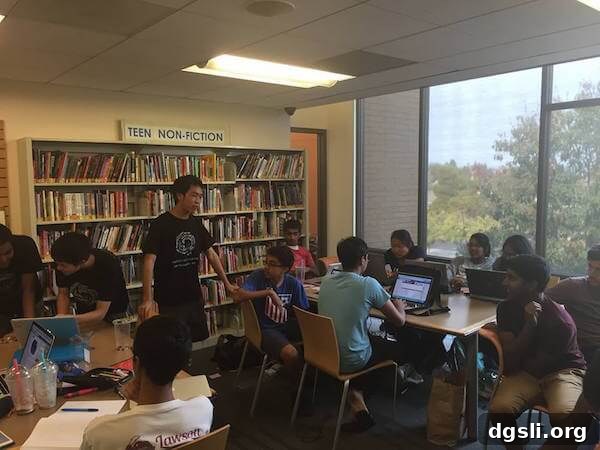
If students need additional support, AoCMM offers affordable online tutoring aimed at helping with project design, coding, and interpretation of results. The organization also works with local schools to encourage independent research, and it runs a volunteer program that connects students and mentors across its subchapters to stimulate interest and collaboration.
Competition Designed for Learning and Real Research
To complement its educational offerings, AoCMM hosts an annual mathematical modeling competition designed with student learning in mind. Many traditional contests compress the research process into very short time windows—HiMCM, for example, uses a 36-hour format—which forces teams to rush through data collection, model design, and writing. That intensity often tests stamina more than modeling skill, discouraging novice participants.
AoCMM’s competition intentionally provides a much longer window—extending the process to allow deeper exploration, revision, and reflection. By expanding the time limit, teams can gather data, iterate on models, and present more thoroughly developed analyses. This approach mirrors authentic research, where progress often comes through cycles of trial, critique, and improvement rather than one-off breakthroughs.
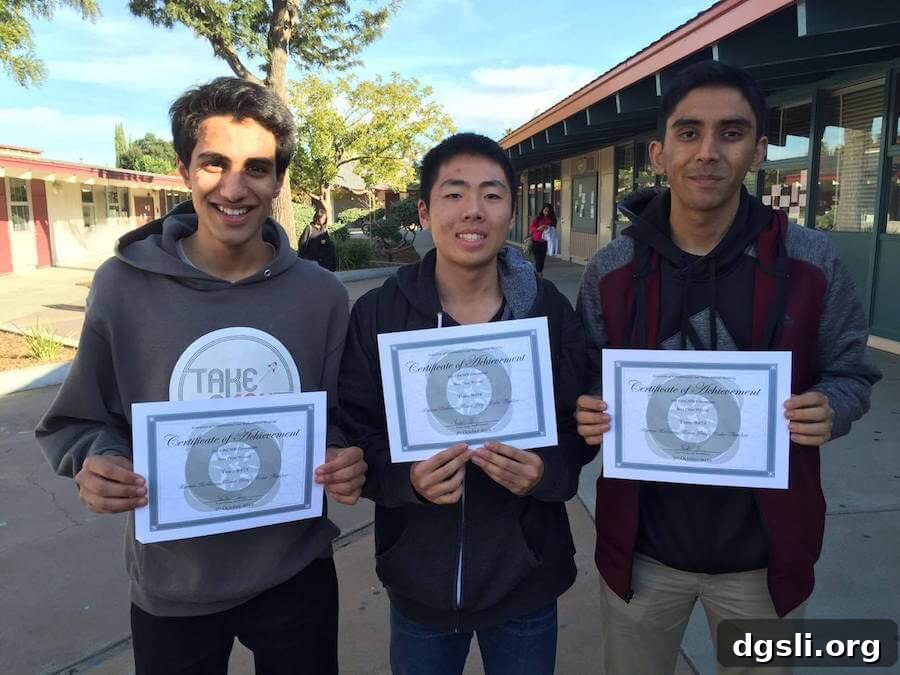
Problems for the competition are created in collaboration with faculty and researchers from leading universities. Submitted papers are reviewed and annotated by judges, giving teams actionable feedback to learn from. Awards are structured to support further research and education: winners receive scholarship funds and educational products to help them pursue larger projects. In past years the competition attracted sponsorship from prominent organizations, and prize support has enabled winners to continue their research efforts with greater resources.
AoCMM’s emphasis on accessibility, practical training, and an educational competition structure aims to broaden participation in mathematical modeling. By offering clear, age-appropriate resources and a supportive pathway into research, the program helps high school students translate curiosity into concrete, impactful work.
For additional context on equity in science fairs, see the work by Bencze and Bowen (2009) on national science exhibitions and participation. For information about AoCMM and its programs, visit aocmm.org.