
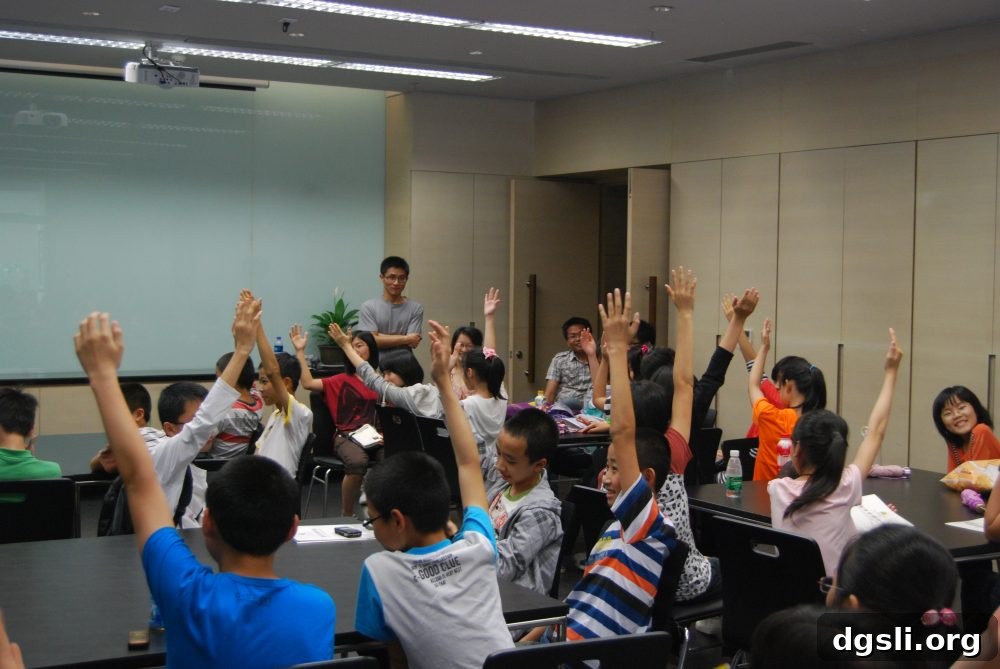
Classrooms across the world
Classrooms vary widely around the globe, shaped by government policy, cultural expectations, and local priorities. Over the past decade, schools in many Western countries have begun to change—shifting toward innovation, creativity, personalized learning, and new approaches that aim to prepare students for a rapidly changing 21st-century economy. Many educators now believe the traditional classroom model is outdated and that teaching methods must evolve quickly to meet future challenges.
In the United States, teachers historically had more latitude to design curricula tailored to their students, though this autonomy has been constrained by the growing emphasis on standardized testing and top-down learning standards. Schools—public and private—must often meet conditions tied to funding, which can limit flexibility. By contrast, schools in parts of Asia have placed heavy emphasis on exam performance and measurable outcomes, while increasingly integrating technology and some 21st-century learning practices.
Below are five key differences commonly observed between Chinese and American classrooms, followed by reflections from teachers at HAWO American Academy who work with Chinese students worldwide.
Classrooms
Class sizes differ markedly. Many Chinese teachers are responsible for large groups—sometimes 30 to 50 students or more—whereas U.S. classrooms tend to be smaller, allowing teachers to focus more on individual student needs. In China, instruction often targets the collective class, with teachers asking, “How can I improve learning for the whole group?” In American classrooms, the emphasis is more frequently on tailoring instruction to individual students’ needs.
Teachers
Teacher-student relationships also take different forms. In the U.S., students commonly change teachers each year as they move through grades. In China, students may have the same teacher for multiple years—sometimes throughout primary school—creating continuity in the teacher-student relationship. Both systems require teachers to meet formal qualifications, but the structure of assignments and responsibilities varies.
Testing
Exams carry substantial weight in China. High-stakes testing is reinforced by cultural expectations, family pressure, and national emphasis on measurable achievement. Grades and standardized test results play a major role in determining student placement and are often used to evaluate teacher performance; strong exam results can lead to financial rewards for teachers. In the United States, student outcomes influence evaluations, but the consequences are typically less centralized and intense than in the Chinese system.
Creativity
Arts and sports receive more systematic encouragement in many American schools, with space in the schedule for creative and physical pursuits. In China, the school day often prioritizes academic subjects and memorization, leaving less room for artistic or athletic pursuits—though signs of change are emerging as innovation and creativity gain more attention in some schools.
Nationality and Individuality
Cultural attitudes toward individual recognition differ. In North America, students are frequently praised individually for achievements—stickers, awards, and public recognition are common. In China, success tends to be celebrated as a collective accomplishment rather than centered on individual praise, reflecting a broader cultural focus on group achievement.
Teacher perspectives from HAWO American Academy
Shaundra Schlapia — “Students in China often have homework during breaks and holidays, and most complete it. In the U.S., holiday expectations vary; teachers may or may not assign work, and students’ obligations during free time are different.”
Jen G. — “In Ontario, Canada, homework guidance suggests about ten minutes per grade each night, and assignments should reinforce classroom learning rather than introduce new material. Chinese students report longer school days and subject-specific teachers even in elementary grades, whereas many North American schools use a homeroom teacher for most subjects. Class size is a major contrast: Ontario limits young classrooms to about 20 students, while Chinese students often report classes of 50 or more.”
Violeta Talavera — “Homework and reinforcement are major priorities in China. In the U.S., homework expectations vary widely; some districts have reduced or eliminated homework, while others outsource assignments via technology, which can increase completion rates.”
Heather Carter — “A notable difference is that Chinese students often continue formal study during summer vacation, whereas in the U.S. summer study is typically optional and not uniformly required.”
Miss Davvison — “The cultural respect for education and teachers in China is striking. Many students and families prioritize language study and honor classroom etiquette. Observing how other cultures revere educators has been eye-opening and humbling.”
James Seymour — “Students in China generally know their rank in each core subject within the class.”
Kristy Diane — “In North America, placement in middle and high school is mostly residency-based. In China, students often test into secondary schools, and there are instances of home visits by high school teachers for welfare checks and residency verification.”
Sasha Truman Young — “Discipline is often cited as more manageable in Chinese classrooms, and nearly everyone in China learns English—while relatively few in North America learn Chinese. Economic factors also shape differences: access and quality of education vary with financial means in both countries.”
Other important distinctions include academic rigor, homework volume, after-school activities, school hours, availability of sports, and expectations around rote memorization versus inquiry-based learning. In China, assessment and comparisons across cohorts inform teacher evaluations over multi-year cycles, while many North American classrooms are increasingly exploring inquiry, creativity, and individualized learning approaches.