
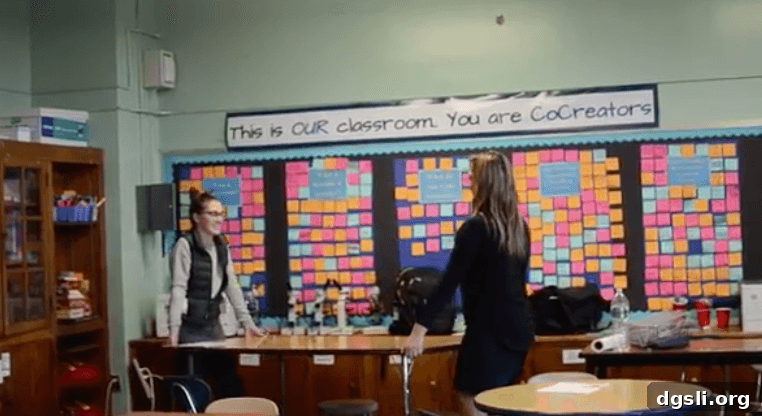
Written By: Grace O’Shea
New York City, summer 2011. I joined a corps of Teaching Fellows determined to close the opportunity gap across the city. I began my summer assignment full of equal parts excitement and dread. I was about to teach live for the first time, and my task was straightforward yet daunting: get a roomful of eighth graders interested in science.
Room 230. I stepped in. My students sat in bulky desk-chairs, all lined uniformly to face the SmartBoard — rows that seemed designed to keep bodies stationary and attention passive.
I wanted conversation and collaboration. To start the session, I gave precise, actionable directions: “Point to your partner. Turn your legs to face them. Partner A, the partner closest to the door, will share first. Get ready to talk in 3, 2, ready? Talk.” I snapped my fingers on the cue.
The first discussion was as awkward as the furniture. Students avoided eye contact, a few shuffled their feet toward vague partners, and many simply rested chins on their hands. Some asked which side was “left” or who counted as Partner A. One student began sharpening a pencil, clearly disengaged. Despite my focus on communication and collaboration, it felt impossible when half the class faced the backs of other students’ heads.
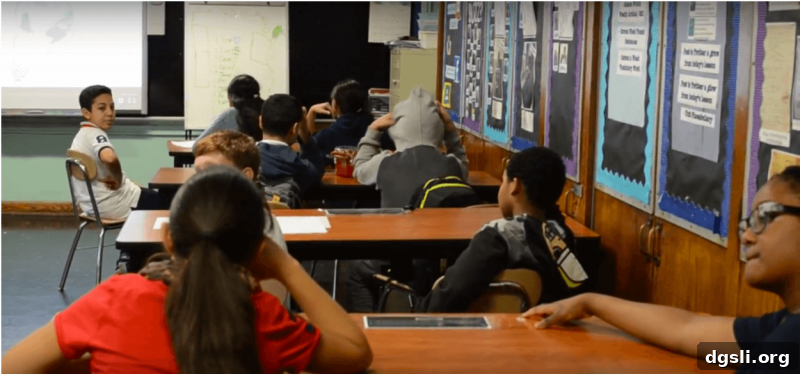
A static classroom environment traditionally found in NYC public schools.
It struck me then that learning demands had shifted in the 21st century, but most classrooms had not. Every day, millions of educators still operate within factory-model spaces designed in the early 20th century — spaces that constrain rather than support the kinds of learning we now value.
So what does 21st-century learning look like? First, it is student-centered: curriculum and activities engage learners in meaningful, immersive problem-solving. Learning is personalized, with systems that respond to student interests and needs. It is also collaborative: students learn in communities, sharing knowledge and supporting one another. For these approaches to succeed, physical space must allow both active communication and quiet reflection.
To make that possible, I began to hack my classroom — to improvise with the furnishings and layout I had. Hacking, in this context, simply meant making the most of existing infrastructure so that the room supported the work we wanted to do.
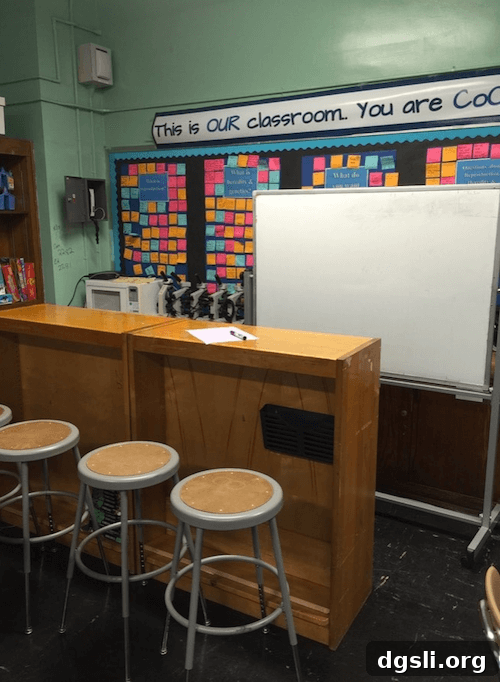
One of my favorite classroom hacks: the student work bar. By removing shelves from an old bookshelves, we’ve opened the postures available to students. Starbucks, anyone?
Yes — it meant moving tables and chairs. Yes — it meant thinking about the people using the space: their tasks, habits, and needs. I started creating simple classroom maps and encouraged students to help shape their own environment. My background in geography made it natural to design layouts aligned to learning goals: if students were reading in small groups, chairs could be arranged to face each other; if whole-class discussion mattered, we could clear tables to focus attention on text and peers rather than on barriers like desks.
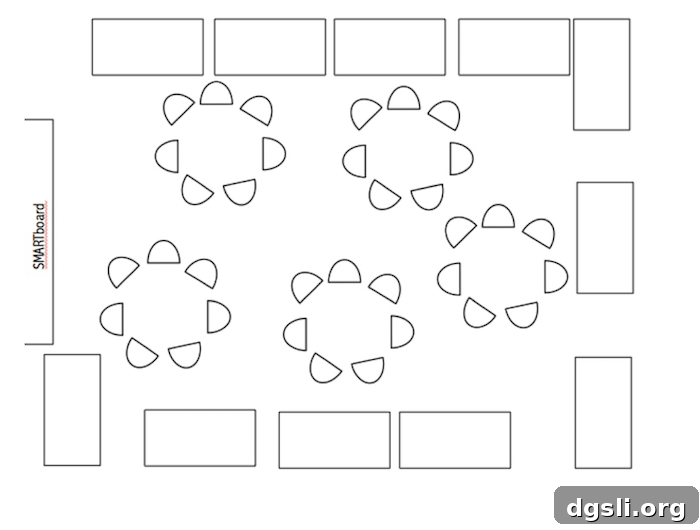
For literacy-based lessons, we may set up our chairs in small groups. Notice that tables are absent — this funnels attention to two essentials: the text and the people.
Over time, students learned to rearrange furniture for different activities and to take ownership of the learning environment. The small changes made the classroom more flexible and better aligned with varied learning modes — independent work, partner conversations, small-group projects, and whole-class inquiry.
In October 2015 I attended the HIVE Hackathon at the Harvard Graduate School of Education, and that experience helped spark a larger effort. There I met my co-founders Jane Zhang (Harvard GSD) and Fernando Trujano (MIT). Together we launched room2learn, a platform where educators can share practical ways they’re reusing and reimagining classroom space. The goal was simple: create a place for teachers to discuss spatial solutions and how those solutions support learning.
Design in schools is more than aesthetics. At room2learn, we focus on the problem-first approach: identify the teaching or learning challenge, then use materials and layout to address it. We also work directly with schools to customize spaces to their needs, keeping cost in mind so good design can be affordable for real classrooms.
Good teachers are, by nature, designers. Every day they create curriculum, organize classroom systems, and design learning experiences. As pedagogies shift and student needs change, our physical spaces must evolve too. It’s time to use our design toolkits to transform how spaces support learning — to make classrooms flexible, student-centered, and built to foster collaboration and reflection.
About Grace:
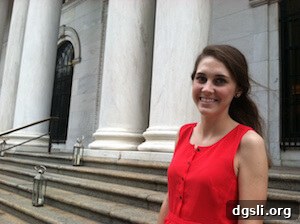
Grace O’Shea
Grace O’Shea is a co-founder of room2learn and a former New York City public school teacher. As a sixth- and eighth-grade science teacher, she applied design thinking at both the classroom and school level, helping her middle school envision and move toward a more flexible learning environment. Grace has continued her work with room2learn, advocating for adaptable, student-centered classroom design.
Grace has participated as a panelist discussing the future of classrooms, including speaking engagements at conferences that explore innovation in education. She and the room2learn team also run campaigns and contests that encourage teachers to share low-cost, high-impact classroom hacks and practical design ideas for the everyday classroom.