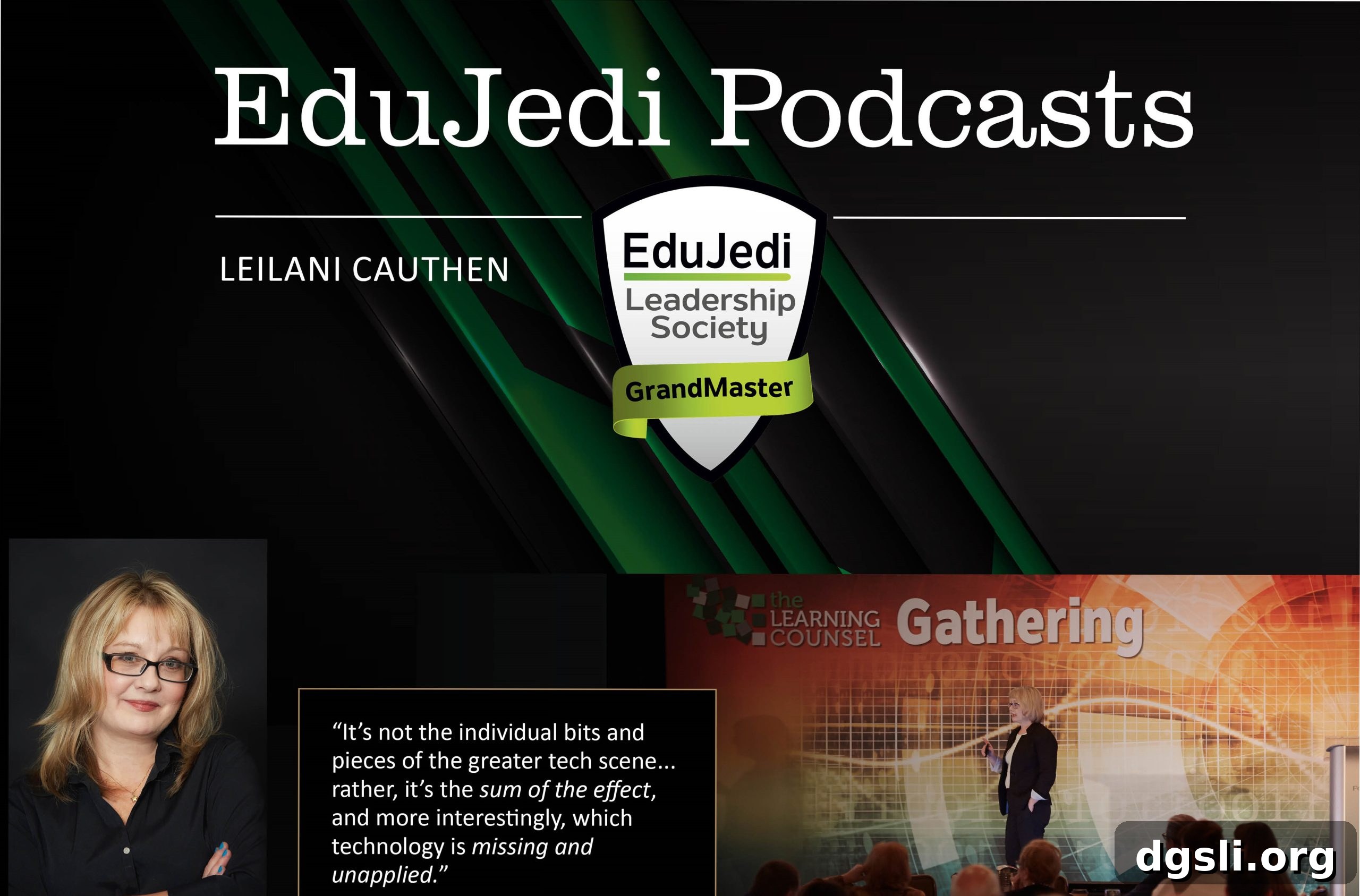
Listen to the New EduJedi Leadership Society Podcast
Special Guest: Senator Howard Stephenson, Utah
LeiLani Cauthen and Senator Howard Stephenson of Utah discuss the rapid transition to remote learning, the strengths and weaknesses of current digital curricula, and what these changes mean for the future of education.
Conversation Overview
Cauthen: Today we’ll examine what actually happened when schools closed and moved to remote learning across the country, and what the long-term implications might be. Senator Howard Stephenson joins us from Utah to share his experience, particularly around adaptive digital curriculum software and how those tools have been deployed in classrooms.
Senator Stephenson: The shift to digital instruction has exposed a wide spectrum of quality. In many places, online learning became a mile wide and an inch deep: lots of content scattered across platforms but too little that is truly effective at helping each student master concepts. Parents, teachers, and school leaders often assume all digital resources are essentially the same, but the difference comes down to whether a tool provides immediate, interactive, adaptive feedback while a student is actively learning. PDFs, static worksheets, or even some project-based learning formats do not replace targeted adaptive instruction that diagnoses gaps and adjusts to a learner’s needs in real time. Project-based work has value, but it alone doesn’t guarantee mastery of core math or English language arts skills.
Key Themes from the Podcast
- Quality Over Quantity: School systems need to prioritize high-quality, adaptive instructional tools rather than simply digitizing traditional materials.
- Real-Time Feedback: Effective digital solutions give students instant feedback and adaptively scaffold learning paths to address misconceptions as they arise.
- Teacher Support and Training: Digital tools are most powerful when teachers understand how to integrate them into instruction, interpret the data they produce, and personalize student learning based on that insight.
- Equity and Access: Remote learning highlights equity issues—access to devices and reliable internet, plus access to instructional tools that actually support mastery, are essential for all students to benefit.
- Balanced Approach: A blended strategy that combines adaptive digital practice, targeted teacher-led instruction, and purposeful project-based activities can produce deeper learning than any single approach alone.
The podcast conversation underscores that simply moving traditional classroom materials online is not sufficient. The most promising digital systems are those that actively engage students with formative checks, tailor difficulty and scaffolds to individual learners, and provide teachers with actionable data. These elements help ensure students build competency rather than merely complete tasks.
Why This Matters Now
As schools plan for future disruptions or consider permanently expanding digital learning, policymakers and education leaders must make strategic choices. Investments should favor platforms that demonstrate adaptive responsiveness, clear evidence of student learning gains, and strong support for teacher professional development. Without this emphasis, districts risk amplifying learning gaps rather than closing them. The urgency of the moment makes it essential to scrutinize digital offerings and prioritize tools that deliver measurable instructional value.
About the Host
LeiLani Cauthen is a leading voice in K–12 education. She serves as CEO and Publisher of the Learning Counsel, a research and news media organization serving a broad readership of education leaders. LeiLani organizes leadership training events in many U.S. cities, frequently keynotes conferences, and connects directly with school districts, charter schools, private schools, and government leaders. Her work includes producing timely webinars with school administrators nationwide, publishing Special Reports, and coordinating a major ed‑tech research study each year. LeiLani founded Knowstory, leads the Edujedi Leadership Society, and is the author of the book The Consumerization of Learning.
Listen: This thought-provoking episode explores practical steps leaders, teachers, and parents can take to ensure digital learning is meaningful, equitable, and focused on genuine student mastery.