
Discovery Education Releases Practical Guide for Cultivating Student Curiosity
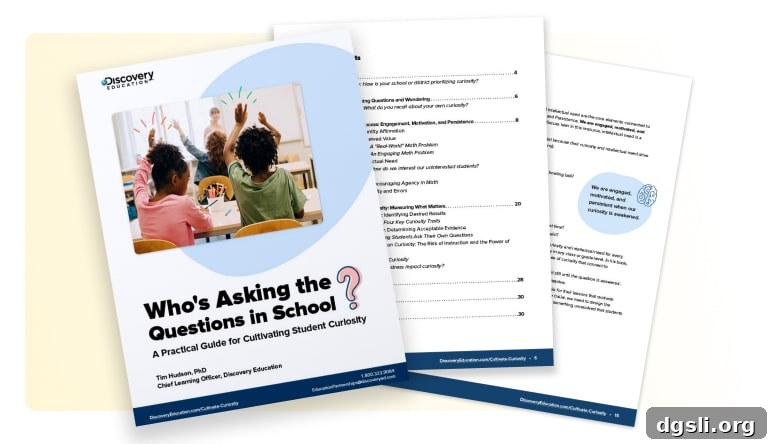
Discovery Education is offering a new, free resource to help educators place curiosity at the center of teaching and learning. Titled A Practical Guide for Cultivating Student Curiosity, the guide outlines clear, classroom-ready approaches to awaken and sustain learners’ natural inquisitiveness. The resource is designed for use across districts, schools, and individual classrooms to boost engagement, motivation, and persistence.
Although curiosity is widely recognized as a vital driver of learning and personal development, it is frequently underemphasized in formal education. This guide responds to that gap by providing a straightforward framework, concrete tools, and inventive strategies teachers can use to encourage curiosity in students of all ages and backgrounds.
What the Guide Offers
- Clear definitions of different types of curiosity and how they appear in learners.
- Practical techniques for observing and measuring curiosity in classroom settings.
- Student self-assessment tools and additional assessment approaches that teachers can adapt.
- Guidance for designing learning experiences that center curiosity and encourage deeper investigation.
- A collection of specific activities, prompts, and classroom tips to foster ongoing curiosity.
Educators can download A Practical Guide for Cultivating Student Curiosity directly from Discovery Education’s resources section. The guide is freely available for teachers, instructional coaches, and school leaders who want ready-to-use materials and evidence-informed strategies to enrich their practice.
Why Curiosity Matters in the Classroom
Curiosity drives active learning: when students ask questions, test ideas, and follow their interests, they are more likely to remain engaged and motivated. The guide emphasizes how curiosity supports persistence through challenging tasks and helps learners develop independent problem-solving skills. By intentionally cultivating curiosity, educators can create classroom environments where students feel empowered to explore, make mistakes, and build deeper understanding over time.
Practical Applications for Educators
The guide is practical in orientation. It offers classroom-ready examples that teachers can implement immediately, including formative approaches for tracking curiosity, simple self-reflection tools for students, and lesson design strategies that prioritize open-ended inquiry. Examples and activity suggestions are adaptable to different subjects, grade levels, and learning contexts, making the guide useful whether you teach early grades, secondary classes, or blended and remote learning settings.
Teachers will find tips for creating routines that nurture curiosity, such as question-generation exercises, student-led investigations, and reflection prompts that transform fleeting interest into sustained learning. School leaders can use the guide to frame professional learning sessions and to support whole-school initiatives that promote curiosity as a central learning outcome.
Leadership Perspective
“Discovery Education is proud to offer this powerful new resource to educators worldwide,” said Brian Shaw, CEO. “We believe that curiosity is not a nice to have—it is a need to have. With the information contained in A Practical Guide for Cultivating Student Curiosity, educators are better able to help their learners improve engagement, motivation, and ultimately, achievement.”
About Discovery Education and Additional Resources
Discovery Education produces a wide range of digital resources and professional learning solutions designed to support teaching and learning. In addition to the curiosity guide, educators will find tools that support curriculum design, formative assessment, and instructional strategies. For more information about Discovery Education’s resources and professional learning offerings, please visit Discovery Education or search for Discovery Education on major social platforms such as X, LinkedIn, Instagram, TikTok, and Facebook to stay connected and learn about upcoming releases and professional learning opportunities.