
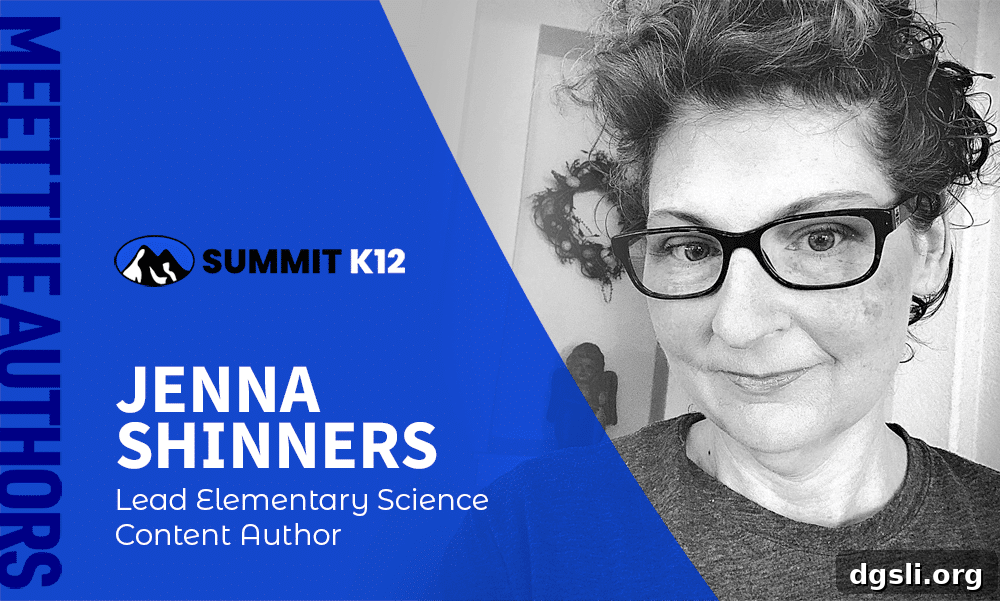
Meet the Authors: Jenna Shinners — Elementary Author for Dynamic Science
The strength of the Dynamic Science curriculum lies in collaboration with authors and editors across Texas. To highlight the people behind the program, we’re sharing our Meet the Authors series so educators and districts can learn more about the experts who developed the unique science content for Texas learners.
Our second interview features Jenna Shinners, who led the development of the K–5 content for Summit K12’s Dynamic Science program for the 2024 Texas State Science Adoption.
About Jenna Shinners
Jenna Shinners brings more than 25 years of experience in education and a deep commitment to sharing the excitement of science with students and teachers. Before joining Summit K12, she served as an educational science specialist at Region XIII Educational Service Center and worked as a science consultant with lead4ward. In those roles, she supported districts across Texas, led professional development, and helped schools build strong science programs. As an elementary content author on the Dynamic Science team, Jenna focuses on creating engaging, standards-aligned learning that fosters curiosity and scientific thinking in young learners.
Request a demo for the Dynamic Science program
Interview: Robyn Shulman and Jenna Shinners
Robyn Shulman: Jenna, can you share a bit about your background?
Jenna Shinners: I have worked in education for over 25 years in a variety of roles supporting science education across Texas. My work has included classroom teaching, district-level support, and consulting. I served as an educational science specialist at Educational Service Center, Region XIII, and as a science consultant with lead4ward prior to joining the Summit K12 team.
Shulman: Has your well-rounded career offered different opportunities in education?
Shinners: Absolutely. My experiences opened doors to lead professional development for teachers, support administrators in building science programs, write curriculum and instructional materials, and contribute to STEM innovation initiatives. Those roles helped me understand classroom needs, teacher workflows, and ways to make science engaging and manageable for daily instruction.
Shulman: What part of the 2024 Texas State Science Adoption did you create?
Image by Summit K12©
Shinners: I served as an elementary content author for the K–5 Dynamic Science program, contributing to the development of lessons, investigations, and teacher-facing supports that align to the Texas standards.
Shulman: What was your favorite part about creating the Dynamic Science curriculum?
Shinners: Working with an exceptional team was the highlight. We collaboratively designed engaging, meaningful science instruction that emphasizes three-dimensional learning. It’s rewarding to see hands-on investigations, opportunities for student discourse and writing, and teacher resources come together into a cohesive program that supports student curiosity and critical thinking.
Shulman: What advice would you give teachers using Summit K12’s Dynamic Science program?
Shinners: Take advantage of the comprehensive resources provided for diverse learners. The program is rooted in three-dimensional learning and offers hands-on investigations, field experiences, and digital simulations that bring concepts to life. Use the materials that align with your students’ interests and needs—explore features like Kate the Chemist content, PhET simulations, and field investigations in state parks. These tools help students question, think, write, and talk about science in meaningful ways while building lasting scientific understanding.
Shulman: Thank you for sharing your story, Jenna. We look forward to more interviews in the Meet the Authors series.
Learn More About the Dynamic Science Team
For additional information about the Dynamic Science team and the resources we provide to support Texas learners, download our brochure or explore the Summit K12 site to request a demonstration. The program emphasizes teacher support, classroom-ready materials, and coherent K–12 progressions that align with state expectations.
Dynamic Science focuses on three-dimensional instruction—disciplinary core ideas, science and engineering practices, and crosscutting concepts—so that students not only learn facts but also engage in scientific thinking. Elementary teachers will find lesson plans, hands-on investigations, embedded formative assessments, and teacher guides designed to streamline planning and maximize instructional time.
We’re proud to work with experienced educators like Jenna Shinners to create curriculum that meets Texas standards while inspiring young scientists to explore, question, and discover. If you’re considering materials for your district or classroom, request a demo to see how Dynamic Science can support your teaching goals and student learning.