
By Peter Meyerhoff, PhD
It’s time to take math education seriously — but not in the way most people imagine. Making math more rigorous doesn’t mean piling on harder worksheets or forcing longer tests. True rigor asks students to use mathematical ideas with equal intensity across procedures, concepts, and real-world application. To reach that standard, we need to make math more playful.
Playful? Isn’t rigor supposed to be strict and solemn?
Rigor = fun
Rigor in math education isn’t simply about harder problems or higher scores. As the Common Core frames it, rigor means balancing procedural skill, conceptual understanding, and meaningful application. Schools often emphasize the first two but fall short on the third: asking students to actually use math to accomplish something. That gap is where many classrooms lose both depth and engagement.
The encouraging news is that this is a solvable problem. When instruction emphasizes applied mathematics — letting students solve problems that matter to them — it becomes more rigorous and more enjoyable. Students engage deeply when they can see the payoff of their learning, just as early readers do when decoding opens doors to stories, ideas, and imagination.
“When am I ever going to use this?”
That question is decisive. Math stops being meaningful when it sits only as abstract symbols on a page. Observe young children at play: they are intensely focused, persistent, and goal-oriented because they are trying to do something — build a tower, stage a pretend world, or launch an imagined rocket. That focused energy is exactly what rigorous math classrooms should harness.
To rebuild rigor, connect mathematical skills to real, non-math goals. Adults use math constantly — to compare prices, plan a household budget, estimate material needs for a project — not for math’s sake but to get things done. If classrooms invite students to apply math in similar, tangible ways, students understand why the skills matter and feel motivated to master them.
Teachers, coaches, and administrators should look for opportunities to make math useful right away. If a lesson can’t occasionally answer “use it now,” it isn’t meeting the applied dimension of rigor and will likely fail to engage students.
Pathways to rigor
There are several effective approaches to strengthen rigor through application:
– Games designed for deep thinking. Not the drill-based apps that repeat facts mindlessly, but games where winning requires flexible reasoning, strategy, and creative use of new math ideas. These can provide repeated, meaningful practice without boredom. Because quality resources are scarce, teachers may need to design their own classroom games.
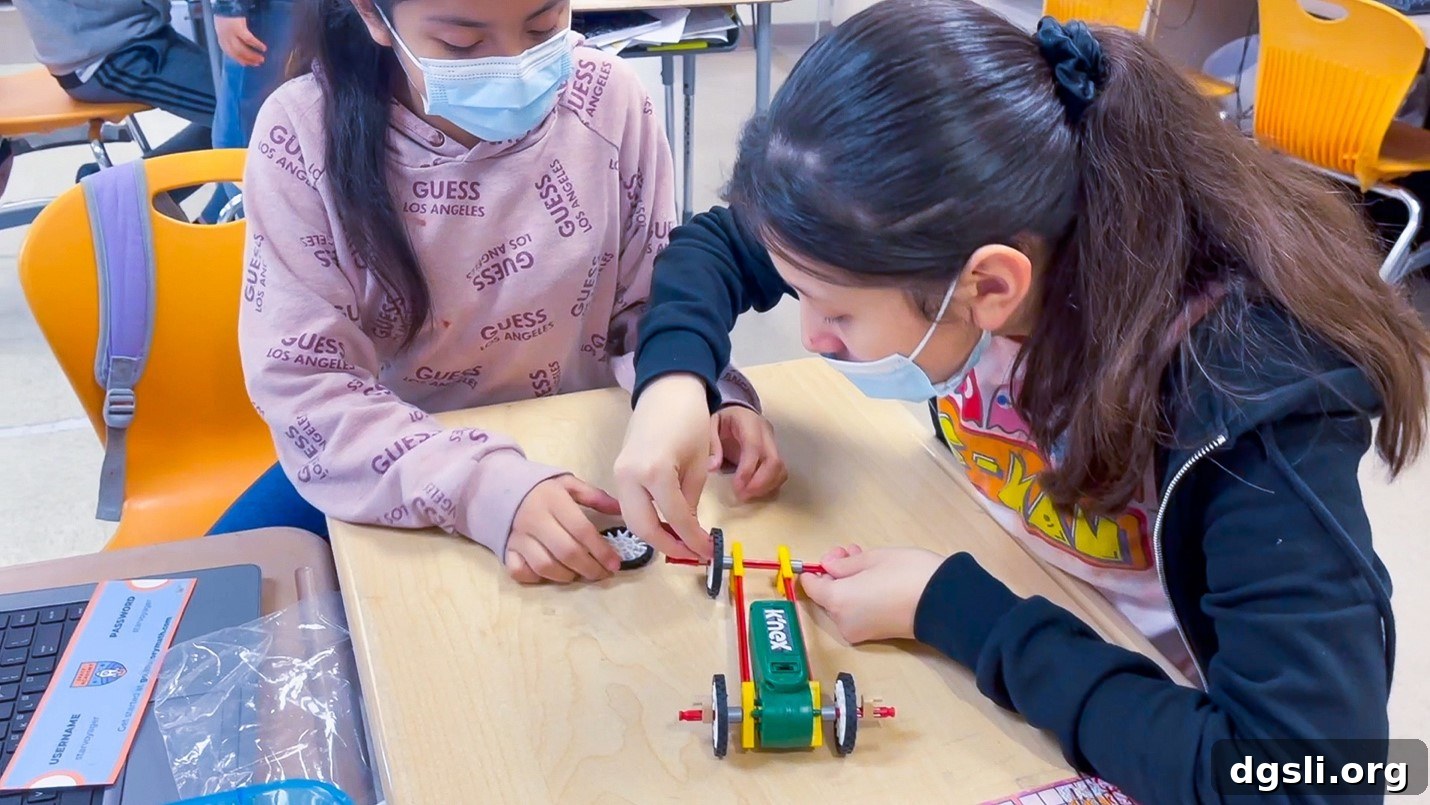
– Making and building. Young children often learn math through hands-on activity — counting plates while setting a play table, measuring when mixing sand. As students move into upper elementary grades, math often becomes overly abstract. Reintroducing tactile, construction-based experiences lets learners use spatial reasoning, measurement, and estimation in concrete projects.
– Inquiry-based investigations. Real questions from the school or community make math genuine. How many gallons of ice cream should the PTA buy for Spirit Night? What adjustments might a local basketball team make to win more games? Questions like these turn story problems into projects students care about and invest effort in solving.
The commonalities of play
Games, building projects, and investigations share qualities that make play a powerful engine for rigor:
– Play is physical. It brings hands, bodies, and minds together. Students build, measure, move, model, and sketch — activities that keep math grounded in the tangible world even when discussions are conceptual.
– Play is light. When math activities feel fun and exploratory rather than punitive, students are more willing to engage with complexity. Teachers set the tone by modeling curiosity and by treating challenges as puzzles to be enjoyed rather than problems to be feared.
– Play is exploratory. Rather than presenting a single “right” method, playful contexts encourage students to try multiple approaches, learn from mistakes, and test boundaries. That freedom builds deep understanding and the confidence to innovate.
The best part is that this kind of rigor is sustainable. When students use math to do things they care about, learning becomes meaningful and memorable. Played well, applied math lessons can transform the subject from a chore into a highlight of the school day.
About the author

Dr. Peter Meyerhoff is CEO of 10storymath, a Chicago-based organization that develops project-based math supplements for elementary schools. A learning scientist and curriculum designer, he also teaches courses in learning and organizational change at the School of Education & Social Policy, Northwestern University.