
By Grant Hosford
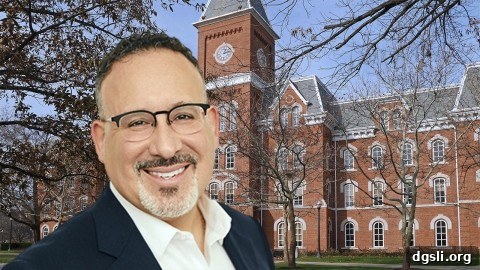
Miguel Cardona and the Future of American Public Education
The past year has been exceptionally challenging for families, businesses, schools, and teachers. With widespread school closures, educators across the country have had to rethink how learning happens, pivoting quickly to virtual classrooms and new ways to empower students. In many districts teachers and administrators rose to the challenge, but remote learning also exposed systemic problems: uneven teacher training, unreliable internet access, limited childcare for working families, and unclear testing protocols have all made learning harder for students and educators alike.
With a new administration in the White House, there is an opportunity to reimagine public education for the digital age. President Biden’s Secretary of Education pick, Dr. Miguel Cardona, brings a lifetime of hands-on experience—as a teacher, principal, and district administrator—and a record focused on improving and modernizing schools. Now confirmed, Dr. Cardona is the first Hispanic Secretary of Education in U.S. history and uniquely positioned to address the needs of a diverse student population. The key question is whether he can lead long-standing institutions toward fairer, more effective approaches centered on 21st-century skills.
What Students Need to Thrive in the 21st Century
Children entering kindergarten today will graduate high school in 2034. To prepare them for that future, schools must prioritize the skills and resources that matter most now:
- Reliable internet and device access: An estimated 18 million Americans—about 9 million children—lack consistent access to the internet and internet-enabled devices. In a digital-first learning environment, connectivity is essential for accessing assignments, school platforms, and peer collaboration.
- Problem-solving skills: With information readily available on mobile devices, success increasingly depends on the ability to find, evaluate, and apply information creatively to solve real problems.
- Collaboration: Team-based work develops executive function and socio-emotional skills while preparing students for modern workplaces that rely on group problem solving.
- Ownership of learning: Students who take responsibility for their education and embrace independent learning tend to advance faster and cultivate lifelong learning habits.
What Cardona Can Do: Priorities for Policy and Practice
During his Senate confirmation, Dr. Cardona emphasized equity and affordability—two priorities that must be addressed together. Without ensuring equal access to technology and foundational resources, millions of students risk entering adulthood without the skills needed in a software-driven economy. Specific steps that can make a meaningful difference include:
1. Universal Technology Access
Ensuring every rural town and low-income neighborhood has reliable Wi-Fi is essential. Where distributing individual devices is not yet feasible, community computer labs and neighborhood centers should be established so students can complete assignments, access learning platforms, and develop digital skills.
2. Early Childhood Investment
Decades of research demonstrate the long-term benefits of quality early childhood education. Children who enter kindergarten with strong foundational skills are far more likely to succeed. Efforts to close opportunity gaps must begin in pre-K, not after students fall behind.
3. College Affordability and Pathways
Higher education remains an important pathway to economic mobility, yet cost and debt place college out of reach for many families. Policies that reduce financial barriers and create clear pathways to postsecondary options should be a central part of an equity-focused agenda.
4. Diverse Educator Recruitment and Training
Schools should recruit and train more Black and Latino teachers and leaders and ensure they are present across districts and schools. Evidence shows students benefit academically and socially when they learn from educators who reflect their backgrounds. Increasing diversity in the educator workforce can strengthen outcomes for all students.
5. Curriculum and Instructional Modernization
Traditional systems that prioritize memorization and high-stakes data regurgitation fail to prepare students for modern challenges. Curriculum and instruction must shift toward problem-solving, information literacy, and independent learning—skills that encourage students to use technology responsibly, evaluate sources, and synthesize information to address real-world problems.
Conclusion
Secretary Cardona represents hope for a more equitable, effective, and forward-looking approach to public education. His background as an educator and administrator gives him insight into practical, classroom-level solutions. Still, transforming entrenched systems will require bold action: investments in technology and early education, commitments to teacher diversity, and a curriculum that prioritizes critical thinking over rote memorization. The stakes are high. If Cardona embraces modern, systemic change rather than temporary fixes, he can help position American students to succeed in a digital, collaborative, and rapidly changing world.
About the Author
Grant Hosford is the CEO and co-founder of codeSpark, an education-technology company and the maker of codeSpark Academy, a coding platform designed for young children.
About Secretary Miguel A. Cardona
Dr. Miguel A. Cardona was sworn in as the 12th U.S. Secretary of Education on March 2, 2021. He previously served as Connecticut’s Commissioner of Education, where he led efforts to reopen schools safely during the COVID-19 pandemic and prioritized equitable student access to technology. In Connecticut, Cardona’s leadership supported statewide initiatives including a FAFSA data dashboard, a special education data system, and expanded supports for students with disabilities and English learners. A lifelong resident of Meriden, Connecticut, Cardona began his career as an elementary teacher and later served as a principal and district administrator. He holds degrees from Central Connecticut State University and the University of Connecticut, including a doctorate in education.