

By Betsy Hill and Roger Stark
The term cognitive learning describes theories and approaches that emphasize understanding and mental processes rather than merely observable behaviors or trained skills. In this view, learning is about gaining declarative knowledge—facts and concepts you can state—rather than only procedural knowledge, which involves skills and actions acquired through practice, such as driving or playing an instrument.
- Relies on conscious understanding: Cognitive learning centers on awareness and comprehension. Declarative knowledge includes facts like historical dates, definitions, or events, while procedural knowledge covers skills learned by repetition and practice.
- Builds on prior knowledge: New information becomes meaningful when it connects to existing knowledge structures—often called schemata—that model how the world works. From a neuroscience perspective, knowledge is encoded in neural networks, and new information must link to those networks to be learned and retained.
- Depends on cognitive processes: Attention, sensory memory, working memory, and long-term memory are core cognitive systems through which declarative knowledge is acquired and stored. Developing and supporting these cognitive functions is central to effective learning.
- Involves guided learning experiences: The way teachers or learners structure activities influences how well information is processed, retained, and applied. Thoughtful instructional design improves the depth, durability, and transferability of learning.
Cognitive learning theory argues that by understanding how the brain processes information and applying research-based learning strategies, we can make learning more efficient and productive. Teachers and learners should understand both general cognitive skills and the individual learner’s profile to choose strategies that guide information through attention and memory into durable long-term storage.
Cognitive Skills and Their Role in Learning
Cognitive skills are the mental abilities used to take in, organize, store, retrieve, and use information. They include attention, visual and auditory processing, sensory integration, memory systems, executive functions, and reasoning. These foundational skills strongly influence academic performance and learning outcomes.
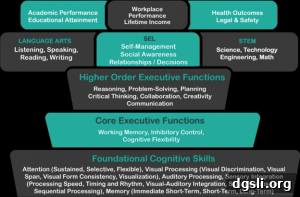
Each person has a unique cognitive profile of strengths and weaknesses, which helps explain why students differ so much in their ability to learn particular kinds of information. Effective cognitive learning requires assessing and understanding those individual differences so instruction and study strategies can be tailored appropriately.
Short, affordable cognitive assessments can produce profiles that highlight a learner’s reasoning abilities, types of memory strengths (visual versus verbal), and executive function capacities like working memory or processing speed. With this information, teachers and students can select strategies that align with strengths and address weaknesses, improving both performance and confidence.
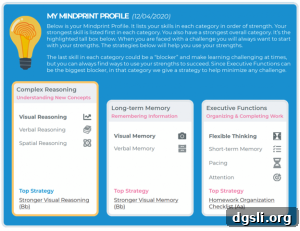
For example, a student with strong visual reasoning but weaker verbal memory will benefit from learning vocabulary through pictures, diagrams, and visual associations rather than relying solely on written definitions. A student with limited working memory or slower processing speed may need organizational strategies and stepwise routines to keep tasks manageable and maintain focus.
Improving Cognitive Skills
Beyond matching strategies to a learner’s profile, cognitive skills themselves can be strengthened. Training and practice targeting attention, memory, and other executive functions can increase a learner’s capacity to absorb and apply new information. Structured exercises, scaffolded tasks, and repeated, progressively challenging practice help build these underlying skills over time.
Designing Effective Learning Experiences
Because each brain constructs meaning from experience, instructors should design activities that promote deep engagement across diverse learners. Cognitive learning emphasizes interaction with material in ways that connect it to existing knowledge networks. Meaningful, elaborative processing—not rote repetition—is the most reliable route to durable declarative learning.
Elaborative learning activities encourage learners to interpret, relate, and apply information. Examples include:
- Reciprocal or peer teaching
- Using metaphors and analogies to relate new ideas to known concepts
- Mnemonics to support memory retrieval
- Physical or conceptual models that make abstract ideas concrete
- Storytelling and role-playing to add context and emotional relevance
- Problem-based and project-based learning that require active application
- Creating visuals, diagrams, and mind maps
- Simulations and hands-on activities
- Rhythm, rhyme, or lyrical techniques to aid recall
- Reflection and journaling to consolidate understanding
Variety is important: engaging multiple senses and modes of thinking helps new material link to a broader set of neural associations, increasing the likelihood of long-term retention and transfer.
Metacognition: Thinking About Learning
Metacognition—the ability to reflect on and manage one’s own thinking—is central to cognitive learning. It involves using prior knowledge to plan approaches to a task, monitoring progress, evaluating outcomes, and adjusting strategies as needed. Metacognitive skill helps learners select appropriate cognitive tools for the task at hand and supports independent, effective learning.
Developing metacognition means teaching learners to recognize their cognitive strengths and limits, to choose strategies that fit their profile and the task, and to self-regulate practice and study habits for continuous improvement.
About the Authors
Betsy Hill is President of BrainWare Learning Company, which applies neuroscience to expand learning capacity. An experienced educator, she has studied the links between neuroscience and education with leading experts. She has served as chair of the board of trustees at Chicago State University and teaches strategic thinking in an MBA program. She holds a Master of Arts in Teaching and an MBA.
Roger Stark is Co-founder and CEO of BrainWare Learning Company. He has led efforts to make cognitive literacy training and assessment accessible and effective, guiding the development of widely researched cognitive training tools delivered online.
Note: This article was originally published by The Learning Counsel, a research institute and news organization focused on the transition to digital curriculum in education.