
Young Entrepreneurs and College: Changing Paths
Michael Lisovetsky’s path into entrepreneurship began early. In sixth grade he and a friend launched HomeworkSwap, a site intended to make schoolwork less tedious rather than to generate profit. That project didn’t take off, and an early web-hosting business also failed, but those attempts paved the way for his later success with FazeWire. Michael sold FazeWire while still in middle school; the sum was modest, but the experience confirmed his ambition to build companies.
After high school Michael enrolled at New York University in the fall of 2011. He quickly realized that many traditional classes weren’t giving him the practical skills he wanted, though he valued the degree’s external credibility. While at NYU he began discussing ideas with classmates and contacts that would eventually become the foundation for his next startup.
From Swipe Mechanics to Real Estate: Building HomeSwipe
One casual conversation at the gym with Dean Soukeras, a former real estate broker, sparked the idea behind HomeSwipe. They combined the convenience of card-swipe interfaces with residential search to create an app that helps users discover apartments and houses by swiping—similar in feel to Tinder but focused on finding a home. With CTO Jason Marmon joining the team, the founders built a minimum viable product, tested market traction, and then committed to the startup full time when early signals were promising.
Discovering Draper University
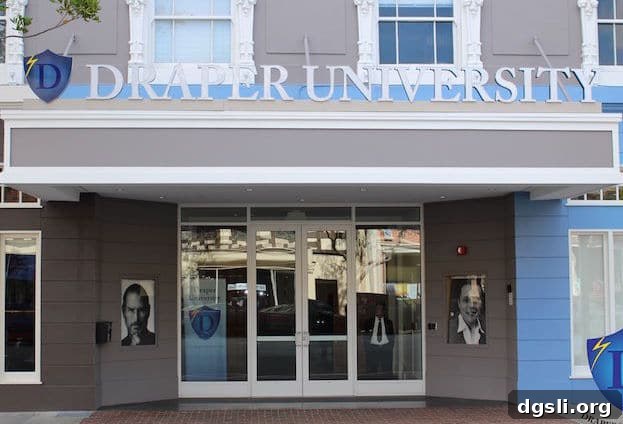
Michael learned about Draper University by chance at a wearable tech conference where he met Draper alumni James Kernan. Drawn to serendipity and hands-on learning, he placed NYU on hold to attend Draper University’s seven-week program in the summer of 2014. He later reflected that Draper accelerated his growth in ways traditional coursework had not.
“At best, NYU spurred a path of self-education, in which I understood the fundamentals of finance from greats such as Benjamin Graham, Warren Buffett, and Charlie Munger,” Michael says. “The $150k+ price tag on my education could’ve been funneled a lot more effectively towards practical learning, and Draper U is an excellent example of that. I learned more about myself and the world in the seven weeks at Draper U than the four years of university I drudged through.”
Draper’s immersive environment pushed Michael to experiment rapidly: from creative sales stunts to team-building exercises, survival weekends that mirrored startup challenges, and a final pitch to Silicon Valley investors and technology leaders. HomeSwipe won an angel investment from Tim Draper, and the startup advanced quickly toward product/market fit. The team prepared to expand to Chicago and shift toward revenue generation.
Michael describes the experience as a whirlwind: pitching at the VCIC Global Finals, winning the Startup of the Year award, and competing against entrepreneurs with far more experience. At 22, he already has hands-on experience, early exits, investor backing, and a clearer sense of how to build and scale a startup.
Draper University and Opportunities for Student Entrepreneurs
Founded by venture capitalist Tim Draper, Draper University focuses on inspiring ambitious founders and accelerating startup-ready ideas. Since its launch in 2012 the program has produced meaningful outcomes: of 305 alumni, 185 have launched companies and collectively raised $15,446,500 in venture financing. The program attracts funding and mentorship from prominent investors and offers participants practical exposure to Silicon Valley resources.
Draper’s seven-week, live-in curriculum emphasizes real-world acceleration: students take an idea from concept to pitch, practice customer development, and receive direct feedback from experienced founders and VCs. The program concludes with a Demo Day where teams present to a panel of technology luminaries; some receive investment or invitations to incubate in nearby Hero City, a startup ecosystem with coworking space and VC offices located across from Draper’s main building.
Admissions are based primarily on passion, creativity, and a desire to make an impact—applicants don’t need a fully formed idea or team to apply. The program accepts entrepreneurs aged 18–28 and draws students from more than 30 countries, including Taiwan, China, India, Mexico, Chile, Estonia, Nepal, South Africa, and Iraq.
Draper also brings prominent founders and experts to teach and mentor. Past presenters and guests have included well-known entrepreneurs and industry leaders such as Bill Draper, Elon Musk, Tony Hsieh, Tina Seelig, Steve Jurvetson, Michelle Phan, and Leah Busque, who share practical lessons on building startups and scaling teams.
Programs like Draper University illustrate an alternative pathway for young entrepreneurs who want hands-on experience, mentorship, and fast feedback loops. For founders balancing formal education and the desire to launch, immersive accelerators can provide an intensive, practical complement to traditional degrees.
What do you think are the key characteristics of a successful entrepreneur?
Who are your top 10 favorite entrepreneurs and why?