
By Joe Parlier, Ed.D.
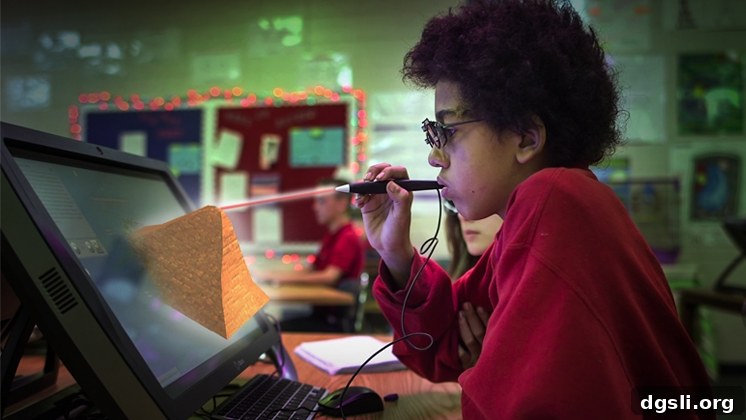
Augmented reality (AR) and virtual reality (VR) are transforming K-12 education, especially in STEM and Career and Technical Education (CTE). Immersive learning technologies let students explore environments and hands‑on processes that are impractical or impossible in a traditional classroom: dissecting human and animal anatomy, observing airflow through automotive engines, practicing trades like welding, or visiting distant communities and cultures. These technologies not only teach subject matter, they also build valuable soft skills—critical thinking, teamwork, communication, resilience, and empathy—preparing students for higher education and future careers.
AR and VR experiences give teachers tools to present complex systems and abstract ideas in concrete, manipulable ways. Students can interact with simulations, test hypotheses, and immediately see the consequences of their choices. This kind of experiential learning encourages curiosity and deeper conceptual understanding while offering a low‑risk environment to practice and improve.
Persevering Through Failure
Failure is an essential element of learning, yet many students are discouraged from taking risks or making mistakes. Immersive simulations reframe failure as feedback. When a student breaks a virtual component, overheats an engine, or alters a surgical procedure incorrectly, the result is a safe, reversible learning moment rather than an expensive or dangerous real‑world consequence. Immediate feedback lets learners diagnose errors, adjust strategies, and try again.
This iterative process builds grit and perseverance. In VR and AR settings, learners can repeat procedures, manipulate variables, and observe how changes affect outcomes. Teachers and peers can provide targeted feedback within the experience, reinforcing metacognitive skills—how to reflect on mistakes and improve. By cultivating a growth mindset through repeated, scaffolded practice, students gain the resilience needed to tackle future academic and career challenges.
Overcoming Anxiety and Building Confidence
For students who experience anxiety or who are on the autism spectrum, unfamiliar social interactions and stressors can be overwhelming. Virtual environments provide structured, controllable simulations where learners can practice coping strategies and rehearse social behaviors. Applications exist that help users identify triggers, practice emotional regulation, and learn to interpret social cues like eye contact, facial expressions, and body language.
Simulated rehearsals of real‑world tasks—job interviews, classroom presentations, or public speaking—allow students to build competence and confidence through repeated exposure without real‑world consequences. When learners have practiced scenarios multiple times in a virtual setting, they are more likely to transfer those skills to real life with reduced anxiety and improved performance. This practical preparation supports smoother transitions into postsecondary education and the workplace.
Empathy and Cultural Understanding
Immersive technology can also deepen empathy and cultural awareness. The old saying, “Before you judge a person, walk a mile in their shoes,” describes what AR and VR enable in the classroom. Students can experience different cultural contexts, walk through historical moments, or assume virtual personas that reveal how social, economic, and political forces shape people’s lives. These first‑person perspectives encourage students to consider not just events but motivations and consequences, fostering compassion and ethical reflection.
Such experiences also sharpen critical thinking. For example, students can simulate human impacts on the environment—altering land use, emissions, or conservation choices—and then observe cascading ecological effects like coral reef decline, glacial retreat, or coastal erosion. Manipulating cause and effect in a virtual ecosystem helps learners analyze complex systems and evaluate the consequences of different actions in ways that textbooks alone cannot achieve.
Soft skills—critical thinking, communication, teamwork, and adaptability—are often cited as gaps among new college students and entry‑level employees. When educators intentionally integrate AR and VR into curriculum design, they can address both academic standards and social‑emotional learning outcomes. Immersive lessons teach content while simultaneously developing the interpersonal and intrapersonal skills students need to thrive.
Even within discipline‑specific lessons, the broader benefits of immersive learning extend beyond technical knowledge. VR and AR encourage experimentation, collaborative problem‑solving, and reflective practice, producing confident, creative thinkers who are better prepared for the complexities of modern careers.
About the Author
After a long career in public education—as a science and math teacher, elementary and high school principal, assistant superintendent, and associate state superintendent—Dr. Joe Parlier continued his work in the private sector supporting schools with reform initiatives and emerging technology. His research focuses on improving student learning and school performance through comprehensive attention to curriculum, assessment, instruction, professional development, community engagement, leadership, school culture, and organizational effectiveness. Dr. Parlier currently serves as the Sr. Director of Education at zSpace and holds degrees from Mercer University, the University of Georgia, and the University of Florida.
This article was originally published by The Learning Counsel, a research institute and news media organization focused on the transition to digital curriculum in education.