
By LeiLani Cauthen
Schools, districts and the companies that serve them face uncertainty. Two opposing views dominate discussions about what will happen next: one expects a return to normal in the fall followed by broad budget cuts in about eighteen months (tempered somewhat by the CARES Act stimulus and additional state funding), while the other believes the old normal is gone for good. Both perspectives raise valid questions about the future of K–12 education.
To make sense of the future, it helps to first examine the trends that were already in motion before national quarantines began to impact the economy. Once those pre-existing patterns are clear, it becomes easier to layer on three critical developments that followed the quarantines: 1) the rapid adoption of digital learning by parents, students and schools; 2) the economic fallout and its effects on public budgets; and 3) the likely responses from districts that default to traditional, cost-cutting methods such as layoffs and consolidation instead of embracing newer hybrid or “uberized” models of education. The latter approaches could reduce long-term costs and reshape the use of physical space, but they are still in an early stage of understanding and adoption.
- Some expect operations to normalize in the fall and then for widespread K–12 budget reductions to begin in about eighteen months, offset in part by roughly $13.5 billion from the CARES Act and additional funds allocated to governors and early childhood programs.
- Others believe that the pandemic has permanently altered the educational landscape and that a return to the previous status quo is unlikely.
Early Predictions
Relaxed restrictions and fast-tracked alternatives
Policymakers are likely to relax certain regulations—such as rigid seat-time requirements—and may waive other structural obligations that have constrained district budgeting. Behind the scenes, states may adopt measures that shift much of the work and cost of educating students to non-traditional or non-public providers, giving families more apparent choice while preserving payments on long-term obligations like pensions and debt. Public messaging may mask these shifts to avoid political backlash, but the result will be fewer traditional operating costs for districts.
Alarmist headlines about closures and layoffs
Media coverage can be expected to focus heavily on school closures and teacher layoffs. While some school closures will be portrayed as sudden, many are the culmination of longer demographic trends and fiscal pressures. Some districts already identified as inefficient or underutilized were likely headed toward consolidation before the pandemic. Still, the coming months and years may reveal much larger structural disruptions, with a potential two-year period that could reshape public education at scale.
At the same time, new schools will still open in rapidly growing regions, producing overcrowding in certain pockets even as other districts shrink. Large capital projects will face intense scrutiny during economic recovery periods, given competing demands on public funds.
Increased conflict
Expect intensified disputes between traditional labor groups and the expanding universe of online, charter and alternative providers as parents increasingly exercise new schooling choices.
Accelerated layoffs
Layoffs were already rising in the years prior to the pandemic. While recent events accelerated the timeline, many districts entered the emergency period with thin staffing margins. The result will likely be more layoffs over time, although these will often reflect long-term demographic and financial shifts rather than a sudden single cause.
The Trajectory
Layoff activity increased substantially beginning in 2017 and continued through 2019. By the end of 2019 and into early 2020, numerous districts announced or contemplated significant staff reductions. Examples reported in the months before quarantines include large-scale layoff plans, budget shortfalls and board-approved notices in multiple states and districts, reflecting a national pattern of fiscal strain.
Why were so many districts facing cuts even before the health emergency? While the broader economy experienced growth and increased tax revenues in recent years, those gains did not always translate into sustained support for education. When viewed at scale, these budgetary constraints and demographic shifts suggested systemic stress well before the pandemic added new pressures.
Declining school-age populations
Many regions have seen shrinking child populations and declining student enrollments. For example, some large urban districts forecast significant declines in enrollment over the coming decade despite overall population growth in their counties. Demographic experts have pointed to lower birth rates, delayed family formation and migration patterns that have altered where families live and how many children attend traditional public schools. Across hundreds of metropolitan areas, many reported losses in their child populations, forcing districts to consider long-term adjustments to capacity and staffing.
Parental choice driven by concern over achievement
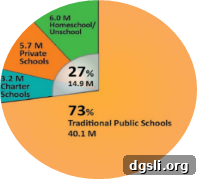
Academic performance has not shown consistent long-term improvement nationwide, and dissatisfaction with results has contributed to growth in homeschooling, private schools and charter schools. Homeschooling and unschooling movements have expanded rapidly in recent years, and many families that tried home-based learning during quarantine may continue to explore alternative models. Because some states do not require formal registration of home-based learners, official counts likely understate the true scale of the trend.
Spending versus outcomes
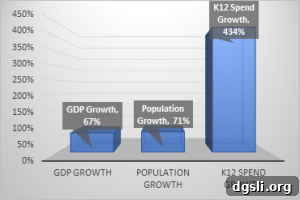
Over three decades, per-student spending grew faster than either population or measurable academic outcomes. That disconnect fuels pressure to rethink how funds are allocated and to demand greater accountability for results. These funding-versus-performance dynamics will be a driving factor in future reforms.
Digital-first acceleration
The pandemic accelerated a long-running shift toward digital resources in education. Schools and families adopted online tools, platforms and devices at unprecedented speed. This digital transition favors providers that deliver high-quality remote instruction and scalable learning technologies. The rush to secure devices and software revealed supply constraints and also highlighted how quickly districts and families embraced new delivery models when circumstances demanded it.
Placeless work and changing communities
Remote work trends in the private sector demonstrated that many jobs can function outside traditional office settings. At the same time, migration patterns have shifted: some cities are losing young adult populations while suburbs and smaller communities grow. These shifts affect where children live and which districts see enrollment gains or losses. Families increasingly seek communities with lower costs, safer neighborhoods and good schools, and the redistribution of population will continue to influence district planning and resource allocation.
Additional factors—such as evolving curriculum priorities, renewed attention to career and technical education, STEM emphasis, testing debates and teacher supply—will also shape what comes next. Those topics will be discussed in more depth in follow-up pieces as the situation develops.
Stay tuned for ongoing analysis as conditions continue to change.
About the author
LeiLani Cauthen is an author, speaker, research analyst and futurist. As CEO and Publisher of The Learning Counsel, a K–12 research and news organization, she organizes leadership training events across the United States and hosts virtual seminars. She is also the founder of Knowstory, a social platform focused on education, and serves as GrandMaster of the EduJedi Leadership Society.