
By Lane Jabaay
Editor’s Note: This is part two of a series about how findings and solutions from Applied Educational Neuroscience are necessary in improving our approach to the social and emotional development of children.
Applied Educational Neuroscience (AEN) examines the brain processes that underlie learning and behavior. While the research behind AEN can be detailed and technical, educators and parents don’t need to master the science to benefit from it. Just as most people use basic arithmetic rather than advanced calculus in daily life, a practical grasp of brain structure, brain states, triggers, and regulation strategies provides powerful tools for supporting children’s social, emotional, and academic growth.
The role of educators in the AEN process
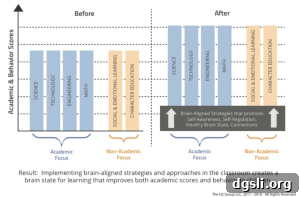
Educators play a central role in helping students move into brain states that support learning. When children arrive at school or become upset during the day, they often shift out of the prefrontal cortex—the area of the brain associated with reasoning, planning, and learning—and into the limbic system, which governs emotion and survival responses. Learning is most effective when children are operating from their prefrontal cortex, so it is essential that teachers recognize signs of dysregulation and use AEN-informed strategies to help students return to a regulated state.
Modeling co-regulation and self-regulation techniques during emotional moments is one of the most effective teaching methods. When a calm, regulated adult uses simple practices—breathwork, guided movement, or paced speech—children are more likely to shift out of fight/flight/freeze reactions and re-engage their capacity to think and learn. These interventions are practical, immediate, and can be embedded into everyday classroom routines.
As Dr. Bruce Perry, founder of the ChildTrauma Academy, has noted: “Self regulation, or lack thereof, is the major factor contributing to today’s achievement gap.” In short, students must be regulated before they can fully engage in learning, and improving regulation reduces barriers to achievement.
So when would a teacher use AEN practices in their classrooms?
When behavior issues arise, the instinctive answer is often to teach social-emotional content directly—lessons on self-regulation, empathy, or conflict resolution. While SEL instruction is important, many behavior outbursts require an immediate shift in physiology before learning can occur. That is where co-regulation—an adult-guided regulation practice—becomes crucial. Breathing exercises, movement breaks, or brief grounding activities can restore students to a learning-ready brain state so they can later benefit from SEL lessons.
It’s a paradox: children must be regulated before they can learn self-regulation, compassion, leadership, or even academic skills like math and reading. Therefore, a simple, guiding objective for educators is: regulate first, then educate. And because AEN is about practices—not just knowledge—regular rehearsal of breathwork, movement, and co-regulation strategies is essential. Knowing that breathwork helps is not the same as integrating the practice into daily classroom routines.
Do all students need to understand AEN?
Yes. All students benefit from AEN-informed environments. Children with high ACEs (Adverse Childhood Experiences) are more likely to enter school already dysregulated; trauma-informed approaches and compassionate school models have increased awareness of how quickly small triggers—a glance, smell, or word—can push a child into survival mode. But dysregulation affects children from every background: social media, relationship issues, losses, and pandemic-related isolation all raise stress and anxiety levels. Readily accessible strategies—breathwork, movement, brief sensory breaks—give students tools to self-regulate or to be supported by a calm adult when needed.
The role of schools in helping kids develop emotional and social intelligence
Social and emotional learning is not just a cognitive subject to be memorized; it must be experienced. Knowing the definition of self-confidence does not make a child confident, and identifying an “upstander” on a worksheet does not ensure courageous action during a bullying incident. AEN and SEL require experiential practice—safe, structured opportunities to rehearse new responses until they become habits.
Schools should intentionally build time and space for this practice. Project-style labs focused on SEL and AEN, enrichment-based afterschool programs, and dedicated classroom routines provide the repeated practice necessary to rewire neural pathways. Research suggests forming new habits can take weeks; repeated role play, reflection, and guided practice help transform impulsive reactions—hitting, biting, name-calling—into deliberate alternatives like breathing, walking away, or using a coping strategy. Neuroplasticity means that brains at any age can change with consistent practice.
What does it mean to empower students?
Empowerment begins with trust: trusting students, believing in their potential, and helping them build trust in themselves. Core attributes of empowerment—self-confidence, agency, and resilient decision-making—must be cultivated deliberately and compassionately.
How can we empower our students?
There is no single path to empowerment, because children come from diverse backgrounds. Still, schools can create environments that encourage age-appropriate risks and challenges in low-stakes settings. Offer opportunities for students to exercise judgement, take leadership in small projects, and receive feedback that builds confidence rather than shame. Help students to see both successes and setbacks as valuable learning experiences that contribute to growth.
What does it mean to Rise Above?
To “Rise Above” is to recognize that circumstances do not have to define or limit a person. It means using challenges as motivation to change one’s trajectory—transforming obstacles into catalysts for personal growth and for contributing positively to others.
Examples of children Rising Above
Kimmie Weeks.
Kimmie Weeks is an internationally recognized humanitarian who has worked to alleviate poverty and human suffering for decades. Born in Liberia in 1981, he survived extreme hardship as a child, including displacement and illness in a refugee camp. According to his own account, after a near-death experience he vowed to dedicate his life to improving conditions for children—an example of using traumatic circumstances as impetus for lifelong service.
Dennis Cole.
Dennis Cole grew up caring for two brothers with muscular dystrophy while his single mother struggled with substance use. As a child he took on overwhelming responsibilities, and later shared his experiences through personal storytelling and music. His work highlights how vulnerability and honest reflection can become strengths and sources of leadership.
How can children use their circumstances to become empowered?
Self-awareness and self-management—two core competencies defined by CASEL—are foundational to empowerment, especially for students from disadvantaged environments. Children often sense when something feels wrong even if they lack the vocabulary to describe it. Validating their feelings is the first step toward helping them develop an internal compass they can trust. This validation, delivered in age-appropriate ways, should neither frighten nor minimize their experience; instead it should offer hope and practical tools—social, emotional, and motivational—to navigate their future.
Research consistently links emotional intelligence with academic success: students with stronger social-emotional skills perform better in school and are more likely to thrive in work and community life. Conversely, signs of emotional struggle—frequent outbursts, withdrawal, persistent dysregulation, or difficulty connecting with adults and peers—are red flags that warrant timely intervention. Without support, these children face increased risk of long-term academic and social challenges.
About the author
Lane JaBaay is the founder and CEO of The H2 Group, an EdTech company focused on the social and emotional development of children. The H2 Group creates engaging curricula that use storytelling, gameplay, and animation to teach SEL and promote pro-social action. Lane is certified in Applied Educational Neuroscience from Butler University. Her curriculum, SHAKTI Warriors, has been implemented in large school districts across the country, including Los Angeles, Chicago, the greater DC area, and Indianapolis, where she lives.
This article was originally published by The Learning Counsel, a research institute and news media hub focused on the shift in education toward digital curriculum.