

Written by Steve Klinsky
Millennials and younger generations are streaming entertainment and sharing their lives online in unprecedented ways. Yet despite the Internet’s power to spread information, the idea of widely available, high-quality, tuition-free college courses that count for traditional college credit is still in its infancy. Making such courses broadly available could help narrow the growing gap between families who can afford college and those who cannot.
A Moral Imperative
A college education remains a decisive factor in a person’s economic prospects, but it has become increasingly expensive. The average college debt today hovers around $35,000, and individual accredited college courses often cost $1,000 to $2,000 or more. These costs put higher education out of reach for many families and discourage students from lower- and middle-income backgrounds from pursuing degrees.
Scholarships and grants have not solved the problem: fewer than half of low-income high school graduates go on to college, and only a small share of degrees are awarded to students from the lowest-income households. At the same time, millions of students are enrolling in online courses, yet many of those courses either carry similar tuition fees to campus offerings or, if they are free, do not translate into credits toward a traditional degree.
If we are serious about widening access to higher education, we must develop tuition-free online courses that maintain high academic standards and provide recognized college credits.
Modern States Course Providers
A Simple and Cost-Effective Solution
The most practical solution is to offer tuition-free online courses taught by respected instructors, paired with free textbooks and materials, and explicitly designed to earn traditional college credit. For governments and philanthropic organizations, supporting such programs is a highly affordable way to expand access to higher education.
I founded Modern States, a non-profit that provides free online college-level courses and textbooks that prepare motivated learners to earn credit. The “Freshman Year For Free” initiative delivers introductory courses—such as chemistry, biology, introductory psychology, and U.S. history—without cost to students. Our goal is to make more than 40 freshman-level courses available, all tuition-free and accompanied by free materials.
Online courses can reach thousands or even millions of learners, and they allow talented instructors from leading institutions to teach broad audiences. For example, a former law school dean teaches our introductory business law course. By leveraging experienced faculty and high-quality materials, online offerings can match the rigor of campus courses.
Modern States designs courses to prepare students for the College Level Examination Program (CLEP) exams administered by the College Board. CLEP exams are widely available, well-established assessments, and passing scores are accepted by more than 2,000 colleges as equivalent to transfer credits. This means a motivated student can complete the equivalent of a full freshman year with no tuition costs by passing CLEP exams and then enter a four-year university with fewer required semesters to finish a degree.
The objective is not to replace the traditional residential college experience. Instead, free, credit-bearing online courses offer an affordable “on-ramp” to higher education for students who need one. Modern States collaborates with established institutions and online platforms to ensure credits transfer and that students have clear pathways to degree completion.
Cost considerations make this approach especially attractive. Creating a high-quality online course typically requires an initial investment in the range of $50,000 to $100,000, after which the course can be offered to unlimited learners at no additional tuition cost. A complete freshman curriculum can be developed for a few million dollars—modest compared to traditional higher-education spending—and it can dramatically increase access for low- and middle-income students.
Early results demonstrate this model’s potential. Students who complete Modern States courses and pass CLEP exams have received credits at many major colleges and universities, reducing their overall time and cost to a degree. Other institutions and innovators are exploring complementary approaches, such as low-cost credit-bearing online programs and university-affiliated digital campuses, which together could expand options for learners nationwide.
Providing free, high-quality, credit-bearing college courses to everyone who wants them is both feasible and affordable. With coordinated support from government, philanthropy, and higher-education institutions, we can broaden access and help more students graduate with the skills and credentials they need to succeed. What remains is the collective will to make that change.
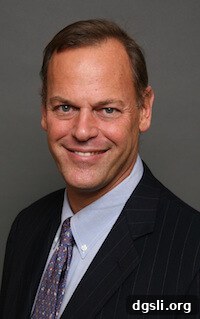
Steve Klinsky
Steve Klinsky is the founder of Modern States, a non-profit dedicated to making high-quality college education accessible and tuition-free for motivated learners. He is also the founder and CEO of New Mountain Capital and chairs the advisory board for Harvard’s Program on Education Policy and Governance.
Sources cited in the background research for this article include statistics on average student debt, college enrollment rates for low-income students, the share of degrees awarded to low-income graduates, trends in online course enrollment, and typical costs for accredited online courses. These sources informed the discussion of cost, access, and the potential impact of tuition-free, credit-bearing online courses.