
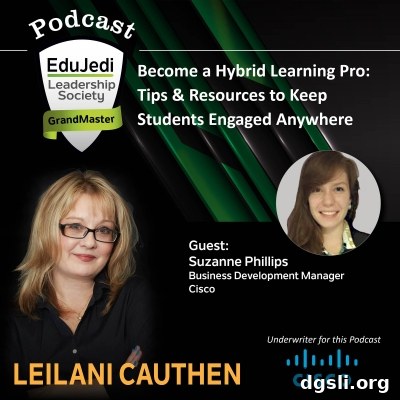
Making Virtual Classrooms Human: Tips from Suzanne Phillips on the EduJedi Report
When classrooms shifted from shared physical spaces to remote settings, educators and students rapidly adopted video conferencing as the primary means of teaching and learning. Early on, many teachers reported screen fatigue, waning attention, and general disengagement. In this episode of the EduJedi Report, host LeiLani Cauthen speaks with Suzanne Phillips of Cisco Webex about practical, proven strategies that help virtual instruction feel more human, more engaging, and more effective.
Suzanne Phillips has spent considerable time learning from outstanding educators around the world and turning those lessons into accessible, classroom-ready resources. Her approach is grounded in the belief that virtual teaching does not have to be a cold, transactional experience. With thoughtful workflows, small design choices, and a few classroom-tested tricks, teachers can create lively, inclusive virtual learning environments that encourage student participation and reduce digital fatigue.
The interview explores concrete techniques and mindsets teachers can adopt right away. Instead of relying on long uninterrupted lectures, Suzanne and LeiLani discuss breaking lessons into bite-sized segments, using purposeful visuals, and planning interactive pauses where students reflect, collaborate, or respond. They emphasize the value of predictable routines and clear transitions—elements that reduce cognitive load and help students feel secure in the online classroom.
Another central theme is accessibility and equity in hybrid and remote learning. Suzanne stresses designing lessons that account for different home environments, device capabilities, and connectivity levels. Simple alternatives—like offering text summaries, asynchronous options, or low-bandwidth participation modes—can significantly widen access and keep more students engaged.
Teacher presence also plays a major role. Suzanne describes how small human touches—camera framing that centers the teacher, brief personal anecdotes, varied speaking pace, and intentional eye contact into the camera—can strengthen emotional connection. These techniques help students sense a teacher’s attentiveness and investment, which supports motivation and classroom community even when participants are physically apart.
Because screen fatigue remains a widespread concern, the conversation includes practical strategies to reduce its impact. Recommendations include shorter whole-group sessions, opportunities for offline or hands-on work between synchronous meetings, and frequent micro-breaks. Using polls, short breakout discussions, and collaborative documents keeps students interacting rather than passively watching, which also helps combat disengagement.
Suzanne and LeiLani also highlight the importance of professional learning communities for teachers. Sharing short videos, rehearsal sessions, and quick peer feedback helps educators refine virtual routines and spread what works. It’s no surprise that educator-focused video conferencing tips have resonated widely—collectively they’ve amassed over one million views since the pandemic began—underscoring the demand for practical, classroom-tested guidance.
Top Resources for Hybrid and Remote Teaching
Below are the key resources discussed in the episode. These pages offer teacher-centered guidance, training, and community support for hybrid learning and virtual classroom design:
https://www.webex.com/webexremoteedu.html
https://community.cisco.com/t5/webex-for-education/bd-p/disc-education
https://help.webex.com/landing/onlineclasses/upcomingClass/Education
Why These Practices Matter
Hybrid and virtual teaching demand more than technology alone; they require intentional instructional design, human connection, and ongoing reflection. When teachers apply simple workflows—clear opening routines, consistent engagement strategies, and flexible assessment options—they build resilient learning experiences that work across settings. By prioritizing inclusivity and interactivity, educators can reduce screen fatigue, boost student engagement, and create environments where learning thrives.
For teachers seeking quick, actionable ideas, Suzanne’s resources and the community spaces she helps curate make it easier to adopt techniques proven by peers. Whether you’re new to video-based instruction or refining a mature hybrid practice, small, purposeful changes can have big results for student learning and well-being.
Click Here to Listen to the Podcast