
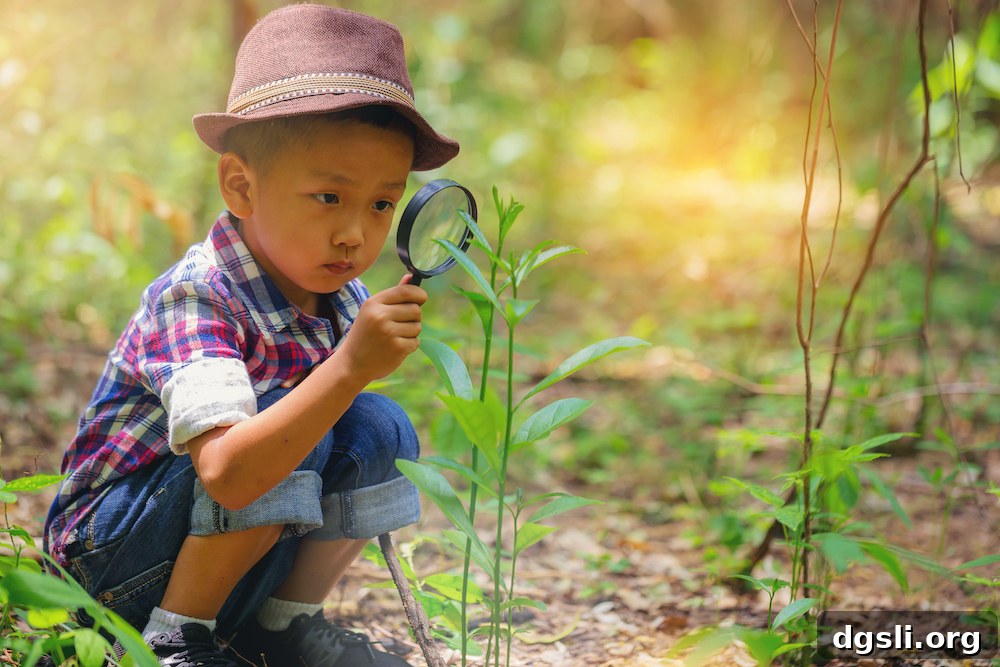
Did you know?
According to the IDRA, roughly 1 million emergent bilingual students are currently enrolled in Texas public schools. Texas educates the largest share of emergent bilingual students in the United States: about 28% of all students from Pre-K through third grade are emergent bilinguals.
Teaching English alongside academic content is a complex challenge for ESL, bilingual, and multilingual teachers. Depending on district structures and available resources, schools use varied models to support language development while delivering grade-level content.
Some classrooms use a push-in model where mainstream teachers collaborate with ESL or English support staff. In other settings, students participate in regular academic classes when their English proficiency allows. Occasionally, students move between ESL or bilingual classes and general education classes depending on the amount of academic language they have acquired.
Other programs take a whole-child approach: ESL or bilingual teachers address both social and academic language while teaching content. In these cases, students often learn grade-level science, math, and literacy through their language-support classes until they are ready to transition fully into mainstream instruction.
One of the most engaging academic fields to teach English is Science.
Why Science?
Science sparks curiosity and offers concrete, observable phenomena that help emergent bilingual learners connect vocabulary and concepts to real life. Because scientific ideas are rooted in observable experiences, students can apply what they learn in the classroom to their everyday world. This natural connection makes science an especially effective subject for simultaneous language and content instruction.
Integrating an academic subject while teaching English helps teachers make efficient use of classroom time and accelerates language development within meaningful contexts.
A classroom that emphasizes inquiry—critical thinking, problem-solving, discussion, experiments, hands-on activities, and collaboration—creates rich opportunities for emergent bilingual students to practice English in authentic ways.
Seven practical tips for teaching English and Science
Know students’ background knowledge: Before planning lessons, gather information about students’ language abilities, academic levels, native languages, cultures, and lived experiences. Understanding their backgrounds helps you design science lessons that are relevant and accessible, increasing student engagement and ownership of learning.
Use formal and informal assessments to determine what students already know and where scaffolding is needed. When lessons connect to students’ familiar contexts, they are more likely to participate and retain new vocabulary and concepts.
When you connect students’ language and culture to the content, the learning sticks—and students feel seen.
Encourage communication: Emergent bilinguals are often at different points in their language development and may experience a silent period before they speak confidently. Create a low-risk environment that supports gradual language production: use partner talk, small-group discussions, and structured speaking routines so students can practice without fear of judgment.
Assess speaking and listening in both informal and formal ways, and balance opportunities for quiet processing with collaborative tasks. A classroom that values risk-taking and patience will help students move from understanding to active use of English.
Use science-based resources and visual supports: Display vocabulary word walls with images, provide labeled diagrams, and incorporate photographs and drawings so students can access meaning without relying solely on English text. Visuals support comprehension across proficiency levels and reinforce vocabulary through repeated exposure.
Choose hands-on materials, age-appropriate readers, short articles, videos, and simulations that align with standards and offer scaffolds. Ask students to draw and label diagrams, pair visuals with key terms, and use leveled texts to build reading fluency and domain-specific vocabulary.
Offer science experiments: Experiments give students ownership of investigations and create natural opportunities for language use—asking questions, making predictions, recording observations, and presenting findings. Structure experiments to promote critical thinking and collaborative discussion, and scaffold tasks so all students can participate meaningfully.
Simple, guided experiments—like building a small model volcano or observing plant growth—can introduce key scientific concepts while reinforcing English vocabulary and academic language functions such as describing, comparing, and explaining.
Keep videos and activities brief and focused to hold students’ attention and prompt discussion after viewing.
Use short, engaging science videos: Well-chosen videos help emergent bilingual learners develop listening comprehension and build background knowledge. Select clips that are concise, visually rich, and tied to follow-up discussion prompts or quick writing tasks to encourage active engagement.
Pick topics students can relate to at home and in their community to strengthen the connection between classroom learning and everyday experience.
According to Total Care Therapy, the average attention span in 2023 is about 8.25 seconds. Keep learning segments short and engaging to maintain focus.
Integrate writing regularly: Writing is often the most challenging skill on language proficiency exams, so build daily opportunities for written expression. Use science journals, quick exit tickets, captions for diagrams, or paired writing tasks to make writing routine and purposeful.
Choose science topics that spark curiosity—students write more when they are interested. Provide models, sentence frames, and collaborative drafting so all learners can produce meaningful written work and develop academic language across content areas.
Bring science into the real world: Field trips, outdoor lessons, and virtual visits to museums, parks, and zoos help students practice language skills in authentic contexts. When real-world experiences aren’t possible, virtual simulations and interactive online experiences can still expand background knowledge and provide rich prompts for speaking and writing.
Authentic experiences deepen understanding and motivation, making science both memorable and meaningful for emergent bilingual learners.
Teaching science in ESL, bilingual, and multilingual classrooms offers a powerful way to develop English proficiency while delivering grade-level content. By combining background knowledge, visual supports, hands-on experiments, short videos, frequent writing, and real-world experiences, educators can create classroom environments where emergent bilingual students engage deeply and achieve academic success.
My name is Robyn D. Shulman. I am a writer, editor, and educator, and I serve as Growth Marketing Manager for Summit K12, where we support teachers and learners in ESL, bilingual, and dual language education. I have been recognized as a LinkedIn Top Voice in education and have contributed to publications on education and entrepreneurship.
If you found these strategies useful, consider following my professional profile on LinkedIn and connecting with our organization to discover more resources, articles, and practical ideas for supporting emergent bilingual students.