
By Welda Simousek
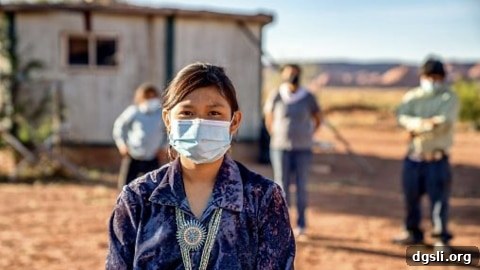
Many households on the Navajo Nation still lack basic utilities like running water and electricity—about 37 percent of residents face these conditions. These longstanding infrastructure gaps made the COVID-19 pandemic particularly devastating for the Navajo people. The community adopted the term Dikos Ntsaagii, meaning “big cough,” to describe the virus. By October 2022, the Navajo Nation recorded 74,604 COVID-19 cases and roughly 1,919 confirmed deaths. Beyond the immediate health toll, the pandemic exposed and amplified a number of deep educational and social challenges across the reservation.
The Navajo Nation spans the Four Corners region of the U.S. Southwest—Arizona, New Mexico, Utah, and portions touching Colorado—with the majority of tribal lands in Arizona, New Mexico, and Utah. Covering roughly 27,000 square miles and home to over 175,000 people, the reservation is larger than many U.S. states. Economic hardship is widespread: approximately 40 percent of residents are unemployed and living below the poverty line, and about one in three people are affected by chronic conditions such as diabetes, heart disease, or lung disease. These vulnerabilities increased the risk and severity of COVID-19 among the population.
Access to essential services is limited. The reservation has roughly 13 grocery stores and about a dozen medical facilities that together offer some 200 hospital beds. Nearly 15,000 people lack electricity and running water. Many communities are reached only by unpaved roads and have little or no public transportation. When public health orders recommended sheltering at home, the reality for many families—living in multigenerational homes and close quarters—meant transmission of the virus was more likely and more rapid.
Education was severely disrupted. For extended periods students were unable to attend in-person classes and relied on remote learning or analog methods such as packets delivered and collected by bus. Broadband Internet is sparse across the reservation, and where service exists it is often unaffordable. In 2020, advertised Internet service plans in the Navajo Nation priced about $42.94 higher than average promotional rates in other parts of the United States. For households already below the poverty line, that extra cost put reliable connectivity out of reach. In schools where I have worked directly, roughly 60 percent of students lacked home Internet access during the pandemic.
Districts and schools tried multiple outreach strategies: delivering learning packets by bus, calling families on the single cell phone line many households share, and distributing laptops when funds permitted. These efforts helped maintain some continuity, but they could not fully replace sustained, in-person instruction. Native American students were already trailing national peers on many measures before the pandemic: only 37.8 percent scored proficient on state standards-based assessments, and many students perform several grade levels behind by the time they reach third grade.
Today, many classrooms face stark learning deficits. Students enrolled in third grade may be functioning at kindergarten or first-grade levels; in some third-grade classrooms, at least one-third of students cannot read at all. Across grades, pandemic disruptions have widened gaps so that students who were one or two grade levels behind now lag as much as four years behind in specific skills. The degree of learning loss varies with families’ capacity to support at-home instruction, and schools are providing parent support, training, and outreach through parent liaisons to help families engage in their children’s learning.
Recent federal investments aim to improve connectivity. A $50 million grant from the U.S. Department of Commerce will fund 11 new telecommunications towers, roughly 204 miles of fiber optic lines, and other infrastructure to bring high-speed Internet to approximately 27,000 homes. While this investment is an important step toward closing the digital divide, it does not address the needs of the more than 30 percent of homes still lacking electricity or running water, nor does it resolve the substantial learning gaps accumulated over nearly three years.
To help students recover academic ground, educators should consider “accelerating up” rather than simply “remediating down.” That means diagnosing specific skill deficits and teaching directly to those foundational gaps, particularly in reading, which underpins learning across subjects. Standardized tests give a broad snapshot but typically do not pinpoint the exact prerequisite skills a student lacks. Diagnostic assessments and targeted programs that identify weaknesses in comprehension, fluency, vocabulary, and word analysis can guide focused instruction. For example, established reading programs that combine diagnostic tools with leveled materials can match instruction to each student’s skill profile.
Broad, general tutoring without an initial diagnostic assessment is unlikely to produce rapid progress. A more intensive option is a nongraded reading block where students are grouped by skill level rather than age or grade. If schools can implement even an hour to ninety minutes per day of skill-based, leveled instruction, many students could make sizable gains. The priority must be to identify which specific skills students lack and deliver concentrated instruction on those areas.
Social-emotional support is equally important. Dr. David Smith, Principal of Nenahnezad Community School in Fruitland, New Mexico, emphasizes that many students experienced loss, grief, and anxiety during the pandemic. He notes that in addition to academic remediation, schools must help students process emotions and develop coping strategies. At Nenahnezad, this work is paired with individualized tutoring through a 21st Century program and extra guidance time to help students stay focused on learning.
Virginia Jumbo, Principal of Crownpoint Community School in Crownpoint, New Mexico, reflects on the pandemic’s lessons: communities and schools adapted, grew more resilient, and maintained their focus on supporting students’ futures despite unprecedented challenges.
Recovering from the pandemic’s educational impact on the Navajo Nation will require coordinated investment in infrastructure, targeted academic intervention, and sustained social-emotional support. Diagnostic assessment, accelerated skill-based instruction—especially in reading—and family engagement are essential components of any effective recovery strategy. Given the compounded barriers Navajo students face, delivering intensive, focused interventions at scale is critical to narrowing learning gaps and helping students return to grade-appropriate progress.
Sources:
- “Narrowing the Digital Divide in the Navajo Nation,” NTIA, January 7, 2014
- “Historical Marginalization Had Left the Navajo Nation Uniquely Vulnerable to COVID-19,” Prosperity Now, May 22, 2020
- “Dine Navajo Resilience to the COVID-19 Pandemic,” PLOS ONE, August 4, 2022
- “The Cost of Connectivity in the Navajo Nation,” Claire Park, October 12, 2020
- “Navajo Nation Awarded More Than $50 million for high-speed internet,” Fronteras, Michael Marizco, August 31, 2022
- “COVID-19: Internet Access and the Impact on Tribal Communities in New Mexico,” State of New Mexico Indian Affairs Department and partners
- Interviews with Dr. David Smith, Principal, Nenahnezad Community School
- Interviews with Virginia Jumbo, Principal, Crownpoint Community School
About the author
Welda Simousek owns Welda Consults, an educational consulting firm that has provided teacher, administrator, and parent training in the Navajo Nation for several years. Welda Consults focuses on differentiated instruction, social-emotional learning, classroom management, and best practices in teaching reading and mathematics. Consulting is customized to each school’s needs. For more information, contact Welda Simousek at [email protected] or refer to Welda Consults.