
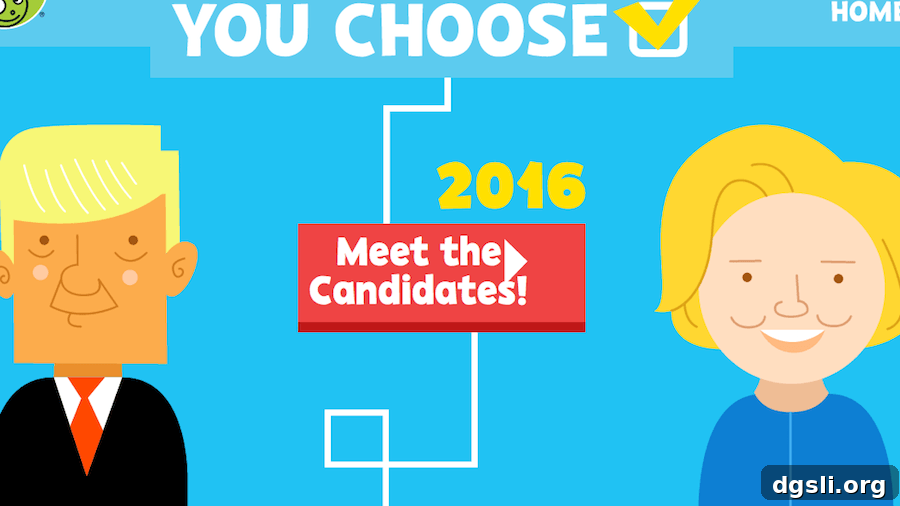
PBS KIDS Launches “You Choose 2016” — A Kid-Friendly Guide to the Presidential Election
PBS KIDS has introduced You Choose 2016, an engaging, nonpartisan online experience designed for children roughly ages 6–8. The site uses interactive activities, videos, and playful design to introduce young learners to the basics of the presidential election process and civic participation. While children cannot vote, You Choose 2016 emphasizes that their opinions and voices matter and encourages curiosity about how democracy works.
The You Choose 2016 site offers several kid-focused features that make learning about elections accessible and fun:
- Meet the candidates: Simple profiles present key facts and lighthearted details about the presidential contenders, written in age-appropriate language so children can understand who the candidates are and what they stand for.
- Collect trading cards: Kids can collect illustrated trading cards featuring past presidents and first spouses, making history tangible and memorable through play.
- Create campaign posters: An online coloring and design tool lets children create their own campaign posters—an activity that combines creativity with an introduction to the idea of civic messaging and expression.
- Watch videos: Short videos starring favorite PBS KIDS characters and new role models discuss election-related topics in kid-friendly ways, connecting civic concepts to everyday life and familiar faces.
These features are intentionally nonpartisan and geared toward sparking conversations within families and classrooms. The content focuses on how elections work, why they matter, and how civic engagement begins even for the youngest learners.
For older students, teachers, and families seeking a deeper, interactive civics tool, PBS LearningMedia offers the Electoral Decoder. This scrubbable timeline covers presidential elections beginning in 1789 and lets users explore different electoral scenarios. Students and adults can experiment with state-by-state outcomes and see what combinations of states a candidate would need to reach the 270 electoral votes required to win. The tool presents election mechanics visually, helping learners of all ages grasp the Electoral College and the strategic role of states in presidential elections.
Free and Accessible Resources for Families and Educators
Both You Choose 2016 and the Electoral Decoder are offered free of charge and are intended to be widely accessible. These resources are part of the broader PBS Election Central initiative, which aggregates videos, lesson plans, interactive features, and classroom-ready materials that support civic learning. The goal is to involve entire families and learners across age groups in meaningful election-related conversations well in advance of election day.
Teachers and educators will find these materials useful for classroom lessons on government, history, and media literacy. You Choose 2016 provides an approachable entry point for younger children, while Electoral Decoder and other PBS LearningMedia tools offer richer explorations for middle and high school students. Educators can integrate activities into lessons on the voting process, the role of leaders, and how elections shape public life.
Parents can use the site to start age-appropriate discussions at home, turning videos and interactive activities into opportunities to explain civic responsibility, community involvement, and respectful discussion. Because the materials are designed for different age levels, families can explore them together—young children engaging with You Choose 2016, and older siblings or parents trying the Electoral Decoder to model deeper civic inquiry.
Sharing Student Work
PBS encourages educators to share student projects inspired by these resources using the hashtag #YouChoose2016. Sharing examples of student posters, trading card collections, or classroom discussions helps build a community around civic learning and highlights creative ways schools and families are preparing the next generation of engaged citizens.
By combining playful learning tools for young children with more advanced, interactive platforms for older students and adults, PBS provides a range of nonpartisan resources that promote civic knowledge, critical thinking, and respectful conversation about elections and government.