
What if testing was more human centric and not so scary and indiscriminate?
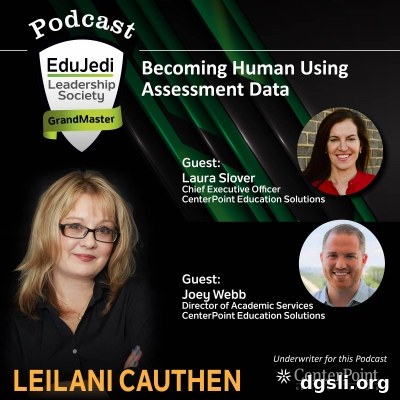
In this episode of the EduJedi Report Podcast, host LeiLani Cauthen explores how assessments can be redesigned to restore meaning, fairness, and usefulness for students and educators. LeiLani speaks with Laura Slover, CEO, and Joey Web, Director of Academic Services, from CenterPoint Education Solutions to examine practical approaches that make testing more human-centered—even in remote and hybrid learning environments.
Listen to the Episode
This conversation focuses on shifting assessment practice away from high-stakes, anxiety-inducing tests toward assessment approaches that support learning, measure what matters, and inform instruction. The episode highlights the intersection of strong data practices and clear logical design in creating assessments that are valid, reliable, and student-centered. Listeners will gain insight into how to apply these ideas in real classrooms and district systems, particularly where distance learning complicates traditional assessment models.
Key themes include:
- Human-centered assessment design: Strategies to center student experience by making assessments more transparent, equitable, and aligned to real learning goals.
- Data literacy for educators: Practical ways teachers and leaders can collect, interpret, and act on data to support instruction and improve outcomes.
- Logic and structure: How careful test design—clear rubrics, aligned items, and coherent scoring—strengthens the quality and usefulness of assessment results.
- Assessment in distance learning: Approaches that preserve integrity and authenticity while minimizing harmful surveillance or one-size-fits-all testing practices.
The guests on the episode share how districts and schools can make assessments more meaningful without sacrificing rigor. Instead of relying solely on infrequent, high-pressure exams, they discuss creating an ecosystem of formative checks, performance tasks, and iterative assessments that provide immediate, actionable feedback. These practices help teachers adjust instruction and help students see assessment as part of learning rather than a separate, punitive event.
Practical guidance offered during the episode includes:
- Building assessments around clear learning targets so every item contributes to a transparent purpose.
- Using item-level analysis and simple analytics to identify misconceptions and to guide reteaching.
- Designing performance-based and open-ended tasks that allow students to demonstrate depth of understanding and real-world application.
- Implementing low-stakes formative assessments frequently to reduce test anxiety and to support continuous growth.
- Designing rubrics and scoring guides that communicate expectations and help students self-assess.
For schools navigating remote instruction, the episode emphasizes alternatives to heavy-handed proctoring, such as authentic assessments, project-based tasks, and portfolio reviews that honor academic integrity without turning assessments into surveillance. The discussion also covers how to use technology intentionally—prioritizing platforms and tools that support meaningful evidence collection, simplify scoring, and preserve student dignity.
Leaders and assessment specialists will find useful recommendations on building capacity across a school or district: focused professional learning on data analysis, collaborative item review sessions, and routines for continuous improvement of assessment quality. The guests underscore the importance of including educators and students in assessment design to ensure relevance and buy-in.
Ultimately, the episode presents assessment as a tool for improvement rather than judgment. When assessments are thoughtfully designed and paired with teacher data skills and clear logic, they can illuminate learning pathways, reveal gaps, and support individualized instruction. This human-centered approach aligns assessment practice with broader educational goals—equity, student agency, and deeper learning—while remaining practical and actionable for districts working in both in-person and distance learning contexts.
Whether you are a classroom teacher, curriculum leader, district assessment director, or policy maker, this episode of the EduJedi Report Podcast offers perspectives and strategies to make assessments more humane, informative, and aligned to real student learning. Tune in to hear the full conversation and to gather concrete steps you can take to redesign assessment practice in your context.