
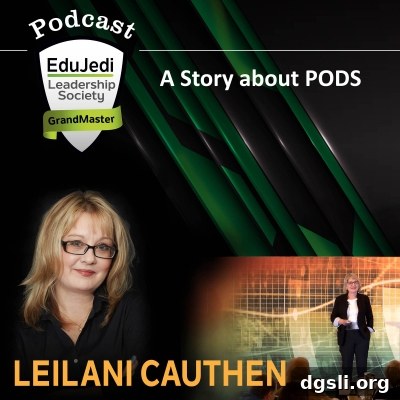
Fabulously Fun Fiction from LeiLani Cauthen
In this episode of the EduJedi Report Podcast, LeiLani Cauthen, CEO of the Learning Counsel, explores the evolving trend of PODS—small, parent- or community-led learning groups that connect homeschooling families with school systems. Cauthen discusses how the COVID-19 pandemic accelerated a shift she outlined in her book, The Consumerization of Learning, turning theoretical possibilities into practical realities for many families and districts. To illustrate how this new model can play out, she reads a fictional account from the final chapters of her book: a student’s journey through a POD. That narrative offers listeners a vivid, human-centered glimpse into how learning could look when families, educators, and institutions collaborate in new ways.
Click the image below to listen to the episode

PODS have become an important point of discussion among educators, parents, and district leaders because they represent a hybrid between traditional schooling and homeschooling. Rather than leaving families to operate completely independently, PODS create structured, small-group learning communities that can be supported by school districts or run by certified instructors. In her interview, LeiLani Cauthen frames PODS as part of a larger trend toward the consumerization of education: learners and families demanding more choice, personalization, and flexible delivery. The fictional vignette she reads helps listeners imagine a day in the life of a student navigating that hybrid landscape—how curriculum, mentorship, social interaction, and assessment might blend when learning is both community-based and school-aligned.
The podcast conversation covers practical benefits and potential challenges of PODS. On the positive side, PODS can offer smaller class sizes, tailored instruction, and closer family engagement, while still giving students access to district resources, certified teachers, and recognized credentials. These arrangements can be especially appealing during times of disruption when families seek safer, more controllable learning environments. At the same time, Cauthen and the episode’s hosts highlight important considerations: equity of access, consistent academic standards, funding mechanisms, and the logistical complexities of coordinating between families and school systems. The fictional story serves to humanize these policy and operational debates, showing how one student’s progress, social life, and sense of belonging might thrive—or struggle—within a POD model.
For listeners interested in the broader context, Cauthen’s perspective connects the PODS trend to long-term shifts in educational expectation. The Consumerization of Learning concept argues that families increasingly treat education like a marketplace where customization, convenience, and user experience matter. PODS reflect that shift: they prioritize adaptability and local solutions while prompting districts to rethink delivery, partnerships, and accountability. The fictional excerpt in the podcast is not a prediction set in stone, but rather a storytelling tool that helps educators and families envision practical outcomes and trade-offs. It invites listeners to consider how policy, technology, and community action can combine to create new pathways for student success.
This episode of the EduJedi Report Podcast is both reflective and forward-looking. LeiLani Cauthen’s account, blending research-based observations with a creative narrative, encourages thoughtful dialogue about the future of schooling—especially as families and systems adapt to ongoing challenges. Whether you are an educator, a parent exploring alternatives, a school leader weighing policy options, or simply curious about how learning models evolve, the conversation offers valuable insights into how PODS can reshape learning experiences while prompting important questions about equity, quality, and collaboration.
Listen to the podcast to hear the full fictional account and the expert discussion. The episode provides a concise, accessible look at how PODS might function in real communities and why the trend matters to anyone invested in the future of education.