
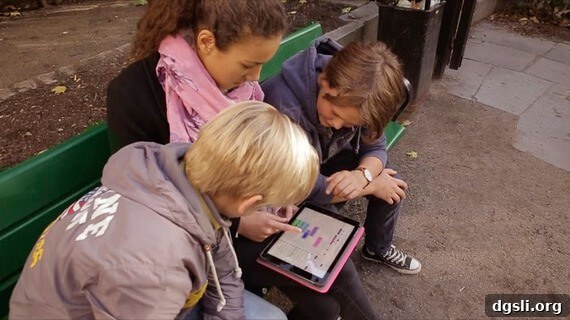
Schools use Soundtrap in projects to promote deeper learning and to develop students’ creativity, collaboration, and communication skills. Create music online with an easy-to-use, cloud-based studio that works across devices.
Our Soundtrap Review & Interview
Meet Per Emanuelsson, CEO of Soundtrap
1. Per, you have a background that spans business and music. How did your experience lead you into music and education?
I started very young as both a musician and a software developer. While growing up I alternated between performing and programming, which made combining the two a natural progression. After high school I taught guitar and studied composition, then moved into physics and computer science. With a degree in computer information systems, I spent over 15 years consulting for enterprises and startups, and launched several businesses of my own. Teaching product and business development at universities and in corporate settings has been a constant throughout my career. Ultimately, music, education, and building innovative software converged in one project: Soundtrap.
2. What inspired the founding of Soundtrap?
Soundtrap was co-founded with Björn Melinder and Fredrik Posse. Björn, like me, grew up as a programmer and musician and later worked as CTO of successful startups. Fredrik is a serial entrepreneur with deep ties in the music industry. The three of us pivoted an early music project into a collaborative, cloud-based music studio. Because most of our team are practicing musicians, we understood firsthand that a huge number of people make music as amateurs but lack accessible collaborative tools. Research shows many households include someone who plays music, yet mainstream tools weren’t designed for casual creators, students, or teachers working together—so we built Soundtrap to fill that gap.
3. How does Soundtrap support amateur musicians?
We focused on three core problems with traditional music software. First, classic tools are often too complex—designed for professional producers, not casual users or students. Second, many solutions are platform-specific downloadable apps, which trap creativity on one device. Third, conventional software rarely supports real-time collaboration. Soundtrap solves these issues by offering a simple, cloud-based music and audio studio that runs on Chromebooks, Windows, Mac, iPad, and Android devices. It enables collaborative creation—similar to Google Docs but for music—so creators can work together remotely or in the classroom without losing momentum when they switch devices. Those features made Soundtrap attractive to both hobbyists and educators.
Educators have adopted Soundtrap for three main reasons: ease of use across age groups, full cloud-based cross-platform support for BYOD and homework, and collaborative tools plus assignment workflows that support remote coaching and group projects.
4. You offer both consumer and school programs. How do they differ, and how widely is Soundtrap used?
The consumer version launched first and was well-received by musicians. Educators then began asking for school-friendly features. In response we built Soundtrap for Education with COPPA-compliant environments, teacher administration tools, assignment management, and integration with Google Classroom and other learning management systems—while offering schools a cost-effective option compared to premium consumer plans. Today Soundtrap serves over half a million users across hundreds of countries, with strong adoption in the United States and thousands of schools using the platform to enable collaborative creativity every day.
Create your own music online with a collaborative studio for home and school.
5. How does Soundtrap stand apart from other tools in this space?
Many entry-level tools are easy to use but lack the cross-platform collaboration and school-focused administration that classrooms need. For example, some popular apps don’t run on Chromebooks, don’t support remote collaboration, and offer limited integration with classroom tools. Soundtrap is built for the classroom and the consumer market alike: it supports Chromebooks and other devices, enables real-time collaboration, and offers teacher workflows and learning-management integration—features that make it uniquely well suited for education and group creative work.
6. Tell us about your partnership with Google and its impact.
Google was an early and important partner. We were invited to present at Google I/O in 2014, which helped increase visibility. As Chromebooks have become more common in K–12 education, schools are looking for collaborative, creative tools that support STEAM, the 4Cs (creativity, critical thinking, communication, collaboration), and project-based learning. Being a solution that meets those needs has helped drive our rapid adoption in Chromebook-equipped schools.
7. How does Soundtrap support the 4Cs and 21st-century learning?
As automation takes over routine tasks, human strengths like creativity, collaboration, communication, and critical thinking become increasingly valuable. These skills are not taught in isolation; they are integrated across subject areas. Music naturally fosters those competencies—composition and performance require creativity, communication, and collaboration—so Soundtrap provides an environment where teachers can embed the 4Cs into core lessons. Using music and audio projects, educators can deepen learning across curricula while helping students develop skills computers can’t replicate.
8. With arts funding under pressure, how can Soundtrap help sustain arts education?
Arts education is central to nurturing an innovative workforce. The arts influence how products look, feel, and perform—think of the importance of design to devices like smartphones—and musical training has measurable cognitive benefits. Research indicates that playing an instrument improves problem-solving, memory, and other executive skills. By making music creation more accessible, collaborative, and affordable in schools, Soundtrap helps educators keep arts instruction alive and integrates the arts into broader learning goals. This supports STEAM initiatives and strengthens learning outcomes across subjects.
9. What are Soundtrap’s goals and plans for the near future?
We are rapidly scaling to meet growing demand from both consumers and schools. Our priorities include maintaining fast, reliable growth while rolling out strategic features designed to support educators and learners. Teachers and administrators can expect continued enhancements to administration tools, integrations, and collaborative workflows aimed at making creative classroom projects easier to manage and more impactful.
10. Any recent announcements?
We recently welcomed award-winning songwriter and producer Andreas Carlsson as an advisor and investor. Andreas has written for high-profile artists and has strong industry connections that help bridge classroom music education with the broader music community. His experience supports our mission to connect schools with real-world music practice and opportunities.
Watch the video about Soundtrap’s work in education and explore how the platform can help teachers and students create music together. Consider Soundtrap your online music mixer and recording studio—designed for classrooms and homes. Have you used the Soundtrap app? Share your thoughts and experiences with educators and fellow creators.