
Teaching, Volunteering, and the Lasting Impact of Education
By Katie Clancy
Like many directors and program coordinators in education and nonprofit work, I began my career in the classroom as a teacher. Over the years I gradually shifted into administrative roles, managing programs, coordinating volunteers and supporting schools. I often rely on dedicated volunteers to run workshops and activities, and it is deeply rewarding to see those sessions succeed. Still, I have at times felt a piece of myself missing — a sense that something inside me had been left behind when I stopped teaching full time.
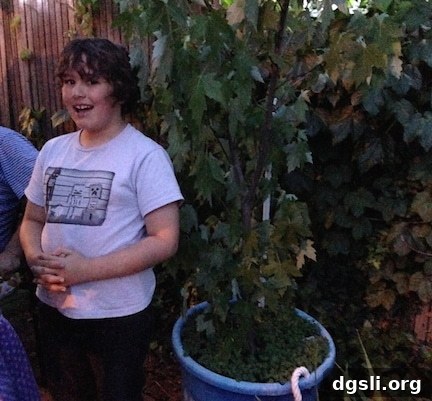
I rediscovered that part of myself on a trip home when I met an old friend and former boss from an elementary school in St. Louis. On the drive to a restaurant where we were meeting other friends, she suddenly pulled out her phone and told me she had to show me something the moment I parked. She was certain it would move me. She reached into her photos and showed me a picture of a boy standing in front of a towering maple tree.
That boy had been one of my students five years earlier. In my class we had planted a small maple in a painted paper cup as a Mother’s Day project. Later the family transplanted the seedling to a large container, and over the years it had grown into a substantial tree. My former boss told me the family was donating the tree back to the school at the boy’s graduation. Seeing the photograph — and learning the story behind it — washed away a lot of doubt I had carried about whether small classroom projects really mattered.
At the time I had wondered whether a four- or five-year-old would take the planting seriously or share the experience with a parent. I worried the tiny paper cup project would be forgotten. But the image of that tree and the family’s decision to donate it to the school replaced my doubts with a simple, powerful reminder: teaching creates enduring connections. You plant ideas, skills and memories that can grow long after the lesson ends. Sometimes you never know the full extent of that influence until much later.
After leaving that school and the United States, I moved to central Mexico to live and continue teaching. Today I work in Guanajuato, where I coordinate volunteers and educators for two education-focused organizations: Colectivo TAN 473, a volunteer-based arts and education enrichment program, and Do Good as You Go, an international volunteer network focused on skill-transfer volunteering. My role involves designing workshops, training volunteers and building partnerships that bring arts, education and practical skills to underserved communities.
Although my daily work is largely administrative now, the tree and the boy brought back the essential truth of why educators and volunteers do what they do. Coordinating programs and supporting volunteers matters because it enables meaningful classroom moments. It creates ripples of positive impact that reach families, schools and entire neighborhoods. That sense of connection — the relationship built with children and their families — is one of the most meaningful outcomes of teaching and community-based education.
What surprises me most is how small acts in the classroom can become lasting symbols for families and communities. A painted paper cup, a seedling, a hands-on workshop — these simple experiences can become treasured memories and practical legacies. They encourage stewardship, creativity and pride. For volunteers and program coordinators, this is a reminder that long-term change often begins with modest, intentional activities that transfer skills and foster relationships.
I remain committed to cultivating these opportunities. In Guanajuato, our volunteer-driven arts and education programs emphasize collaboration, cultural respect and skill sharing. We work with local educators and families to design workshops that are relevant, sustainable and rooted in community needs. The goal is to empower participants with knowledge and tools they can continue to use and adapt.
On a personal level, I am grateful for the reminder that teaching leaves traces that extend far beyond a single school year. Those traces may show up as a blooming tree, a confident child, a parent who remembers a lesson or a community that builds on a small idea. As someone who has both taught and now supports others who teach, I feel honored to be part of that process.
If you are interested in volunteering, teaching workshops, or supporting education-based volunteer programs, consider how skills-based and arts-focused initiatives can create long-term value in underserved communities. Organizations like Colectivo TAN 473 and Do Good as You Go focus on meaningful, sustainable engagement through volunteer-led workshops, skill transfer and community partnerships.
Contact information (please copy and paste as needed): [email protected]
Katie Clancy
Director, Do Good as You Go
Co-founder, Colectivo TAN 473
Guanajuato, Mexico
Website: www.dogoodasyougo.org