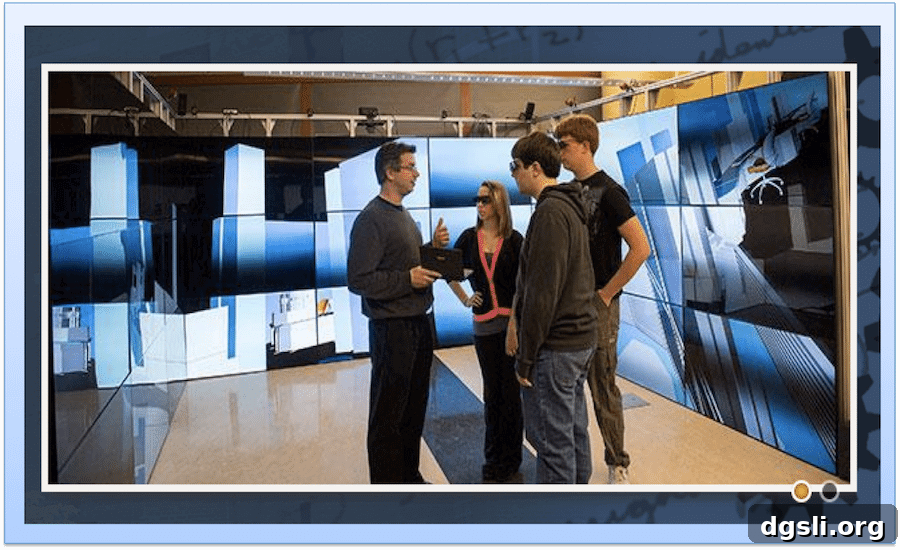
Wright State University has significantly improved graduation rates for engineering students through a focused redesign of its introductory engineering mathematics curriculum. The Wright State Model for Engineering Mathematics Education was created to help students succeed in required engineering courses, increase on-time graduation, and improve performance across the broader curriculum—not only within the engineering major. Since implementing the model, four-year graduation rates for engineering students at Wright State have risen dramatically, from 26 percent to 56 percent.
Designed in 2001 by engineering professors Dr. Nathan Klingbeil and Dr. Kuldip Rattan, the cornerstone course EGR 1010, “Introductory Mathematics for Engineering Applications,” now serves as the gateway for incoming engineering freshmen. The program also adjusted prerequisites for core engineering courses and restructured the required math sequence to ensure students encounter applied engineering mathematics earlier and in context. This combination of curricular and course design changes has produced measurable improvements in retention and student achievement.
Historically, many engineering programs required students to complete the full calculus sequence (Calculus I–III), differential equations, and matrix algebra before exposure to fundamental engineering classes such as statics, dynamics, strength of materials, and circuits. For many students—especially those who were not top scorers on standardized tests—this front-loaded math load made it unlikely they would persist long enough to discover whether engineering was their right path. Poor performance in the math sequence often led students to leave the major, assuming they lacked the ability to be engineers.
EGR 1010 was created to address that disconnect by showing students how the mathematical concepts they learn are used in real engineering problems. The course delivers immediate context to the question “Why do I need this?” by drawing material from upper-level engineering topics and demonstrating concrete applications. This early exposure provides incoming students with a realistic preview of engineering work, helping them make informed decisions about their major while increasing motivation to study engineering. Students still complete the traditional math sequence required of engineers nationwide, but they do so after experiencing its relevance and often in parallel with some core engineering courses—an approach that has improved retention and success.
Beyond retention, the model has elevated the quality and preparedness of engineering students. The early, rigorous workload in EGR 1010 helps incoming freshmen develop the study habits and problem-solving skills needed to handle subsequent mathematics and engineering coursework.
The EGR 1010 course is organized around three integrated components: lecture, recitation, and laboratory. Lectures present core material in a traditional format, and the university has invested in active-learning, scale-up lecture environments to enhance student engagement. Smaller recitation and laboratory sections, led by advanced engineering students under faculty supervision, typically enroll 20–30 students. These sections provide extra practice, introduce students to MATLAB programming, and offer hands-on experiments that reinforce mathematical concepts.
Laboratories include a writing component that satisfies ABET requirements for a writing-intensive course. Assessment includes weekly engineering homework, programming assignments, lab reports and abstracts, and three exams across the semester. The curriculum intentionally challenges students with applied topics such as linear algebra, trigonometry, harmonic signals, basic differentiation and integration, and introductory differential equations—skills they will use throughout their engineering studies.
The results are students who are better prepared for the next four years of their degree program. And when students determine that engineering is not the right fit, that decision is based on authentic exposure to engineering coursework rather than on an abstract or isolated math sequence.
The Wright State Model has attracted interest from institutions across the country. Dr. Klingbeil, now dean of the College of Engineering and Computer Science at Wright State, regularly consults with other universities adopting the model. Several institutions have implemented or piloted EGR 1010 sections, including The Ohio State University and the University of Illinois Urbana-Champaign; other universities exploring adoption include Temple University, Howard University, Boise State University, Miami University, and the University of Toledo.
High schools have also begun offering versions of EGR 1010 as dual-credit pathways. Changes in state-level college credit programs have encouraged high schools to create pathways that allow juniors and seniors to earn college credit. Wright State has partnered with Bellbrook High School for several years and with the Dayton Regional STEM School, offering EGR 1010 for dual credit. To reach schools beyond the immediate region, Wright State developed two additional delivery models: a co-teach option where a Wright State faculty member mentors a high school teacher running the course, and a fully asynchronous online version. The online offering was scheduled to be available beginning in fall 2015.
Miamisburg High School was identified to pilot the co-teach model in its initial roll-out, with New Albany following in the spring term. Conversations with Dayton Public Schools and the Miami Valley School District are ongoing to expand availability. These pathways broaden student access to college-level engineering coursework while maintaining academic standards.
Wright State University — Addressing Real Engineering
Wright State’s approach emphasizes practical design, problem solving, modern engineering tools, and clear connections between mathematics and engineering practice. Faculty travel to partner high schools to teach sections when proximity allows, and the university continues to develop scalable delivery options so that distant schools can participate. The model helps students see the relevance of mathematics within real engineering workflows and builds early competence and confidence.
Wright State University: Engineering Class Success
The impact of the curriculum is visible in student outcomes and alumni careers. For example, Josh Deaton credits the Wright State model with keeping him in engineering; he later completed a Ph.D. and founded his own engineering company. “A traditional curriculum would have been too much for me, just blasting myself with math without any of the creativity of engineering that I really liked,” Deaton has said. “Had it not been for Wright State’s innovative curriculum, I very likely would have switched my major to business.” Deaton now leads Adjoint Technologies, which provides multiphysics simulation and computational design services.
Course materials, notes, and laboratory exercises developed for EGR 1010 are openly available through Wright State University for institutions interested in adopting the model.
 Craig Baudendistel currently serves as director of engineering mathematics for the Wright State Engineering Department and teaches in the Mechanical Engineering program. A Wright State alumnus with B.S., M.S., and Ph.D. degrees completed under the advisement of Dean Klingbeil, he is the point of contact for institutions interested in running a section of EGR 1010. Contact: [email protected]
For information about Wright State University financial aid, campus maps, or academic programs, consult the university’s official resources. Readers are encouraged to share their experiences with Wright State’s engineering initiatives on community forums and education news outlets.