
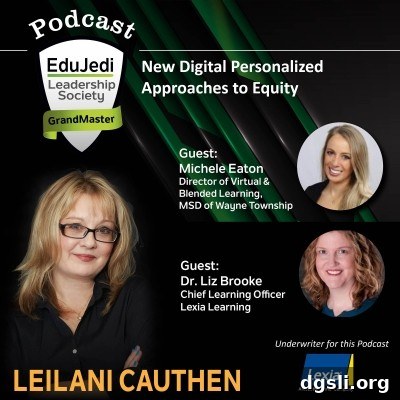
EduJedi Report Podcast: Professional-Grade Digital Curriculum and True Personalization in Schools
The Learning Counsel’s EduJedi Report Podcast, hosted by LeiLani Cauthen, features a timely conversation about how K–12 schools are adopting professional-grade digital curriculum while pursuing true personalization for students. In this episode, Cauthen speaks with Liz Brooke and Michele Eaton, the Director of Virtual and Blended Learning for the Metropolitan School District (M.S.D.) of Wayne Township. Together they examine the evolving role of software in classrooms, the careful balance between technology and human teaching, and the potential for digital tools to address long-standing inequities across school systems.
The discussion centers on practical strategies school leaders are using to bring sophisticated digital curriculum into their districts. Rather than replacing teachers, the goal described by the guests is to enhance instructional practice—using well-designed software to support individualized learning paths while preserving the empathetic, adaptive human interaction that educators provide. This distinction is central to understanding modern personalization efforts: technology can scale differentiation and provide data-driven insights, but it is most effective when integrated into a broader instructional model led by skilled educators.
Listeners will hear about how school leaders are evaluating digital curricula based on instructional quality, alignment to standards, and the capacity to adapt content to individual student needs. The episode highlights the importance of selecting platforms that are not just visually engaging, but pedagogically sound and responsive to diverse learners. Brooke and Eaton discuss how districts must be intentional about vendor choices, professional development, and ongoing support to ensure that digital curriculum becomes a reliable component of teaching and learning rather than an add-on that amplifies existing gaps.
Another major theme of the episode is equity. The guests address how districts are leveraging software to reduce systemic inequities by offering consistent access to high-quality instructional materials, formative assessment, and adaptive practice that can respond to each student’s current level of understanding. At the same time, they emphasize the need for human oversight to interpret data, make instructional decisions, and provide the social and emotional support students require. The conversation stresses that technology alone cannot erase inequity; it must be part of a comprehensive strategy that includes targeted interventions, family engagement, and community-focused supports.
Professional development emerges as a critical element in the conversation. Michele Eaton and Liz Brooke underscore that successful implementation depends on teachers and administrators receiving ongoing training—not only on how to operate software, but on how to integrate digital curriculum into lesson design, assessment practices, and collaborative instructional planning. Building educator capacity enables tech investments to translate into measurable learning gains and more personalized experiences for students.
Finally, the podcast explores the future-facing perspective of virtual and blended learning models. Eaton, in her role as Director of Virtual and Blended Learning, brings practical insights into how districts can design flexible learning environments that combine face-to-face instruction with high-quality digital content. The episode offers thoughtful reflections for district leaders, curriculum coordinators, and classroom teachers who are navigating limited budgets, diverse student needs, and the technical and human infrastructure necessary to sustain meaningful personalization.
Click Here to Listen
For educators and administrators seeking to understand the intersection of sophisticated software, teacher-led instruction, and equity-driven goals, this episode of the EduJedi Report provides practical perspectives and real-world considerations. The conversation reinforces that true personalization is not a technological checkbox, but an ongoing commitment to aligning tools, people, and policies to improve outcomes for every learner.