

Human interaction, SEL in curriculum key to curbing cyberbullying – By Lauren Barack, Education Dive
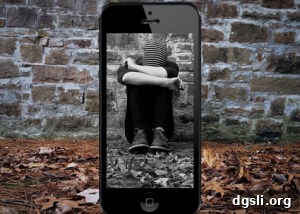
Mandy Manning, the 2018 National Teacher of the Year, has spent the last year walking school hallways and noticing the same pattern: students scattered around, not talking to one another, their attention fixed on screens. Back in the classroom as an English language development teacher and department lead at the Newcomer Center at Joel E. Ferris High School in Spokane, Washington, Manning is focused on how social-emotional learning (SEL) shapes the ways students relate—both in person and online. She uses the term “digital civility” to describe that intersection.
Manning observes that face-to-face interactions naturally create accountability: when you can see someone’s reaction, you’re less likely to say or do hurtful things. Online environments, by contrast, often feel anonymous and remove that immediate social feedback, which can embolden harmful behavior. Manning and other educators argue that SEL can bridge that digital distance: teaching empathy, perspective-taking, and responsible communication helps students remember the real people behind screens and reduce cyberbullying.
Integrating SEL into daily instruction—through explicit lessons, role-playing, restorative practices, and opportunities for reflection—can help students recognize the consequences of online actions and build respectful habits. Schools that emphasize human connection alongside digital skills aim to foster safer online communities and better overall student well-being.
Mass. public schools violated law by denying Catholic, Jewish schools aid for special education, US officials say – By James Vasnis, The Boston Globe
The U.S. Department of Education has concluded that several public school districts and state education officials in Massachusetts violated federal law by failing to provide special-education services and federal funds to students with disabilities who attend private religious schools. The finding comes after formal complaints from a coalition of Catholic and Jewish schools.
Under federal special-education rules, school districts that receive federal funds must ensure that eligible students with disabilities in their communities—whether enrolled in public, private, or religious schools—have access to services funded by those federal dollars. The Department’s decision suggests districts may need to provide years of missed services to affected private school students, rather than simply issue cash payments.
The coalition that filed the complaints estimates the amount owed for services could reach as much as $120 million, though state officials caution that the precise figure has not been calculated. Any obligation would likely be fulfilled through the provision of special-education services by public systems to students in private schools.
High school grads earn $20 an hour, free college through apprenticeships – By John Wisely, Detroit Free Press
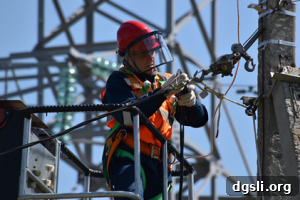
A growing number of Michigan students are choosing career-focused apprenticeships over a traditional four-year college path. One example is Austin Grzywacz, a recent Huron High School graduate who originally planned to attend a university but shifted course after exposure to a mechatronics program that blends electronics and mechanical engineering. The program highlighted strong demand for skilled trades and prompted him to pursue an apprenticeship.
Within two months of graduating, Grzywacz began an apprenticeship at U.S. Steel in Ecorse, earning $20.45 an hour while alternating eight-week rotations between working at the plant and studying at Henry Ford College in Dearborn. Programs like his offer paid experience, hands-on technical training, and pathways to credentialed careers without the traditional four-year timeline.
Educators, employers, and economic development leaders are promoting apprenticeships and technical training to meet labor market needs in fields such as construction, manufacturing, health care, and IT. For many students, these pathways provide a faster route to stable, well-paying work while limiting student debt.
The Incredible Shrinking Higher Ed Industry – By Doug Lederman, Inside Higher Ed
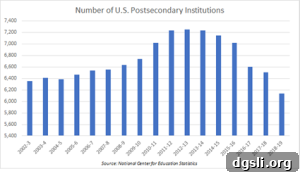
Data from the U.S. Education Department’s National Center for Education Statistics reveal that the number of U.S. colleges and universities offering federal financial aid fell by 5.6 percent in 2018–19, reaching the lowest level in at least two decades. This decline occurs alongside long-running drops in overall higher education enrollment, which fell from a peak headcount of about 29.5 million in 2010–11 to roughly 26.4 million in 2017–18.
Multiple factors contribute to these trends: demographic shifts, a stronger job market that draws potential students into employment, rising skepticism among some about the return on investment of a college degree, and financial pressures on smaller institutions. As college enrollments and the number of institutions both contract, the higher education landscape is undergoing a significant restructuring that affects students, faculty, and local economies.
Policy makers, institutional leaders, and higher education researchers are watching these shifts closely, seeking strategies to adapt programs, funding models, and student supports to a changing environment.
Your weekly Newsbriefs are provided by The Learning Counsel, a research institute and news media hub focused on providing context for the shift in education to digital curriculum.