
By Dr. Angela Gibson, Professor, School of Arts and Humanities at American Public University
Informal STEM Education: Sharing Passion and Sparking Curiosity
Times Square Photo Credit: Jason Major (@JPMajor)
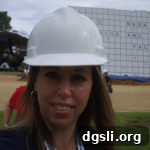
I wear many hats: mother, partner, professor of education, gardener, fan of 1980s dance music, and dog owner. I also work as an informal STEM educator—an identity that often surprises people. Informal STEM education means creating and delivering hands-on learning experiences about science, technology, engineering, and mathematics outside traditional classrooms, in places like museums, camps, community events, preschools, or through volunteer programs.
Although my formal academic background is in education rather than a STEM discipline, my curiosity about science and space has led me to design and lead engaging programs for children and families. I use my skills in curriculum design and presentation to turn personal interests into accessible, memorable lessons. Sometimes that means dressing up, being playful, and encouraging kids to explore and ask questions—because enthusiasm is contagious.
One family project that grew into a hands-on program is our backyard butterfly garden. My son and I learned about native plants and butterfly ecology by reading, talking with master gardeners, and doing our own small experiments. From that experience I developed a caterpillar lifecycle presentation for young learners. For these sessions I bring live swallowtail caterpillars, preserved pupae for touch-and-feel exploration, videos of caterpillars transforming into chrysalises and emerging as butterflies, and examples of nectar and host plants. Children plant seeds of nectar plants in small pots to take home, helping them connect the lesson to long-term stewardship. And yes—I don butterfly wings and antennae and encourage the students to be curious and creative.
Another passion I bring to informal outreach is space exploration. My son and I avidly follow missions and astronomical discoveries, and that enthusiasm opened the door to participation in NASA Socials. These events offer an opportunity to go behind the scenes at NASA facilities, meet scientists and engineers, and learn how missions are planned and executed. Attendance at NASA Socials helped me build connections that enriched my community outreach: a local NASA program manager presented to students about the Orion spacecraft, and another contact enabled a camp of upper-elementary and middle schoolers to Skype live with the Aquarius Reef Base—the world’s only underwater laboratory—linking astronaut training simulations to real-world research.
I tailor activities to the audience. For preschoolers learning about the planets, I created a tactile, playful exercise using straws, candy bars, and small cups of ice cream or sorbet to simulate taking core samples on rocky, gas, and ice planets. These simple, sensory-rich experiences help young children grasp abstract ideas while having fun.
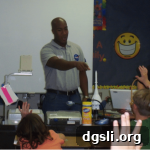 If you have a STEM-related interest, you can become an informal educator, too. Start by choosing a topic that excites you and keeping up to date on the science and best practices in teaching it. Assess your strengths and the skills you might need to develop. Design a simple, audience-appropriate program focused on hands-on learning and clear takeaways. Finally, find venues—libraries, schools, community centers, summer camps, or local events—where your program can reach curious learners.
Informal STEM education is as much about the learners as it is about the educator. While I share my passions, I also keep learning—attending workshops, connecting with experts, and updating activities to reflect current science. The greatest reward is seeing a child’s face light up when a concept clicks or when their curiosity is sparked. Those moments of wonder and discovery are what make outreach meaningful.
About the Author
Dr. Angela Gibson is a Professor in the School of Arts and Humanities at American Public University System. She has taught at community colleges, private institutions, and state universities, delivering face-to-face, blended, and fully online courses for first-year students as well as Master’s and Doctoral learners. In addition to STEM outreach and participation in NASA Socials, Dr. Gibson works as a facilitator and mentor for the Online Learning Consortium, publishes research, and presents at national and international education conferences. Her degrees include a B.A. in International Relations from George Mason University, an M.A. in Human Performance Systems (with a Graduate Certificate in Instructional Design) from Marymount University, and an Ed.D. in Educational Leadership from Texas A & M University–Kingsville. Find her on Twitter at @AgilistaAG.