
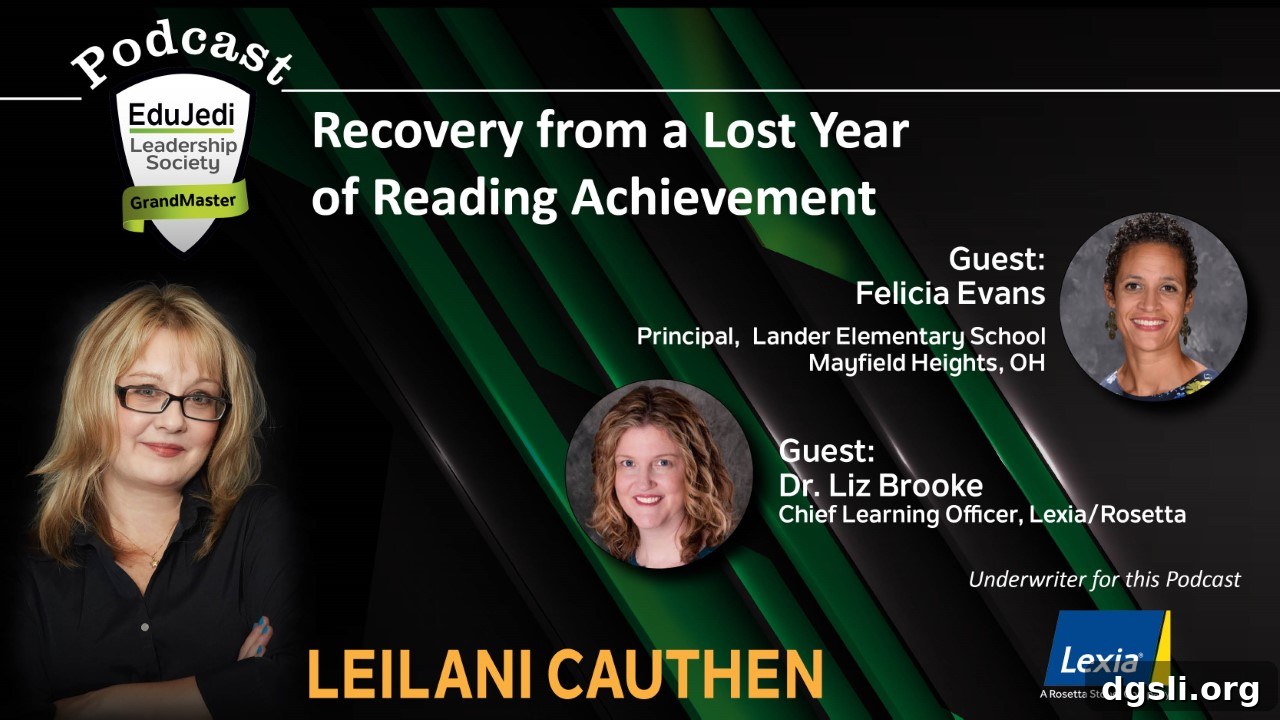
Recovering Lost Learning: Insights from the EduJedi Report Podcast
Many school leaders are confronting a difficult reality: tens of thousands of students may have lost a year of academic progress. In a recent episode of the EduJedi Report Podcast, host LeiLani speaks with Dr. Liz Brooke, Chief Learning Officer at Lexia, and Felecia Evans, principal of Lander Elementary School in Mayfield Heights, Ohio, about practical steps to realign student learning during ongoing disruptions. Their conversation focuses on how leaders and teachers can respond to interrupted instruction across on-campus, remote, and hybrid learning models.
The episode begins by acknowledging the immediate operational challenges schools faced early in the pandemic—distributing millions of devices and securing reliable internet connectivity for students. With those urgent tasks increasingly managed, educators are now turning their attention to curriculum, assessment, and recovery strategies. The discussion highlights how well-designed digital curriculum and targeted leadership practices can accelerate learning recovery, particularly in language and literacy.
Dr. Liz Brooke brings a research-informed perspective on digital learning tools and curriculum design. She emphasizes the importance of selecting software that adapts to individual student needs, provides clear diagnostic information for teachers, and connects practice to classroom instruction. According to Brooke, the most effective digital programs do not replace teachers; they extend teachers’ capacity by delivering data-driven insights and personalized practice that help close learning gaps more quickly.
Felecia Evans shares frontline experience as a principal managing shifting schedules, staffing, and student needs. She describes concrete leadership actions that helped her school respond: prioritizing core literacy instruction, using frequent formative assessment to identify gaps, and integrating targeted digital resources to complement classroom teaching. Evans stresses the value of clear communication with families and staff, setting realistic short-term goals, and celebrating small but consistent gains to build momentum.
Together, the guests explore practical strategies for school leaders aiming to recover unfinished learning. Key recommendations from the conversation include:
- Prioritize foundational literacy and numeracy instruction so that students have a strong base for future learning.
- Use frequent, aligned formative assessments to pinpoint specific skill gaps rather than relying solely on broad benchmarks.
- Select digital curriculum and intervention tools that are evidence-aligned, adaptive, and teacher-facing—tools that provide actionable reports and integrate with classroom routines.
- Create structured schedules that blend small-group teacher-led instruction with purposeful independent practice supported by technology.
- Provide targeted professional learning for teachers focused on data use, differentiation, and blended instructional strategies.
- Engage families with clear guidance and resources so students can practice learning at home in ways that reinforce classroom work.
The episode also discusses how specific software qualities can accelerate progress: real-time diagnostics, individualized practice paths, scaffolded skill progression, and progress monitoring that is easy for teachers to interpret and act on. When these software features are combined with focused instructional leadership and consistent classroom routines, schools can achieve measurable improvement in shorter timeframes than with fragmented interventions.
For K–12 leaders planning recovery efforts, the conversation offers a balanced view: recovery is possible, but it requires deliberate prioritization, strong instructional leadership, and thoughtful use of technology. Evans’s experience underscores that school culture, clarity of goals, and teacher support are as important as the tools themselves. Brooke reiterates that when digital resources are chosen and implemented with fidelity, they can be powerful accelerators of learning.
If you are a principal, district leader, or instructional coach tasked with designing a recovery strategy, this episode provides practical, field-tested insights. It centers on immediate actions—prioritizing literacy, aligning assessments, choosing adaptive tools, and equipping teachers—while keeping an eye on sustainable practices that support long-term student growth.
Click Here to Listen to the Podcast