
Esports in K–12 Education: Boosting Attendance, Engagement, and Lifelong Opportunities
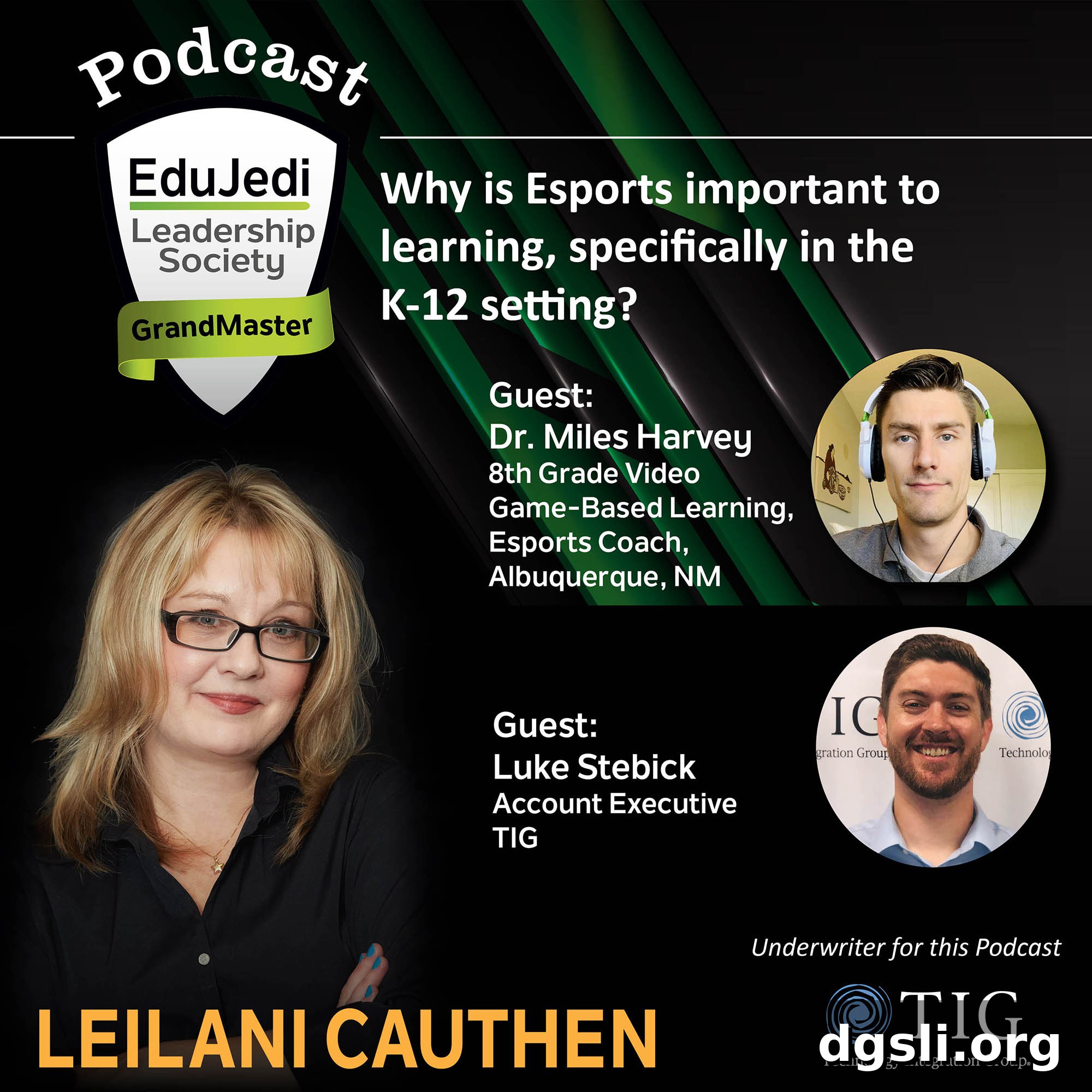
Esports and video game-based learning are emerging as powerful tools to re-engage students across K–12 schools, particularly in hybrid or remote learning environments. Educators and administrators are increasingly recognizing esports as a practical avenue to improve attendance and increase sustained engagement in other subjects. On a recent episode of the EduJedi Report Podcast, host LeiLani Cauthen spoke with Dr. Miles Harvey, an 8th Grade Video Game-Based Learning and Esports Coach with Albuquerque Public Schools, and Luke Stebick, Account Executive at TIG, about how esports programs are working on the ground and the long-term benefits they create for students.
Why Esports Works as an Engagement Strategy
Esports taps into students’ existing interests and digital skills, offering an immediate point of relevance that traditional approaches sometimes lack. Students who might be disengaged from conventional classroom activities are often motivated to show up and participate when their school offers an esports team, club, or curriculum component. That motivation can translate into more consistent attendance, better classroom behavior, and a stronger willingness to tackle other learning goals.
As Dr. Miles Harvey explains, “Even before COVID, we were already about 15 years behind the ball. With Esports and games, they’re possibly the one thing that gets us to bring kids back into school with not only some excitement, but an open mindset towards some undefined learning outcomes.” That open mindset is important: esports provides context for building collaboration, communication, critical thinking, and technical skills in ways that feel meaningful to students.
Practical Steps for Schools to Start an Esports Program
Starting an esports program doesn’t require rebuilding a school’s entire technology infrastructure. Schools can begin by assessing current resources, identifying staff or community members with gaming or coaching experience, and choosing games and platforms that align with school values and student interests. Key first steps include:
- Define clear educational goals for the program—attendance improvement, social-emotional learning, STEM pathways, or career exploration.
- Establish participation guidelines, eligibility rules, and behavior expectations to align the program with school policies.
- Start small with a club or intramural league to build interest, then scale to interscholastic competition as capacity grows.
- Leverage community partnerships and parent volunteers to supplement coaching, funding, or equipment needs.
- Integrate learning outcomes into related coursework—media literacy, coding, teamwork, and leadership—so esports complements academic goals.
Benefits Beyond the Game
Esports programs can produce measurable improvements in student attendance and engagement, but the benefits extend well beyond classroom presence. Participation helps students develop transferable skills—strategic thinking, time management, collaboration, and conflict resolution—that support success in college and the workplace. Students involved in esports often explore technology pathways, such as game design, streaming production, and IT support, opening doors to future career opportunities.
Equity and Access Considerations
To ensure esports programs are inclusive, schools should proactively address access to equipment and connectivity so that all interested students can participate. Offering after-school practice with school devices, working with local organizations for donations, and providing accommodations for students with disabilities are practical ways to reduce barriers.
Getting Started: Attendance, Engagement, and Lifelong Opportunities
Esports creates a bridge between students’ interests and the school environment, often improving attendance and participation in other classes as students re-engage with the school community. Programs anchored in clear educational goals can intentionally connect gaming experiences to academic and career pathways, helping students develop skills that match future opportunities.
Listen to the full EduJedi Report Podcast episode for firsthand accounts and practical guidance from educators and industry representatives.
Whether a school adopts a competitive team, a casual club, or classroom-based game design projects, esports and video game-based learning can be a strategic, adaptable tool to support student success in today’s hybrid and remote learning landscapes.