
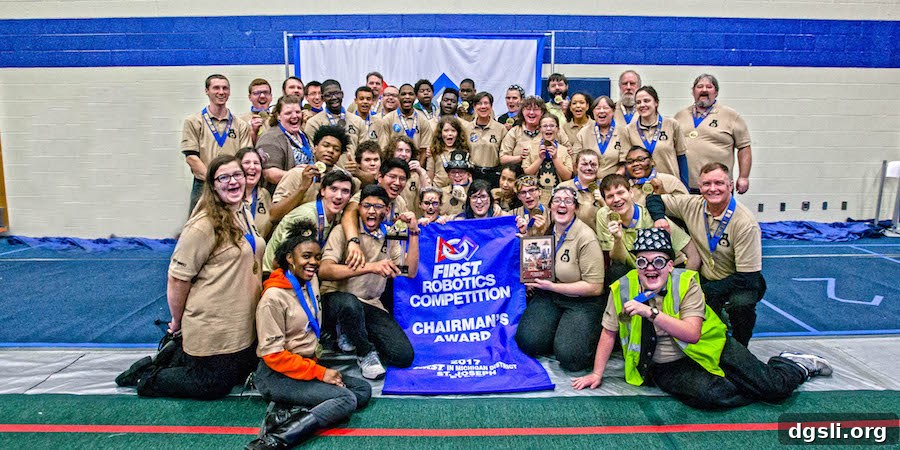
Scott Heister, an engineering and physics teacher, has mentored his high school’s FIRST Robotics Competition team in Michigan for nearly two decades. Over those 19 years, the robotics program has weathered many challenges—nearby factories closed, funding streams diminished, and students faced social and economic pressures. Through persistent effort, the team transformed school culture, developed student leaders in STEM, and provided a consistent place of belonging for young people in Ypsilanti, Michigan.
Now known as Grizzly Robotics, the team has become an important community asset in a city that struggles with violence, drugs, and crime. For many students, the robotics program offers a safe, structured environment where they can discover new interests, build confidence, and take ownership of their learning and success.
In 2013, following declining enrollment, growing debt, and low academic outcomes, Willow Run School and the nearby Ypsilanti district merged. Inspired by the values and methods of FIRST, Heister advocated for designing a new school around those same principles. His effort led to the creation of the Ypsilanti STEMM Middle College. In the four years after opening, the school reported measurable improvements: graduation rates rose from 69% to 97%, daily attendance increased from 85% to 92%, suspension rates dropped dramatically, and science proficiency improved substantially.
Interview with Scott Heister
Heister answered questions about how he achieved institutional buy-in for a school modeled on a robotics program and the lessons learned along the way.
Q: How did you come up with the idea to use your FIRST Robotics Competition team as a model to design an entire school?
We had run a FIRST team for years and observed that students became deeply engaged with robotics in ways they often weren’t in traditional classes. Students who arrived with failing grades would work intensely during the robotics season, showing commitment and pride in their work—but frequently reverted to poor engagement after the season ended. That pattern reinforced what FIRST founder Dean Kamen often says: it isn’t about the robots. It’s about creating conditions where students are present, invested, and partnered with adults. We used that insight as the foundation for building a school that centers hands-on, meaningful learning.
Q: Your school is a middle college—what distinguishes a middle college from a typical high school?
A middle college blends high school and college experiences. Students enroll as freshmen and remain for five years, graduating with college credentials—up to 84 credits or an associate degree. Research and our own data showed that students who earn college credits in high school are much more likely to complete a college degree, so offering that middle college pathway was a strategic priority.
Q: You say that you’ve seen success with this model; can you share more details?
When the two schools merged, the combined graduation rate was 69%. Today, Ypsilanti STEMM Middle College’s graduation rate is 97%. Average daily attendance rose from 85% to 92%. Suspensions dropped from over 35% to about 3%. Science proficiency rates increased from 11% to 48%. These gains did not come from a student population that was already prepared—statistics show that 83% of our incoming juniors and seniors were not proficient in science when they arrived. The results reflect sustained, focused work on engagement, mentorship, and aligned curriculum.
Q: Beyond the robotics-focused curriculum, what other factors contribute to your school’s success?
Two major factors stand out. First, our dedicated staff functions more like mentors than traditional teachers. Low staff turnover helps students build long-term relationships with adults, which is critical in urban settings where trust and continuity matter. Second, our schedule and curriculum are designed so classroom work complements hands-on projects. For example, when students build hydraulic arms in manufacturing, the physics class directly addresses pressure and volume, creating integrated learning across teachers and subjects. Our small, collaborative staff fosters strong communication and alignment.
Q: How did you secure institutional buy-in for modeling a school after a robotics program?
We leveraged the FIRST model of building strong community and business partnerships and made community engagement a priority. Examples of our outreach include:
- Presenting regularly to the school board
- Having students deliver demonstrations and presentations tied to the FIRST Championship
- Hosting two annual open houses for community members, prospective families, and local businesses
- Organizing a “Thank You” dinner for elected officials, school leaders, and sponsors
- Presenting at local businesses and community organizations
- Partnering with the township to run youth robotics camps that serve as recruitment and outreach
We also maintain relationships at the state and national levels and bring students to Washington, D.C., to meet elected representatives. Locally, participating in parades and library events has made our program visible and helped the community see the tangible impact of our work—translating into institutional and financial support.
Q: Can you share examples of alumni success?
Alumni have moved into diverse roles: working in the State Senate as legislative assistants, entering business, and pursuing careers in computer science. The transferable skills learned in robotics—teamwork, problem-solving, persistence, and how to engage adults as resources—prepare students for college and careers. By junior year, roughly 90% of our students have taken at least one college class; they graduate prepared to seek help, collaborate, and persist.
One current example illustrates this transformation. A student who had been frequently suspended and endured the loss of his father became the lead machinist on the FIRST Robotics team and partnered with the University of Michigan on a CubeSat satellite project. He worked through spring break to meet deadlines and raised his GPA above 3.0. Stories like his reflect the profound, personal impact the program can have.
Many students who enter our doors face homelessness, academic gaps, or deep discouragement. Through mentorship, community partnerships, and hands-on learning, Grizzly Robotics and the Ypsilanti STEMM Middle College are changing lives one student at a time.
Teachers: If you’re interested in starting a team or learning more about FIRST, resources are available from FIRST for educators.
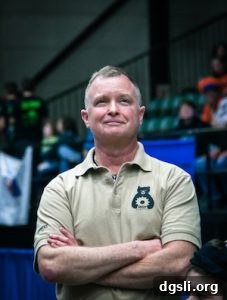
Mr. D. Scott Heister
Mr. Heister grew up in Flint, Michigan, and earned a BS in Biology with a minor in Physics from the University of Michigan, Flint, in 1990. He received a Master of Arts in Teaching from Marygrove College in 2002. He has been recognized with multiple teaching honors, including Michigan Science Teacher’s Association High School Science Teacher of the Year (1999) and awards from university chapters and institutions. He has taught in the Ypsilanti community for more than 25 years and has been the lead mentor for the award-winning FIRST Robotics program since 2004.
Sponsored by FIRST Robotics