

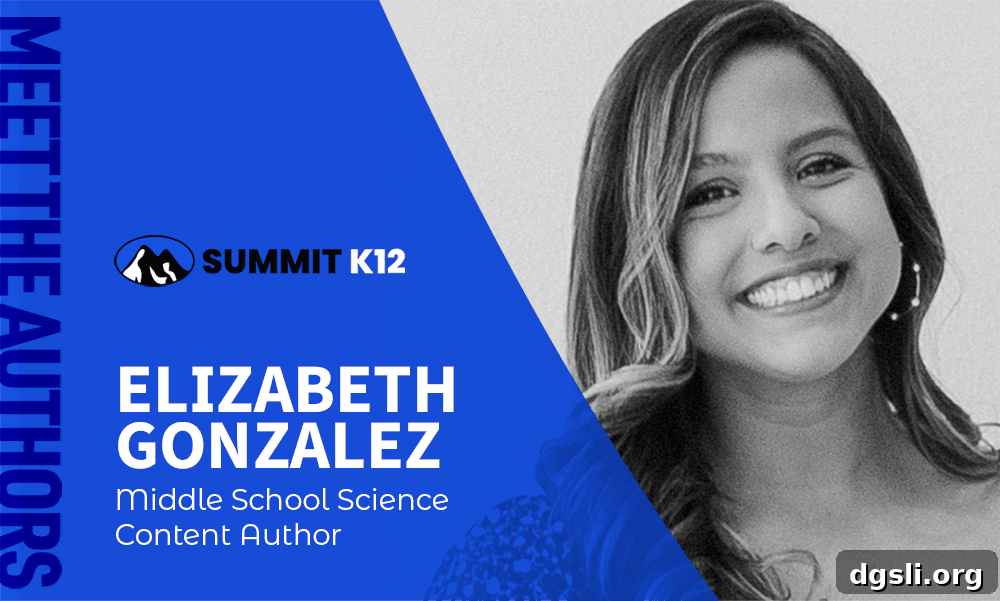
The strength of the Dynamic Science curriculum lies in our close collaboration with science authors and editors across Texas. To highlight the people behind the materials, we are launching the Meet the Authors series to introduce the educators and content experts who developed the Science content tailored for Texas learners.
Our first profile features Elizabeth Gonzalez, an experienced educator who brings a decade of middle school science classroom knowledge to her work as a content writer.
Elizabeth’s enthusiasm for teaching inspired her transition from classroom teacher to science content writer. In her current role she shapes curriculum and resources that aim to make science engaging, accessible, and standards-aligned for all students.
Below is the interview between Robyn Shulman and Elizabeth Gonzalez, where Elizabeth shares insights into her background, her contributions to the 2024 Texas State Science Adoption, and practical advice for teachers using the Dynamic Science program.
Robyn Shulman: Elizabeth, can you share a bit about your background?
Elizabeth Gonzalez: I taught middle school science for 10 years. That hands-on classroom experience deeply informed my move into curriculum development and content writing. As a science content writer, I work to design lessons and materials that reflect real classroom needs, encourage critical thinking, and align with Texas standards.
Shulman: What part of the 2024 Texas State Science Adoption did you create?
Gonzalez: I developed the 6th, 7th, and 8th grade Science content for the adoption. My contributions include Lesson Guides, Study Guides, Assessments, TEKS-aligned videos, Home to School Connection letters, STAAR review materials, and supporting resources designed to help teachers implement lessons effectively.
Shulman: What was your favorite part about creating the Dynamic Science curriculum?
Gonzalez: My favorite part was collaborating with fellow middle school content authors. Each contributor brought different teaching styles, district experiences, and ideas for labs and activities. Through open collaboration we combined those perspectives to create lessons that are both rigorous and engaging, offering a variety of approaches teachers can adapt to their classrooms.
Shulman: What advice would you give to teachers using Summit K12’s Dynamic Science program?
Request a demo for the Dynamic Science program
Gonzalez: My best advice is to embrace experimentation. It’s natural for teachers to rely on familiar labs and activities, but that repetition can lead to burnout and limit student engagement. Try new activities from the Dynamic Science curriculum, adapt them to your classroom context, and allow students to explore different ways of learning. Small adjustments can refresh routines, increase student curiosity, and better meet diverse learning needs.
Shulman: Thank you for sharing your experience, Elizabeth. We look forward to more interviews with the talented people behind our curriculum.
To learn more about the Dynamic Science team and the ways we support learners across Texas, download our brochure, view our organizational profile on LinkedIn, and follow Summit K12 on social media such as Twitter, Instagram, and Facebook for updates and resources. These channels offer additional information about curriculum features, implementation tips for teachers, and announcements related to Texas science education.
Elizabeth’s combination of classroom experience and curriculum design helps ensure that the Dynamic Science program remains student-centered, TEKS-aligned, and practical for everyday use. Her work emphasizes clear lesson structures, purposeful assessments, and hands-on learning opportunities that prepare students for STAAR assessments while fostering scientific thinking and curiosity.
We will continue showcasing the authors and educators who contribute to Dynamic Science so teachers, administrators, and families can better understand the expertise and care behind the materials used in Texas classrooms.