
By Betsy Hill
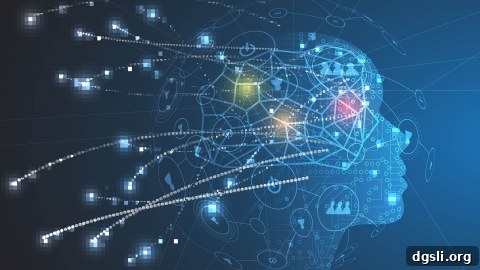
Technology reshapes our minds—for better and worse—but it’s important to remember that every experience shapes the brain. Our brains continually develop through interactions with our environment. As one neuroscientist put it, our brains become what our brains do.
So what are our brains doing in the digital era, and how are they changing? Research into this question is growing rapidly, and some findings raise legitimate concerns. In literacy studies, for example, Maryanne Wolf has argued that “skim reading” is increasingly common and may be replacing deeper, analytical, reflective reading. Skim reading involves scanning for keywords and moving on, rather than pausing to reread, reflect, or revise our understanding of a text. Several studies suggest that reading on screens encourages this lighter, faster mode of reading.
Of course, skim reading is not new—people skim magazines, newspapers, and textbooks when they want to find specific information quickly. Skimming can be useful: it helps us search efficiently, prioritize content, and extract highlights. Many people learn and intentionally practice faster reading techniques because those skills have clear practical value.
But usefulness aside, skimming does not produce the same deep understanding that focused, deliberate reading supports. Deep learning depends on active engagement: processing information in working memory, making connections, and consolidating those connections into long-term memory. Learning is a biological process of forming and strengthening neural networks. The stronger those connections, the more readily we can recall and apply what we’ve learned. For reading to become a source of durable, meaningful learning, it requires attention, patience, and effort—what we might call deep reading.
If both skim reading and deep reading have roles, shouldn’t we teach both approaches? It’s striking that many students never learn different reading strategies; some, like a colleague of mine, only discover in college that reading can be done in multiple ways. Teaching students to recognize when to skim and when to read deeply would help them use their brains more effectively across subjects and contexts.
Digital literacy has become central to college and career readiness because today’s workplaces demand it. The cognitive load of constant digital input—emails, texts, news feeds, notifications—can overwhelm and exhaust us. Some discussions in the business world echo concerns from education: for leaders to perform well in the digital age, they need to manage information flow and protect time for deep work. One common recommendation based on neuroscience is to separate focused work from reactive tasks: reserve blocks of uninterrupted time for concentrated thinking, then set aside brief periods for email and messaging. That structure supports flow states and higher-quality thinking, which multitasking and constant checking tend to disrupt.
If this advice helps CEOs, it also applies to students. Research indicates that the pressure to monitor messages and social media contributes to anxiety; even misplacing a smartphone can trigger panic. When people are anxious or panicked, their cognitive resources narrow and complex thinking suffers. Managing digital anxiety and learning to regulate attention are therefore important 21st-century skills.
Over the past year I’ve presented webinars on brain development and student study habits through Nepris, a platform that connects classrooms with industry experts. In these sessions, students are curious about common brain myths, why they remember some things but not others, and how sleep, stress, and mood affect learning. One simple exercise I use drives home the point that true multitasking is a myth and that deep learning requires focused attention.
Try this quick activity yourself: time how long it takes to write the sentence below continuously:
Multitasking is a misnomer 1 2 3 4 5 6 7 8 9 10 11 12 13 14 15 16 17 18 19 20 21 22 23
Now time yourself again, but alternate between letters and numbers as you write: M 1 u 2 l 3 t 4 i 5 a 6 s 7 … and so on. Notice how much slower and more error-prone the second task feels. Participants often report frustration, make more mistakes, and take longer. The exercise illustrates how switching attention reduces efficiency and undermines deep processing.
As educators and parents, we can lament the ways digital media encourage shallow attention, or we can teach students how their brains adapt and how to use that adaptability intentionally. Practical strategies—teaching when to skim, when to read deeply, how to schedule uninterrupted blocks of cognitive work, and how to manage digital anxiety—equip learners to thrive in a digital world rather than be overwhelmed by it.
Betsy Hill is President of BrainWare Learning Company, a provider of cognitive literacy solutions. An experienced educator, she has studied the neuroscience-education connection with Dr. Patricia Wolfe and other experts. She has taught high school foreign languages and currently teaches strategic thinking in the MBA program at Lake Forest Graduate School of Management. She holds a Master of Arts in Teaching and an MBA from Northwestern University and served as chair of the board of trustees at Chicago State University.
This article was originally published by The Learning Counsel, a research institute and news media hub focused on the transition to digital curriculum in education.