
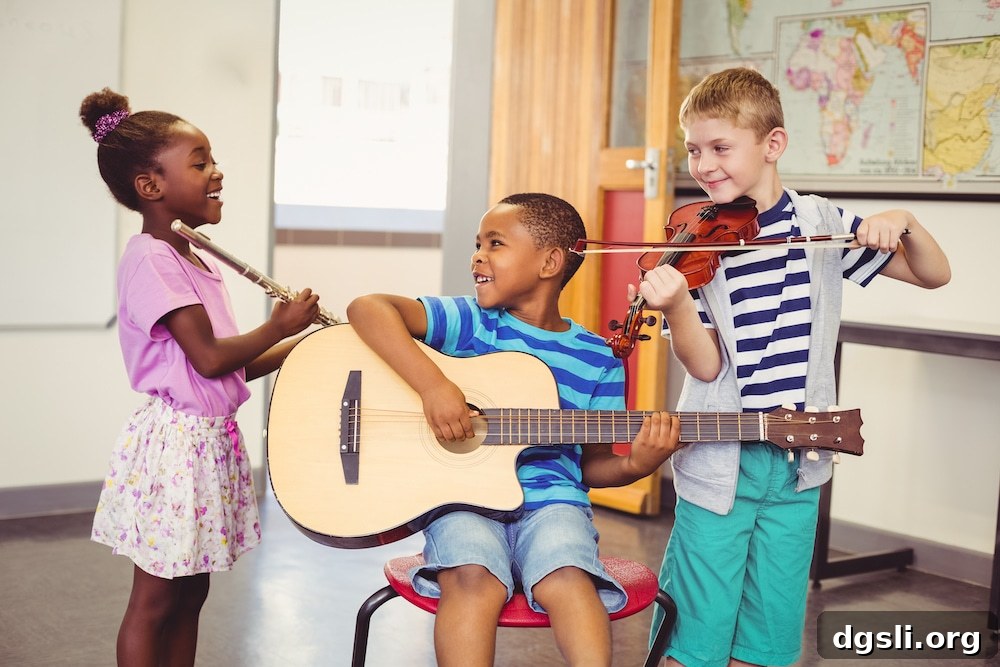
Music can stir deep emotions and instantly transport us to another time. Because emotion enhances memory, music also becomes a powerful tool for learning and retention. As Maya Angelou observed, “At the end of the day, people won’t remember what you said or did; they will remember how you made them feel.” Teachers who harness this connection between feeling and memory can make lessons more meaningful and memorable.
This is how good teachers become great. They know how to connect music with the daily lives of their students.
Skilled educators use music to engage students, make lessons enjoyable, and help new concepts stick. When learners actively participate—singing, moving, composing, or playing—music’s benefit to cognition grows. Participatory music stimulates attention, strengthens memory circuits, and supports language and social learning in ways passive listening alone does not.
We are born with more neurons than we ultimately keep; during childhood the brain prunes excess connections. Because of this early plasticity, it is generally easier to learn language and musical skills when we are young. As one researcher put it, “If you learn music as a child, your brain becomes designed for music.” Early musical exposure therefore shapes neural networks that support lifelong learning.
Listening is good. Playing and engaging in music is even better.
Music is Universal
Music plays a vital role across human cultures and eras. Its universality allows it to cross cultural divides and connect people through shared rhythms, melodies, and emotional responses. Because music can evoke powerful feelings and vivid memories, it creates strong personal connections to songs or genres and becomes a natural vehicle for teaching, expression, and social bonding. It can be enjoyed alone or in groups, making it an accessible, adaptable resource for educators and learners of all ages.
Beyond emotional impact, music can influence brain structure and function. Engaging with music—especially active music-making—stimulates regions involved in memory, attention, language, and executive function. For these reasons, incorporating music into instruction can enhance cognitive and emotional outcomes while supporting a more positive learning atmosphere.
5 Ways Music Improves Learning
Memory and Retaining Information
Music can strengthen memory and recall. Listening to or creating music releases neurotransmitters such as dopamine that promote positive feelings and motivation, which in turn support encoding and retrieval of information. Music also engages brain regions tied to memory and learning, helping students focus and form lasting associations. Using melodies, rhythms, or song-based mnemonics can make facts, vocabulary, and processes easier to remember.
Focus and Concentration
When used appropriately, music helps learners concentrate on demanding tasks. Background music or structured musical activities can mask distracting noises, channel attention, and support sustained focus. Choosing suitable tempi and styles for the task is important—some music helps maintain alertness, while other selections can calm and center learners.
Stress Reduction
Music has a well‑documented calming effect and can reduce stress and anxiety, which in turn supports learning. Calmer learners are often better able to attend, process, and store new information. Faster, upbeat tracks can boost energy and alertness, while slower, soothing music can lower heart rate and relax the body—both outcomes can be useful depending on the classroom goal.
Motivation and Positive Learning Spaces
Music lifts mood and motivation, making lessons feel more inviting. When students associate learning activities with enjoyable music, engagement increases and classroom participation improves. Adding movement, dance, or song-based games creates memorable experiences that reinforce content and nurture a positive classroom culture.
Creativity
Music encourages creative thinking and problem solving. Musical structure—rhythm, form, and harmony—can inspire new approaches to tasks, help learners experiment with ideas, and support divergent thinking. Opportunities to compose, improvise, or remix content allow students to demonstrate understanding in original ways.
Learning and Emerging Bilingual Learners
Music is especially valuable in ESL and bilingual classrooms. Songs provide repeated, memorable language input and make pronunciation, vocabulary, and syntax accessible through melody and rhythm. Singing improves recall, lowers affective filters like anxiety, and connects learners to cultural elements of language. Using music thoughtfully can accelerate language acquisition while honoring students’ diverse cultural backgrounds.
Teacher Tips
Maintaining student interest is a constant challenge. Music offers a versatile solution because of its universal appeal and emotional power. To use music effectively in the classroom, vary the roles students play: sometimes listen, sometimes sing, sometimes create. Student-created songs yield deep learning but require time and careful scaffolding to ensure accuracy. Ready-made educational songs and videos can be adapted—have students remix a track, add verses, explain lyrics, or produce a short performance. Short assessments using rhyme or musical cues can also serve as engaging checks for understanding.
Tom McFadden, a science teacher and creator of educational music resources, advises balancing student-created work with curated materials. Offer song-writing as one of several creative options for demonstrating learning, and consider time constraints when choosing activities.