
How Hybrid Logistics and Personalized Paths Are Reshaping Schools
By Charles Sosnik
It’s hard to believe this school year is already nearly half over. The weeks have seemed to pass quickly: Thanksgiving is approaching, the holiday break follows, and soon we’ll be stepping into a new calendar year. With that transition comes an opportunity to assess how schooling itself is changing.
The disruptions of the recent post-pandemic period accelerated shifts that educators had been considering for years. Instead of returning to a single definition of “normal,” schools are rethinking longstanding routines and structures. Many of the adjustments made in response to that period have become the foundation for lasting change—changes that move districts away from “the way we have always done it” and toward models that truly center the learner.
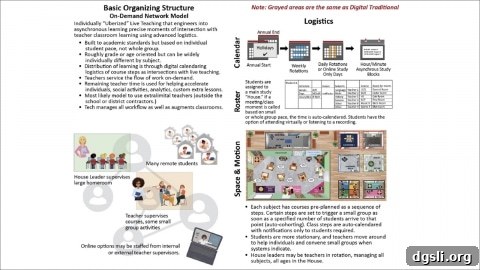
One of the most significant shifts concerns how time, space, staffing, and learning pathways are organized. The Learning Counsel’s Hybrid Logistics Project and its network of Learning Centers provide a practical framework for districts ready to pursue experiential and personalized learning at scale. These Hybrid Logistics Learning Centers (HLLCs) are intended to help districts redesign systems and operations so that instruction is more equitable, relevant, and adaptable to individual learners.
Equity and relevance through transformational district change
The work of the Hybrid Logistics Project builds on research and reports produced by the Learning Counsel, combined with input from educators across the country and other national research. The aim is to create district- and school-level systems that support learner-centered, future-focused practices. Districts invited to participate in this effort join multi-year cohorts committed to building personalized learning environments supported by a hybrid logistics interchange—structures that make flexible, individualized learning operational across time and space.
Hybrid Logistics Learning Centers work in cohorts with peer districts and focus on a sustained transformation. Their goal is to develop systems and routines that leverage hybrid logistics—coordinated approaches to scheduling, staffing, technology, and physical learning spaces—to amplify human teaching and improve learning outcomes. Each participating system advances along a continuum, with support designed to accelerate progress toward experiential and personalized learning.
Strategy over isolated tactics
Rather than applying piecemeal tactics on top of traditional grade-by-grade structures, successful transformation requires a cohesive organizational strategy. HLLCs shift away from isolated fixes and move toward aligned systems that touch every part of the organization—curriculum, staffing, professional development, technology, facilities, and community engagement. That strategic alignment enables sustainable change instead of short-lived improvements.
What becoming an HLLC looks like
No two districts are identical, and each Hybrid Logistics Learning Center designs a path that reflects its culture, community, and needs. However, several consistent elements help ensure productive conditions for innovation and growth. Parallel systems across cohort districts and within districts create coherence, allowing schools to share learning and scale what works. The Hybrid Logistics Project provides both technical and adaptive supports so each district’s plan is tailored while remaining aligned with the cohort’s overall direction.
Participating systems receive targeted support in six critical areas:
- Learner-centered vision and planning
- Research-based foundations for transformational leadership
- Process and technology model architecture
- Structures for learning and professional development
- Practical strategies for implementation and scaling
- Community alignment and stakeholder engagement
Cohort members typically engage in a multi-year progression that meets districts where they are and moves them toward a sustainable structure for experiential, personalized learning. Over time, these changes can help address persistent challenges such as staffing shortages and student attrition by creating more flexible roles, varied learning pathways, and stronger community ties.
How to learn more
The Hybrid Logistics Project offers a comprehensive approach for districts ready to move beyond temporary fixes and toward systemic, learner-centered redesign. Schools and districts interested in more information can contact Chris McMurray via email at [email protected] to discuss participation in the Hybrid Logistics cohort and the supports available for transformation.
About the author
Charles Sosnik is an education journalist and editor who serves as Editor in Chief at the Learning Counsel. As an EP3 Education Fellow, he draws on deep connections within the education community to provide context and insight into the changing landscape of K–12 schooling. Charles writes regularly for influential education outlets and brings a pragmatic, community-focused perspective to conversations about reform and innovation.