
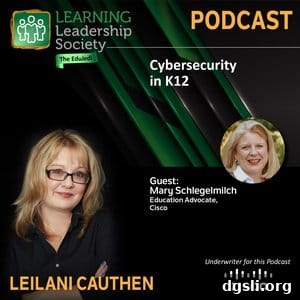
Cybersecurity in K-12: A Conversation with Mary Schlegelmilch
In this episode of the Learning Leadership Society Podcast, host, Learning Counsel News Media and Research CEO LeiLani Cauthen, speaks with Mary Schlegelmilch, Education Advocate at Cisco. Their discussion explores the evolving landscape of K-12 education, how the pandemic reshaped classroom culture and institutional mindsets, and why cybersecurity in education has moved to the forefront of school priorities.
The conversation highlights several key themes relevant to school leaders, IT teams, educators, and policymakers. Among them: the rapid acceleration of digital learning tools during the pandemic, the new and persistent risks that come with expanded connectivity, the importance of aligning security strategies with instructional goals, and practical steps districts can take to build resilience against cyber threats. Those interested in hearing the full interview can listen to the episode directly.
Click Here to Listen
Since the pandemic began, schools adopted a wide range of technologies to support remote and hybrid learning. This transition was necessary to maintain continuity of instruction, but it also introduced complexity in managing devices, accounts, and data. LeiLani and Mary discuss how these changes forced many districts to rethink policies, budgets, and staffing priorities. The result is a broader recognition that cybersecurity is not just an IT issue—it is an educational imperative that affects student privacy, instructional quality, and community trust.
A persistent point in the episode is the cultural shift required to embed digital safety into everyday school operations. Effective cybersecurity in K-12 contexts relies on collaboration between administrators, teachers, technology staff, students, and families. Mary emphasizes practical strategies—such as targeted professional development for educators, clear communication with parents about digital risks, and student-centered lessons on digital citizenship—to help stakeholders understand their roles in protecting school communities.
The panel also addresses the need for scalable, realistic security models that match the resources and constraints of public schools. Not every district can fund enterprise-level solutions, so the conversation includes guidance on prioritizing critical protections: identity management, multi-factor authentication, secure device management, data encryption, and routine backup practices. These measures, when combined with thoughtful policies and staff training, significantly reduce the most common vulnerabilities that lead to disruptions or data breaches.
Another theme explored is the role of public-private partnerships and vendor relationships in strengthening school cybersecurity. Mary, drawing on her experience at Cisco, discusses how technology providers can support districts through guidance, tools, and services tailored to educational environments. However, she also cautions that technology alone is not sufficient—sustainable progress depends on governance, budget planning, and continuous improvement cycles that respond to changing threats.
Listeners will find the episode useful for understanding both strategic and tactical responses to cyber risk in education. It offers practical next steps for district leaders who need to balance instructional goals with security demands: conduct risk assessments, align cybersecurity efforts with pedagogy, invest in staff training, and develop incident response plans that include communication strategies for families and community stakeholders. These actions help schools maintain instructional continuity while safeguarding student data and systems.
Overall, this episode of the Learning Leadership Society Podcast provides a clear, accessible overview of why cybersecurity must be a priority in K-12 education and how school communities can move from reactive fixes to proactive, sustainable security practices. The dialogue between LeiLani Cauthen and Mary Schlegelmilch sheds light on real-world challenges and practical solutions that schools can adopt today to protect their students and support resilient learning environments.