
By Craig Jones
In higher education, many colleges and universities are moving away from requiring ACT and SAT scores for admissions. As of this writing, Princeton stands out as the only Ivy League institution still formally requiring these tests, although this year it temporarily waived submissions because many students could not access testing sites.
Testing in K–12
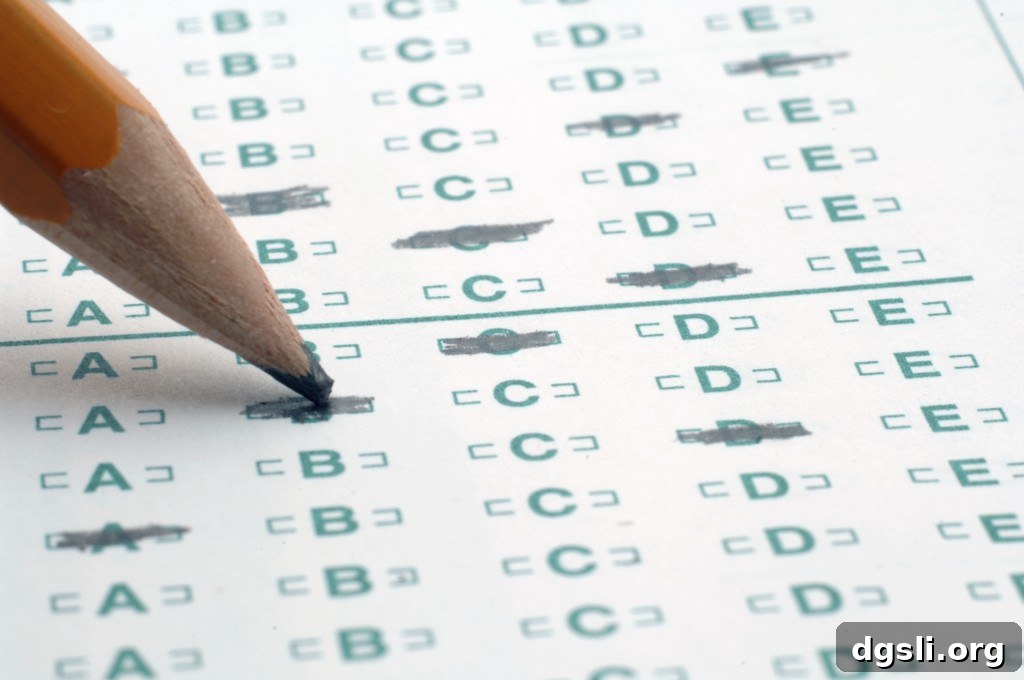
The debate around high-stakes, end-of-year standardized testing in K–12 schools has become increasingly contentious. For years, schools have relied on these exams to expose achievement gaps and measure outcomes. Ideally, assessments should measure learning and ensure students do not fall behind. In practice, however, the system often links funding to test scores and treats students like interchangeable parts in an industrial process. Tests have tended to serve administrators and reporting requirements more than the learners themselves. When students do receive their results, they rarely receive meaningful context or guidance on how to improve. As a result, these summative tests have failed to reliably demonstrate or support real growth.
Criticism of end-of-year assessments is widespread: teaching to the test, test anxiety, and cultural or socioeconomic bias are common complaints. Despite these well-documented flaws, testing has remained a persistent feature of American education.
Last school year, federal requirements for standardized testing were waived because of COVID-19. This year, testing remains uncertain, but major assessment providers have introduced virtual interim assessments that function as practice or checkpoints for larger exams. Coupled with rapid classroom technology adoption driven by the pandemic, we may be approaching a turning point that could finally render high-stakes end-of-year tests obsolete.
Formative Assessment Changed the Paradigm
Formative assessment—concepts dating back to the early 1970s—has long encouraged teachers to use classroom data to support student learning. Framed as “assessment for learning” rather than “assessment of learning,” formative practices shift the primary purpose of assessment from external accountability to instruction. These practices give teachers deeper, actionable insights into student understanding. However, the results of many formative tools—Do Nows, Exit Tickets, and similar strategies—have not always been transparent or immediately useful for students themselves.
The Future Is Here: Eliminating End-of-Year Tests Requires Shared Benefits
I once photographed an old Los Angeles Unified School District poster that described a future many educators had hoped for: technology-based applications would deliver individualized, continuous feedback to students through frequent formative assessment; teachers would receive timely, precise information to adjust instruction; and online systems would speed data transfer across administrative levels, enabling better program review and policy decisions. That vision placed valid, standards-aligned learning data at the center of schooling for administrators, teachers, students, and families.
For years, few believed summative assessments would disappear without a major campaign—partly because formative methods hadn’t yet produced the reliable, system-level data administrators needed to satisfy accountability requirements and prevent students from slipping through the cracks. Then two forces accelerated change: rapid technological innovation and the COVID-19 pandemic.
Today, teachers can implement formative practices that generate millions of data points on individual learning. That data no longer serves only the teacher; administrators can access richer, standards-aligned insights without relying exclusively on end-of-year tests, and students and families can gain direct visibility into progress. In this model, learners themselves become primary beneficiaries of assessment data.
Federal policies such as No Child Left Behind, the Every Student Succeeds Act, and the adoption of Common Core standards pushed schools to use data to reveal opportunity gaps. Yet collecting data only at the end of the year never solved the core problem of improving daily instruction.
Although federal law may continue to require standardized testing in some form, the pandemic has made the future of testing less certain and accelerated trends already leaning away from high-stakes exams. If end-of-year assessments are to be phased out, any replacement must preserve the legitimate needs of all stakeholders: teachers, administrators, students, and families. Fortunately, classroom-level educational technology is finally producing enough valid, actionable learning data to make that possible while keeping accountability intact.
Teachers and administrators are beginning to align around common solutions. Modern instructional platforms can capture more meaningful evidence of student learning than a single annual exam, while reducing the need for traditional tests and quizzes. Classrooms are becoming more student-centered and self-paced, with tailored learning playlists and visual progress tracking that allow differentiated instruction in real time. Formative assessment—long touted as the future—is now scalable and practical.
About the Author
Craig Jones is the co-founder and CEO of Formative. He is a former eighth-grade science teacher and a former district fellow for the Los Angeles Unified School District.
This article originally appeared on edCircuit.