
By Taylor Wiedemann
I grew up knowing I wanted to be a teacher. My education at Olentangy Liberty High School in Powell, Ohio—part of a district consistently ranked among the best in the state and nationally—sparked a genuine love of learning that I wanted to pass on. But early in college I had a reality check: while preparing a college essay, I realized how uneven students’ preparation can be. Many classmates struggled with basic expectations like citing sources and following APA style, while I completed the assignment with ease. That moment revealed how many students receive inadequate instruction and arrive at higher education underprepared.
Thankfully, the teachers in the Olentangy Local School District had given me solid strategies, tools, and a passion for teaching. Their influence shaped my goal not only to teach but to help students become confident, capable global citizens who can succeed in any career.
Helping those with disabilities
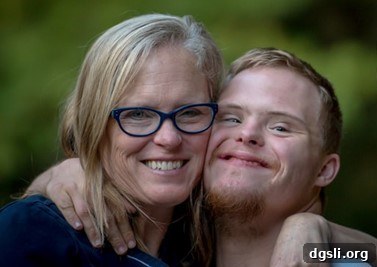
My commitment to supporting students with disabilities grew from my relationship with my uncle, who has Down syndrome. Observing his limited opportunities and narrow curriculum—focused mostly on routine tasks like tying shoes, with little emphasis on marketable skills or inclusion—motivated me to pursue change. He finished school without the tools needed to enter the workforce, and I watched him struggle as an adult. Those experiences pushed me toward a career as an intervention specialist, so I could work directly to improve the educational paths of students with diverse learning needs.
I returned to Olentangy to teach in the district that inspired me, determined to provide more meaningful instruction and greater access for students with intellectual and learning disabilities.
Combining a career with a passion for education
As an intervention specialist in a Specialized Learning Center at a middle school, I supported students with intellectual disabilities and behavioral challenges, including Autism, Down syndrome, and Oppositional Defiant Disorder (ODD). Working with a wide range of learners prompted me to explore instructional tools that address varied learning styles. One of those tools was InferCabulary, a visual vocabulary program that pairs images with words to help students infer meaning. I found that visual representations deepened students’ understanding and helped them form stronger connections to new vocabulary.
My work with visual vocabulary led me to study the Orton‑Gillingham approach, a structured, multisensory, diagnostic method for teaching literacy—especially effective for students with dyslexia. As part of my district training, I completed an extensive practicum and coursework through the Academy of Orton‑Gillingham Practitioners and Educators (AOGPE), earning the Associate level credential after supervised lessons and concentrated training. This hands‑on, multisensory approach became central to my practice for supporting struggling readers.
The middle-school challenge
Orton‑Gillingham techniques are explicit, systematic, and directive, and they are most effective when begun in kindergarten and first grade. But middle school presents a unique challenge when foundational reading skills have not been secured. Teaching older students requires breaking words into smaller, manageable units like syllables and morphemes, analyzing vowel and consonant patterns, and teaching systematic syllable division. Students learn to identify patterns and then use morphology—the study of word parts that carry meaning—to build working definitions. These skills help students decode unfamiliar words and make sense of more complex academic language.
In the classroom, I emphasize morphology daily. We study Greek and Latin roots to expand vocabulary and deepen comprehension across subjects. For example, exploring the root GRAT (meaning “to please” or “to be thankful”) becomes a lesson on gratitude, while roots like AUTO (“self”) and ARCH (“to rule” or “ruler”) help students unpack ancient political systems and modern government concepts. Pulling words apart and examining their meaningful components connects vocabulary study to broader themes in social studies, science, and literature—and it makes abstract ideas tangible.
Added attention for dyslexia
Many students, especially those with dyslexia, initially resist explicit word study because reading feels laborious and frustrating. But once students acquire the tools to analyze words and apply those tools across contexts, they experience breakthroughs. The true measure of success is transferring these skills beyond the intervention classroom: when a student uses morphological analysis in science, decodes vocabulary in math word problems, or improves comprehension in English, we know real learning has occurred.
Teaching students how to use their outside knowledge and word analysis strategies builds autonomy and mastery. That transition—from relying on the teacher to independently applying strategies—is what enables long‑term academic success.
The importance of a multisensory approach
Multisensory instruction can transform a student’s confidence. I often teach reluctant readers who have avoided reading, spelling, and writing for years; through multisensory techniques they become eager learners who ask to be in my class. The methods make sense of English’s irregularities by connecting sight, sound, movement, and meaning. Too often, people assume struggling readers lack intelligence, but in reality many are bright and capable—they simply need instruction tailored to how they learn.
When students develop foundational reading skills, those gains transfer to other disciplines. Better decoding, vocabulary, and comprehension enhance performance in science, social studies, and on math word problems. Strengthening reading skills opens doors: students are more prepared to learn, to engage with content, and to succeed beyond the classroom.
About the author
Taylor Wiedemann is an intervention specialist in the Olentangy Local School District in central Ohio. Trained under a Fellow of the Academy of Orton‑Gillingham Practitioners and Educators, Taylor delivers multisensory instruction to students with intellectual and specialized learning disabilities. Her mission is to build students’ self‑confidence, foster a love of learning, and help reluctant readers become successful, independent learners.