
Jack Moran
Education Writer and Rankings Auditor
QS Quacquarelli Symonds
The 2018 QS World University Rankings are QS’s most comprehensive global guide to higher education performance since the ranking’s launch in 2004. Built on a methodology designed for clarity and reliability, the table helps students compare study destinations and enables analysts to track international trends across the higher education sector.
Below are the main insights revealed by the 2018 edition.
United States
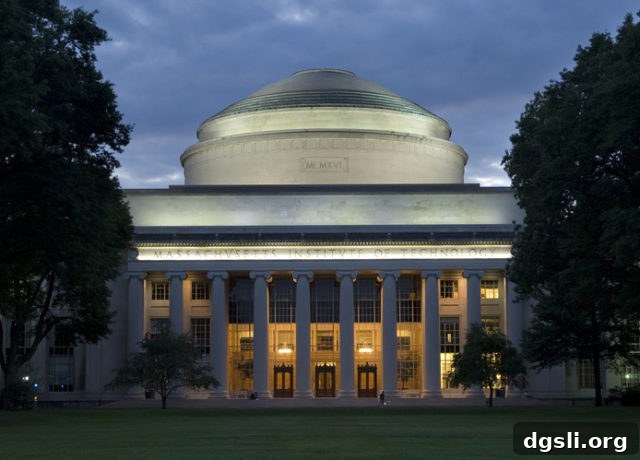
At the very top of the 2018 list, the US higher education system remains strong. Massachusetts Institute of Technology continues its remarkable run, topping the rankings for a sixth consecutive year. With California Institute of Technology rising to fourth and surpassing the University of Cambridge, US institutions occupy the top four places for the first time.
However, a deeper look highlights worrying signs. Of 157 US universities included in the rankings, 71 fall in position while only 41 improve. The country has fewer institutions in the global top 400, top 200, and top 100 than in the previous year. A notable trend in the data is a decline in the share of international students: 107 of the 157 US universities see their International Student Ratio score decrease. As many US universities, public and private, depend heavily on international tuition revenue, these shifts are a cause for concern for institutional finances and future enrollment strategies.
Top 20
The global top 20 remains largely stable year-on-year. Australian National University returns to the top 20, while the United Kingdom still hosts four top-10 universities. Imperial College London makes a modest advance from ninth to eighth.
Though the top 10 is unchanged, two universities are closing in on this elite group. Switzerland’s École Polytechnique Fédérale de Lausanne (EPFL) rises from 14th to 12th, narrowing the gap with ETH Zurich. Singapore’s Nanyang Technological University (NTU) surpasses the National University of Singapore for the first time and achieves the highest placement ever recorded by an Asian institution in these rankings, edging closer to a top-10 position.
The Rise of STEM Institutions
The advances by EPFL and NTU underline a wider trend: institutions focused on science, technology, engineering and mathematics (STEM) are gaining ground. EPFL is renowned for physical sciences and engineering, and NTU ranks highly in engineering and technology subject areas. This pattern appears throughout the rankings: MIT and Caltech occupy first and fourth respectively, Delft University of Technology reaches its best position since 2005, and specialised STEM institutions in Asia such as Hong Kong University of Science and Technology and Korea Advanced Institute of Science and Technology (KAIST) move up the table.
This growth is not driven solely by citation practices in life sciences and engineering. QS’s Faculty Area Normalisation, introduced in 2015, aims to address differences in citation behavior across disciplines. Instead, two factors help explain STEM institutions’ rise. First, these universities tend to be more research-intensive, and seven of the ten most research-active institutions in the rankings have a strong STEM focus. Second, they are often more engaged with industry, which strengthens research funding and employer relationships. Such partnerships enhance performance on QS’s Academic Reputation and Employer Reputation metrics.
Australia
Australia is a clear beneficiary of close industry-university collaboration. Measuring which national system is “improving the most” depends on the chosen metric, but Australia’s performance in 2018 is notable. Eighteen of its 21 top-400 universities improve their positions, a level of success unmatched by comparably sized systems. Nineteen Australian universities show year-on-year research performance gains, a higher proportion than seen in other major systems.
These gains are supported by high employability scores. That improvement reflects both methodological enhancements introduced by QS and a strong institutional focus on aligning graduate skills with employer needs. Australian universities have responded with innovations in teaching and institutional practice, earning recognition in awards that celebrate excellence in education and practical impact.
Western Europe
By contrast, Western Europe faces a period of relative decline. Of the region’s 236 ranked institutions, 140 drop in position. The decline is concentrated in countries that have reduced public funding for higher education—such as the United Kingdom, France, Spain and Portugal—without equivalent private investment to offset the cuts.
France’s tertiary sector illustrates these pressures. Reduced funding has compounded challenges including crowded classrooms, weaker research performance in some areas, and concern about institutional autonomy. Recent political attention to higher education, including ministerial appointments and public commitments to engage with the academic community, signals a willingness to address structural problems. France’s stated openness to international collaboration and to recruiting academics from abroad may become an element of a broader strategy to strengthen innovation, investment and academic excellence.
The wider message of the 2018 rankings is clear: systems that invest in research intensity, foster industry partnerships, and support employability are improving their global positions, while those facing funding constraints or limited private-sector engagement are at risk of falling behind.