
By Franklin Schargel
In honor of Memorial Day, I am sharing this to honor the heroes in our armed forces who have given so much and continue to give. Thank you for making a difference.
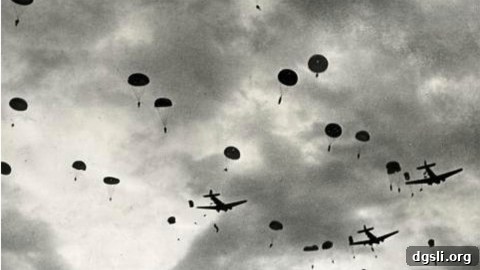
Charles Plumb, a U.S. Navy jet pilot who flew combat missions over Vietnam, survived an extraordinary ordeal. After completing 75 combat sorties, his aircraft was struck by a surface-to-air missile. He ejected, parachuted into enemy hands, and spent six years as a prisoner in a communist Vietnamese prison. Plumb survived that experience and now travels widely, speaking about the lessons he learned about courage, gratitude, and the unseen people who support us.
One day, years after his service, Plumb and his wife were dining in a restaurant when a man at another table approached them and said, “You’re Plumb! You flew jet fighters from the aircraft carrier Kitty Hawk. You were shot down.” When Plumb asked how the man knew, the stranger replied simply, “I packed your parachute.” The moment was electric—Plumb was stunned and filled with gratitude.
The man smiled and said, “I guess it worked.” Plumb replied, “It sure did. If your chute hadn’t worked, I wouldn’t be here today.” That brief exchange opened a deeper reflection for Plumb about the countless, often invisible contributions of others. He imagined the man in his Navy uniform—white hat, bib in the back, bell-bottom trousers—and wondered how many times they might have crossed paths without exchanging even a greeting. Plumb thought about the long hours the sailor had spent at a wooden table in the bowels of the ship, carefully weaving shrouds and folding silk, handling each parachute as if it contained the life of someone he did not know.
Plumb uses that story to pose a question to every audience: “Who’s packing your parachute?” The point is simple and profound. Every one of us relies on others—on people who provide support, care, and competence that help us make it through the day. In Plumb’s case, surviving being shot down required many kinds of parachutes: the physical parachute that saved his life, the mental resilience that kept him focused, the emotional resources that sustained him, and the spiritual strength that helped him endure imprisonment. Together, these supports helped bring him to safety.
In our busy lives we often overlook what truly matters. We can forget to say hello, to offer a please or thank you, to congratulate someone on an achievement, to give a sincere compliment, or simply to do something kind for no reason at all. Small acts of recognition and appreciation can make a real difference. As you move through this week, this month, and the year ahead, take time to notice the people who pack your parachute—those who contribute quietly to your safety, success, and well-being.
I share this story as my own expression of gratitude to those who have helped “pack my parachute.” Forwarding a joke or a kind message may seem trivial, but often it is a simple way of saying, “I remember you; you matter to me.” When busy friends forward lighthearted messages, it can be their way of keeping a connection without a long conversation. Rather than dismiss a forwarded joke, consider it a small gesture of care—a way someone tried to lift your spirits, remind you you’re valued, and help you through your day.
So the next time you receive a forwarded message or a quick hello from someone who seems too busy for much else, don’t assume it’s unimportant. See it for what it often is: a thoughtful nudge, a smile sent your way, and a reminder that someone is helping to pack your parachute.
With hope, gratitude, and affection, I thank all who have helped support me—those who have offered guidance, encouragement, friendship, or practical help. I am fortunate to have people in my life who lift me up. To those on the front lines of service and sacrifice, whether in uniform or not: you are my heroes. Thank you for making a difference.
About the author
Franklin P. Schargel is a former classroom teacher, school counselor, and school administrator who designed and implemented programs that significantly increased parental engagement, raised post-secondary attendance, and reduced dropout rates at a Title I high school. His work has been recognized by the U.S. Department of Education, BusinessWeek, Fortune, National Public Radio (NPR), PBS, and The New York Times. Schargel also served as Education Division Chair for the American Society for Quality and contributed to the development of the Malcolm Baldrige National Quality Award for Education.
Schargel is an internationally recognized speaker, trainer, and author of thirteen best-selling books. His most recent book, Creating Safe Schools: A Guide for School Leaders, Classroom Teachers, Counselors and Parents, was published internationally by Francis & Taylor. He has written more than 100 articles on school reform and education leadership.
This article was originally published by The Learning Counsel, a research institute and news media hub focused on providing context for the shift in education to digital curriculum.