
By Mac Bogert
TANSTAAFL
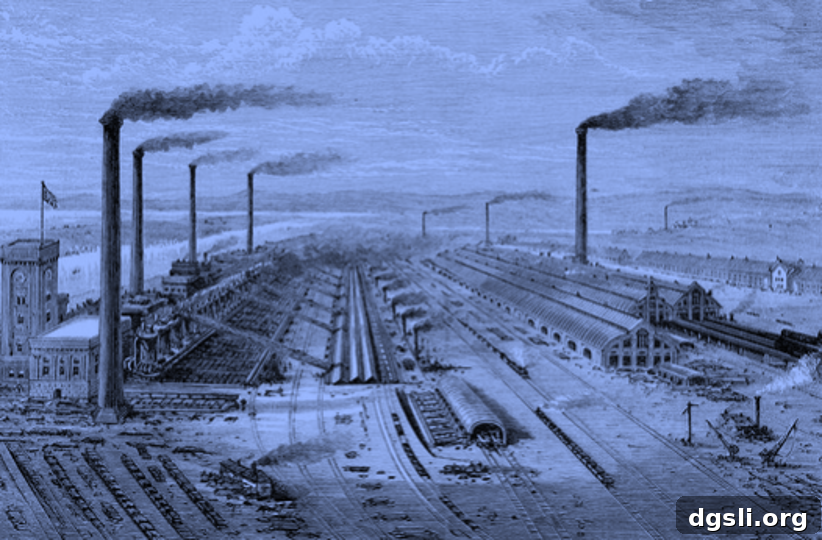
The industrial revolutions of the 18th and 19th centuries arrived on waves of new technology. Innovations such as the steam engine and the sewing machine transformed how people worked, but the effects went far beyond machinery. Urbanization concentrated labor in factories; the reorganization of daily life changed communities and social expectations. Those upheavals offer a useful reminder: technology is neutral, but its impact is not. Cheap, uniform products and higher profits came alongside tedious work, health problems, low wages and a weakened sense of meaningful connection to labor. At the same time, new roles for educated and skilled workers emerged, expanding access to schooling. The net effect was mixed.
We are now living through a comparable shift. Many would point to the early 1990s and Tim Berners-Lee’s invention of the World Wide Web as the moment our thinking patterns began to change. That revolution has delivered instant access to virtually all recorded human information. For educators, fingertip access to vast resources is a staggering opportunity—but it also introduces new challenges and responsibilities.
Technology is the answer. What is the question?
Are we using technology to spread more information or to deliver more useful information? Do we favor fleeting connectivity over humane, meaningful connection? Do we promote self-directed learning or cultivate endless distraction? Do we teach students to think critically or simply to accept opinions as facts?
The power of current information technology is undeniable: instant access, diverse perspectives, and unprecedented convenience. Yet access also brings misinformation, surface-level engagement, and emerging research linking heavy web use to cognitive and social-development challenges. We cannot yet know the full, long-term effects of this era. What we can do is treat the revolution as an opportunity to reshape education—possibly to abandon some of the assumptions of past industrial models—and to pair information technology (IT) with what I call relationship technology (RT): deliberate practices that build meaningful human connection alongside digital tools.
(Dis)Connections and Teachers
Connection Disconnection
Gargantuan amounts of data Insight and skepticism
Instantaneity Patience and depth
All 15,000 tribes* Neighbors
Social networks Social behavior
- TMI: too much information. In the past, teachers and libraries were core filters and interpreters of knowledge. Children often viewed teachers as the experts who framed questions and guided inquiry. Today’s abundance of information means that access alone is no longer sufficient. Teachers must help students develop informed skepticism, learn to evaluate sources, and distinguish knowledge from genuine learning.
- Socrates warned about the emptiness of a busy life. Modern life—and the constant stream of digital input—can encourage shallow engagement. The brain adapts to repeated habits, and without coaches, mentors or teachers to pace and deepen learning, students may never develop the patience or the capacity to form interconnected, sustained understandings.
- The web connects nearly everyone, creating global thought-networks where people share ideas across long distances. Those networks can be rich and productive when participants treat one another like neighbors—building trust and sustained dialogue—instead of transient social media connections. Educators can model and teach how to nurture organic, complex relationships rather than confusing connectivity with community.
- Some evidence suggests social behavior is changing as digital engagement grows. Schools and teachers can help preserve and strengthen empathy, humility and interpersonal skills. Leadership, as Margaret Wheatley has observed, is generated by relationships; schools that emphasize relational competence invest in capacity, not just content.
The Creation of a Leadership Culture
This technological wave is neither inherently good nor bad, but it is inevitable. For those who care about learning, this moment offers perhaps the greatest chance in recent history to rethink how we teach, lead and design educational experiences. Technology alone won’t transform schools. Change requires new structures of leadership and participation.
I observed this in a school my stepson attended where leadership was distributed. From the youngest students to the staff, everyone shared responsibility and authority. Teachers acted as guides—nudging, reflecting and creating a culture of trust and vulnerability. Traditional barriers—rigid grade levels, isolated classes, bells and top-down management—were intentionally absent. The result was a learning community where everyone both taught and learned.
Such environments cannot be created simply by buying devices and apps. Without a fundamental shift in how leadership is understood and practiced, technology risks reinforcing old hierarchies. Relationship technology reframes learning around interdependence: leadership becomes a woven thread that runs across curriculum, governance and continuous improvement, inviting stakeholders to co-design the system rather than being passively managed by it.
If stakeholders—students, educators, families and staff—are involved in shaping the process, they are more likely to invest in it. That shared investment creates resilience and meaning.
If you prefer audio, consider listening to the Learning Chaos episode titled “Curiosity and Fear.”
About the Author
Mac Bogert is President of AZA Learning and began his career as an English teacher. For the past 25 years he has worked at the intersection of leadership and learning. He is also a musician, professional actor, yacht charter captain, staff development consultant, curriculum designer and the author of Learning Chaos.
This article was originally published by The Learning Counsel, a research institute and news media hub focused on the shift in education toward digital curriculum.