


Guest Article Written by: Kimberly Tyson, Ph.D., of Learning Unlimited
Creating classrooms that are truly literacy-rich makes a measurable difference in how students engage with reading, writing, speaking, and listening. Endorsed by literacy professionals and organizations, literacy-rich environments support a wide range of genres and media—print and digital—and set the stage for authentic learning. Over the years I have worked with teachers and school leaders across districts to help design classroom settings that increase access to print, encourage interaction with text, and promote literacy development for all students.
Literacy and the Common Core
 As schools respond to the Common Core and similar standards, there is a growing emphasis on increasing exposure to nonfiction and informational text. Yet improving student outcomes begins with attention to the classroom environment itself. A well-designed literacy-rich classroom not only aligns with Common Core expectations but also encourages meaningful and varied opportunities to read, write, speak, and listen through coordinated print and digital resources.
A literacy-rich environment matters at every grade level and across content areas. Beyond early literacy, the classroom setting supports content-specific learning—science, social studies, math, and the arts—when text, visuals, and supportive tools are visible and accessible. The following elements commonly appear in effective literacy-rich classrooms:
- Classroom libraries that include a broad range of genres and text types
- Content posters and visual references
- Anchor charts—teacher-created and co-created with students
- Word walls and vocabulary supports
- Clear labels and signage that support independent use
- Literacy workstations or centers with purposeful tasks
- Writing centers stocked with models and resources
- Accessible computers and digital reading tools
- Regular display of student work to honor literacy effort
- Book displays and curated informational resources
- Engaging bulletin boards that reinforce instruction
- Ample, structured opportunities to read, write, speak, and listen
Unfortunately, many classrooms remain sparse and transactional: desks in rows, bare walls, and limited reading materials. These layouts reduce opportunities for student collaboration, choice, and frequent interaction with texts. If a classroom lacks inviting, level-appropriate books and purposeful print, students will have fewer chances to build stamina, motivation, and the habits of proficient readers and writers.
Access to engaging books and materials—both print and digital—is essential. Well-designed classroom libraries and reading collections help students spend more time reading, develop more positive attitudes toward reading, and achieve higher reading outcomes. Classroom libraries also support balanced literacy approaches that combine explicit instruction with independent practice, including guided reading, shared reading, and choice reading. Teachers can teach strategies and content-area reading skills, but students also need abundant opportunities to read books they want to read and can read successfully.
This article is intended as a prompt for teachers, coaches, and administrators to pause and evaluate classroom environments. When you observe K–12 classrooms, consider whether each space supports 21st-century literacy demands and the goals of your curriculum. If not, ask: What are the next practical steps to support teachers in creating literacy-rich classrooms that provide equity and access across a school or district?
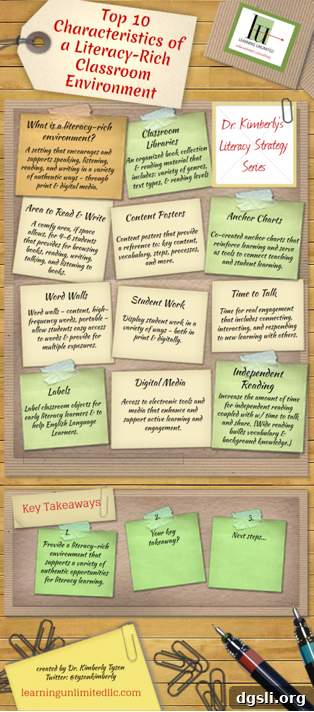
The following infographic highlights key characteristics of a literacy-rich environment. Use it as a conversation starter with colleagues and as a checklist for staging classroom spaces that support student learning and the Common Core standards.
Practical Next Steps for Schools
- Audit classroom resources: inventory books, digital subscriptions, and classroom print supports.
- Invest in accessible classroom libraries that reflect student interests and reading levels.
- Co-create anchor charts and word walls with students to reinforce strategy instruction.
- Arrange flexible seating and collaborative spaces to encourage talk and shared reading.
- Plan regular routines that protect time for independent reading and writing.
- Provide professional learning focused on making content-area classrooms text-rich.
- Monitor equity of access so every classroom offers comparable opportunities to read and write.
References:
Gambrell, L.B., Malloy, J.A., & Mazzoni, S.A. (2007). Evidence-based practices for comprehensive literacy instruction. In L. Gambrell, L.M. Morrow, & M. Pressley (Eds.), Best Practices in Literacy Instruction, 3rd edition (pp. 11–29). New York: Guilford Press.
National Assessment of Educational Progress Report. (2002). 1992–2002 NAEP Report. Princeton, NY: Educational Testing Service.
Photo credits:
bookwyrmish via photopin cc
Tobias Leeger via photopin cc
This article first appeared on Dr. Kimberly’s Literacy Blog.
About Dr. Kimberly Tyson
Dr. Kimberly Tyson is the founder and Lead Consultant at Learning Unlimited and the creator of The Common Core Toolkit. She is author of practical resources such as “25 Great Ways to Prepare for the Common Core” and has more than twenty-five years of experience as a classroom teacher, college instructor, administrator, and literacy consultant. Dr. Kimberly contributes literacy insights through her blog and other education outlets, has served as president of professional organizations, written classroom curriculum, and presents research-informed, immediately usable strategies at conferences and professional learning sessions.